Sourcing inventory efficiently is one of the biggest challenges resellers face when they buy used iPhones in bulk. Choosing the wrong models, grades, or stock types can tie up capital in devices that do not sell, while unreliable suppliers create returns, warranty disputes, and unhappy customers. This guide walks wholesale buyers, importers, and phone store owners through a practical framework for sourcing bulk used iPhones — from selecting models and understanding grading standards to verifying battery health, running IMEI checks, and preparing shipments for export.
Whether you are placing your first wholesale order or scaling an existing supply chain, this article gives you the tools to buy with confidence, along with a decision-making table and checklist you can use directly during supplier negotiations.
Why Buy Used iPhones in Bulk from a Wholesale Supplier
Buying used iPhones wholesale gives resellers access to consistent inventory at a lower per-unit cost than retail sourcing, but only when the supply chain is set up correctly. A dependable used iPhone supplier in China can offer graded stock, tested functionality, and export-ready packaging at volumes that individual or marketplace sourcing simply cannot match. This matters because resale margins are thin and highly sensitive to defect rates, so every percentage point you save on sourcing cost or lose to returns has a direct, measurable impact on your bottom line over a full sales cycle.
For distributors and e-commerce sellers, bulk used iPhones also solve a seasonal demand problem: markets in Latin America, Africa, Southeast Asia, and Eastern Europe consistently want affordable, reliable iPhones, and a steady wholesale pipeline keeps shelves and listings stocked without long lead times. Beyond price, buyers are increasingly asking suppliers for documentation, traceability, and repeatable quality — because a single bad shipment can damage a storefront’s reputation, generate costly returns, and undo months of marketing investment. The key is matching supplier capability to your resale strategy, which starts with model selection and continues through grading, testing, and export preparation, each of which is covered in detail below.
Choosing the Right iPhone Models for Resale
Not every iPhone model performs the same way in every market, and buyers who treat all used inventory as interchangeable often end up with slow-moving stock. Before you buy used iPhones in bulk, take time to map your target customer’s budget, expectations, and local network infrastructure to the right generation and storage configuration, since these factors influence sell-through speed far more than most first-time buyers expect.
Best-Selling Models for Wholesale Resale
- iPhone 11 / 11 Pro — strong entry-level demand, wide parts availability, dependable resale margins
- iPhone 12 / 12 Pro — 5G support at a mid-range price point, popular across emerging markets
- iPhone 13 / 13 Pro — currently the sweet spot for buyers wanting near-current features at a used price
- iPhone SE (2nd/3rd gen) — compact, budget-friendly option for price-sensitive markets
A used iPhone supplier in China with broad sourcing networks can usually offer several generations side by side, which lets you build a tiered product mix — budget, mid-range, and premium — from a single order rather than negotiating separately with multiple vendors. This tiered approach also spreads risk: if demand for one model softens unexpectedly, a diversified lot still gives you inventory that continues to move while you adjust pricing or marketing for the slower-selling units.
Matching Models to Your Target Market
Consider battery and network requirements before locking in a model list, since a mismatch here is one of the most common and most avoidable causes of slow resale. Older markets with limited 5G infrastructure may prefer LTE-only models for cost efficiency, while markets with growing 5G rollout will pay a premium for 5G-capable stock and may reject LTE-only devices outright. Ask your supplier for regional sales data if you are entering a new territory, and where possible request feedback from other buyers who have shipped similar stock to that region — this is where a supplier relationship becomes a genuine sourcing advantage rather than a simple transaction, and it can save you from a costly trial-and-error learning curve.
Understanding Used iPhone Grading Standards
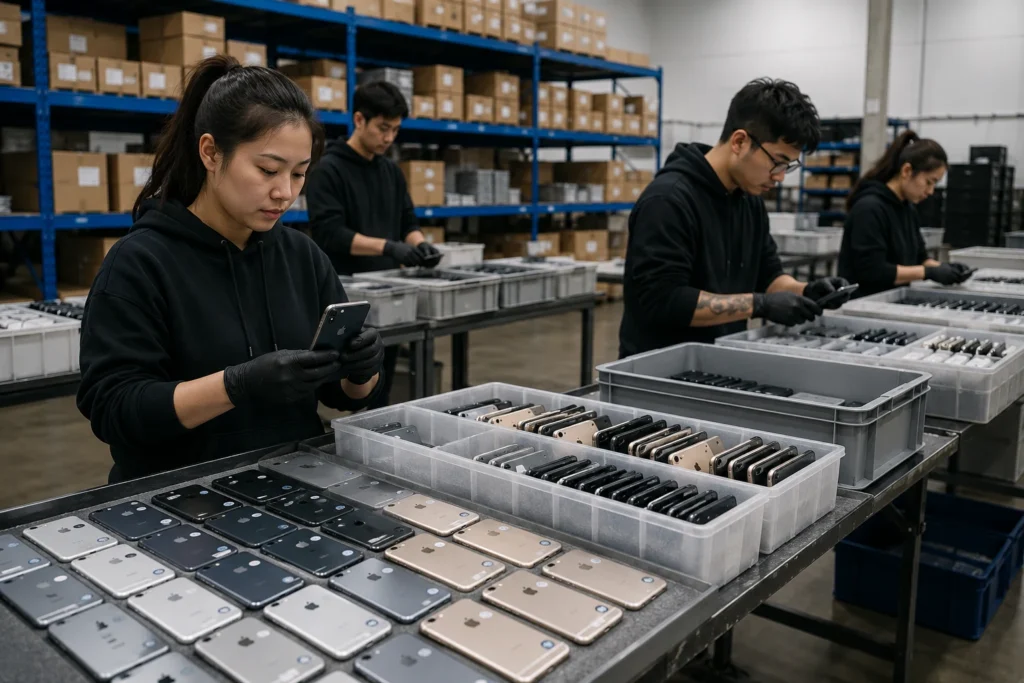
Grading is the foundation of every bulk used iPhones transaction, and it is also the area where miscommunication most often occurs between buyers and suppliers. Buyers who do not fully understand grading terminology often receive stock that does not match their resale expectations, leading to disputes, discounted resale prices, or unsellable inventory, so it is worth reviewing your supplier’s Used iPhone Grading Standards Guide in detail before your first order rather than assuming grades are self-explanatory.
| Grade | Cosmetic Condition | Typical Resale Use |
| Grade A / A+ | Little to no visible wear; screen and housing near-flawless | Premium resale, warranty-backed retail, e-commerce listings with photos |
| Grade B | Light scratches or minor marks not visible at arm’s length | Mainstream retail and online resale at competitive pricing |
| Grade C | Visible scratches, minor dents, cosmetic wear | Budget resale markets, bundled deals, repair shop trade-ins |
| As-Is / Salvage | Functional issues possible; sold for parts or repair | Repair shops, parts harvesting, refurbishment operations |
Always request written grading criteria and, where possible, sample photos or a live video inspection call before confirming a wholesale used iPhones order, since photos of a single sample unit rarely represent the full variability of a large lot. Grading language varies significantly between suppliers — one company’s Grade B may be another’s Grade C — so a numeric or lettered grade alone is not enough on its own. Ask what specific defects are allowed within each grade, whether screen replacements or non-original parts affect grading, and how the supplier handles units that fall on the borderline between two grades.
Quality Control: Battery Health, IMEI, and Functional Testing
Cosmetic grading only tells half the story, and buyers who focus exclusively on appearance often overlook the functional issues that generate the most costly customer complaints. Reliable quality control is what separates a professional used iPhone supplier in China from a low-cost broker, and it directly affects your return rate, your warranty costs, and ultimately your reputation with the customers who buy your resold devices.
Battery Health Verification
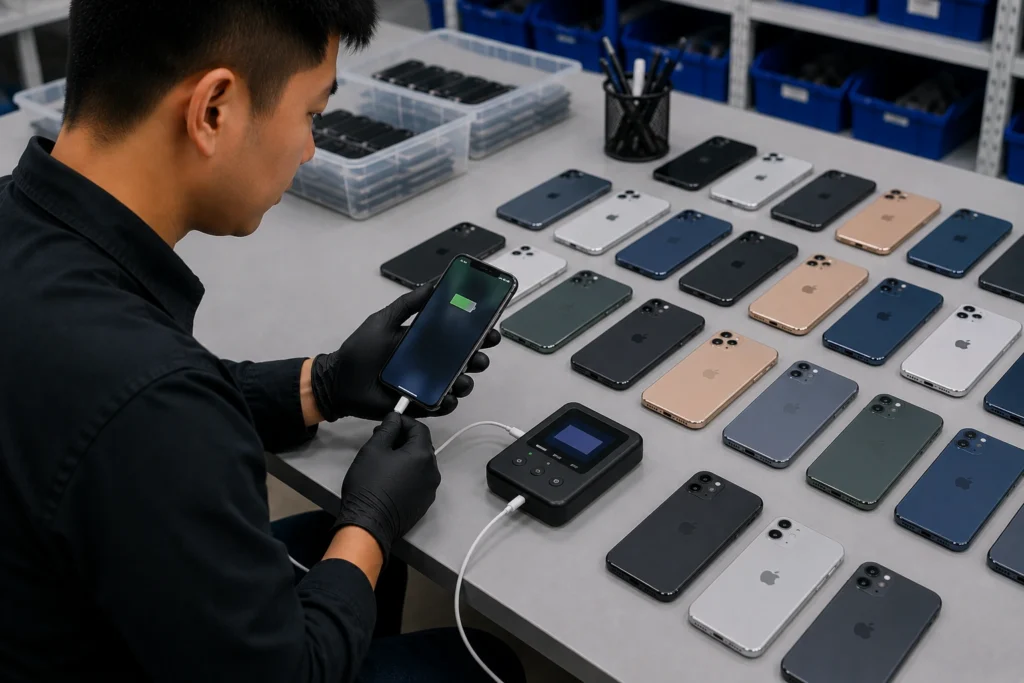
Battery degradation is one of the top reasons resold iPhones get returned, and it is also one of the easiest issues to verify before shipment if the supplier has the right testing process in place. Ask your supplier to report battery health percentage per unit, and set a minimum threshold — most professional buyers require 80% or higher for standard resale grades, with lower-health units disclosed transparently and priced accordingly rather than mixed unlabeled into standard lots.
IMEI and Network Status Checks
Every unit in a bulk used iPhones order should pass an IMEI check confirming it is not blacklisted, reported lost or stolen, or locked to a carrier or financing account, and that it is free of iCloud or MDM locks that would prevent activation. Request an IMEI report or direct checking tool access as part of your quality documentation package, and treat any hesitation from a supplier to provide this information as a significant warning sign rather than a minor administrative gap.
Functional Testing Checklist
- Touchscreen response and display (dead pixels, burn-in, discoloration)
- Front and rear camera function and focus
- Face ID / Touch ID operation
- Charging port, wireless charging, and battery charging cycle
- Speaker, microphone, and earpiece audio quality
- Wi-Fi, Bluetooth, and cellular signal connectivity
- Buttons (power, volume, mute switch) and vibration motor
A supplier that performs and documents this level of functional testing before shipment reduces your inbound inspection workload considerably and protects your margins on resale, since every defect caught before export is a defect you never have to absorb as a return, a discount, or a negative review from your own customers.
Stock Types, MOQ, and Pricing for Bulk Orders
Wholesale used iPhones are typically offered in a few standard stock formats, and understanding the trade-offs between them helps you plan cash flow, set customer expectations, and negotiate pricing that genuinely matches your resale channel rather than defaulting to whatever a supplier happens to be pushing that month.
| Stock Type | Description | Best For |
| Mixed Grade Lots | Assorted grades and models bundled at a blended price | Buyers wanting the lowest entry cost and flexible resale mix |
| Single Grade Lots | All units meet one grading standard (e.g., all Grade A) | Retailers needing consistent quality for storefront or online listings |
| Model-Specific Lots | One model/storage configuration per order | E-commerce sellers running targeted listings or ad campaigns |
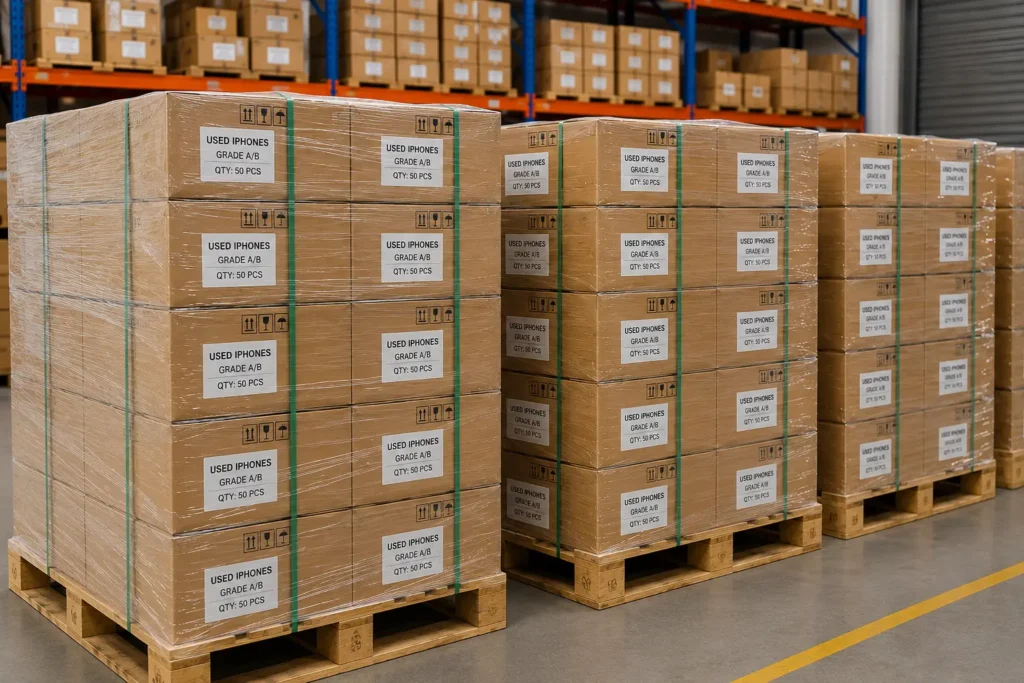
| Bulk Pallet Orders | Large-volume, container or pallet-level shipments | Established distributors and importers with high monthly turnover |
MOQ (minimum order quantity) varies by supplier and stock type; expect lower MOQs on mixed lots and higher MOQs on model-specific or single-grade lots, since these require more selective sorting from a larger pool of inventory to fill your order accurately. Ask for a written quotation that breaks down price per grade, per model, and any volume discount tiers, and clarify payment terms, deposit requirements, and lead time for each option — this level of transparency makes it far easier to compare wholesale used iPhones offers across suppliers and to spot quotes that look attractive on the surface but hide costs in vague terms.
Buyer Decision-Making Checklist and Guide
Because the right sourcing strategy depends heavily on your business model, use the decision-making table below to match your business type to a recommended grade, stock type, and model tier before requesting a quotation. This is not a rigid rule, but it reflects patterns that experienced wholesale buyers have validated across many resale channels, and it gives you a practical starting point for your first conversation with a supplier.
| Business Type | Recommended Grade | Recommended Stock Type | Recommended Model Tier |
| Budget retailer / street shop | Grade B / C | Mixed grade lots | iPhone 11 / SE |
| Online marketplace seller | Grade A / B | Single grade or model-specific lots | iPhone 12 / 13 |
| Repair shop / refurbisher | As-Is / Salvage | Mixed grade or salvage lots | Any model with available parts demand |
| Premium retailer / boutique | Grade A+ | Single grade, model-specific lots | iPhone 13 Pro / latest available |
| Distributor / importer (large volume) | Mixed A–C, tiered | Bulk pallet orders | Full model range for tiered resale |
Use this table as a starting framework rather than a fixed formula: your actual mix should still be adjusted based on your specific customer base, local demand data, and the grading and pricing your supplier can realistically deliver at the volumes you need. If you are unsure which column applies to your business, request small sample quantities across two or three combinations and track sell-through and return rates for a full sales cycle before committing to a larger recurring order.
Pre-Order Buyer Checklist
Before you place a bulk order, work through the checklist below with your supplier. It is designed to surface the details that most commonly get overlooked during fast-moving wholesale negotiations, and completing it in writing gives you a clear record to refer back to if a shipment does not match what was agreed.
| Buyer Verification Checklist | Status |
|---|---|
| Written grading definitions provided for every grade included in the order | ☐ |
| Sample photos or video inspection completed for the specific lot, not generic stock images | ☐ |
| Battery health report provided per unit or per batch, with an agreed minimum threshold | ☐ |
| IMEI report confirming no blacklist, no carrier lock, and no iCloud/MDM lock | ☐ |
| Functional testing checklist confirmed and documented in writing | ☐ |
| MOQ, unit pricing, and volume discount tiers confirmed in a written quotation | ☐ |
| Payment terms, deposit percentage, and payment method agreed and documented | ☐ |
| Packaging standard and carton labeling confirmed before production | ☐ |
| Shipping method, Incoterm, and estimated delivery timeline agreed in writing | ☐ |
| Export documentation (commercial invoice, packing list, HS code) confirmed | ☐ |
| Return or replacement policy for DOA (dead-on-arrival) units confirmed | ☐ |
| Sample order completed and inspected before scaling to a full container or pallet order | ☐ |
Packaging, Shipping, and Export Preparation
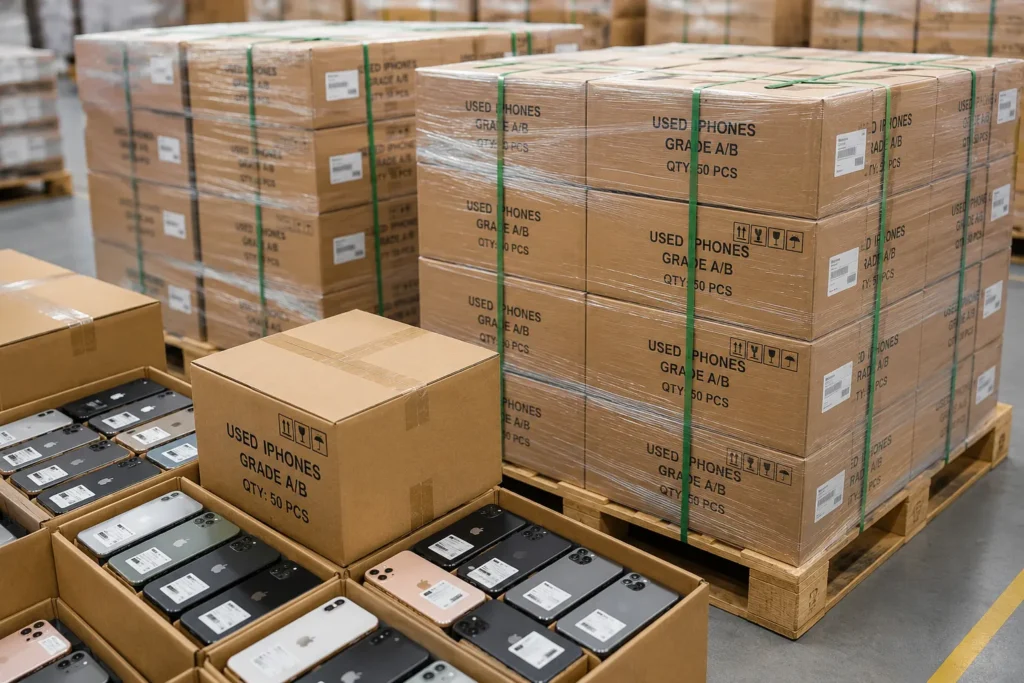
Proper packaging and export documentation reduce transit damage and prevent customs delays, and these two issues remain among the most common causes of cost overruns for first-time importers who underestimate how much logistics detail affects the true landed cost of a shipment.
Packaging Standards
- Anti-static bags or individual sleeves for each device
- Foam or bubble padding between units and box walls
- Sealed cartons labeled with model, grade, and quantity
- Pallet wrapping and reinforced corners for bulk pallet shipments
Export and Customs Preparation
Request a commercial invoice and packing list that itemizes model, grade, IMEI ranges where applicable, and declared value, since incomplete paperwork is one of the most frequent causes of shipments being held at customs for review. A supplier experienced in international logistics should offer guidance through their Shipping & Export Guide for Bulk Orders, including HS code classification, support for your preferred incoterm (FOB, CIF, or EXW), and realistic transit time estimates so you can plan inventory and cash flow around a shipment date rather than an optimistic best case.
How to Evaluate a Used iPhone Supplier in China
Supplier selection is the single biggest risk factor in bulk sourcing, and it is worth spending more time on this step than most first-time buyers initially plan for, since a strong supplier relationship compounds in value over dozens of future orders while a weak one creates recurring problems. Use the checklist below to evaluate any used iPhone supplier in China before committing to a wholesale order.
- Business license and export credentials verifiable on request
- Clear, written grading standards with sample photos or video inspection
- Documented battery health and IMEI reports per unit or per lot
- Functional testing process disclosed, ideally with quality certificates
- Transparent MOQ, pricing tiers, and payment terms
- References or verifiable trade history with other international buyers
- Responsive communication and willingness to provide a sample order
- Clear return/replacement policy for DOA (dead-on-arrival) units
Suppliers that welcome scrutiny on these points are generally the ones capable of supporting long-term wholesale relationships, not just one-off transactions, and their willingness to document processes in writing is often a better predictor of reliability than price alone. If a supplier is reluctant to answer these questions directly or pushes back on providing sample inspections, treat that hesitation as useful information rather than an obstacle to work around.
Common Mistakes to Avoid When Buying Used iPhones in Bulk
1. Ordering Based on Price Alone
The lowest quoted price per unit often reflects lower-grade stock, unverified battery health, or skipped functional testing, and buyers who focus purely on the headline number frequently discover the true cost only after the shipment arrives. Buyers who ignore quality documentation in favor of price frequently see higher return rates that erase any upfront savings, and in some cases the cost of handling returns and customer complaints exceeds the amount they originally saved on the order.
2. Skipping IMEI Verification
Failing to confirm IMEI status before shipment can result in blacklisted or locked devices arriving in your inventory — units that cannot legally be activated or resold in many markets, leading to direct financial loss and, in some cases, regulatory complications with local telecom authorities. This is one of the easiest risks to eliminate, since IMEI checks are inexpensive and fast, yet it remains one of the most common oversights among buyers placing their first few wholesale orders.
3. Not Requesting a Sample Order First
Committing to a full container or large lot without first testing a smaller sample shipment removes your ability to verify grading accuracy, packaging quality, and shipping reliability before scaling the relationship. A sample order is a small, recoverable cost compared to discovering grading or packaging problems for the first time in a shipment of several thousand units, and most established suppliers will readily accommodate this request from a serious buyer.
4. Misunderstanding Grading Terminology
Assuming grading labels are standardized across all suppliers leads to mismatched expectations, since there is no universal industry standard governing terms like Grade A or Grade B. Always request the supplier’s specific written definition for each grade rather than relying on the label alone, and keep that definition on file so you have a clear reference point if a dispute arises after the shipment is received and inspected.
5. Overlooking Export Documentation
Incomplete commercial invoices, missing packing lists, or incorrect HS code classification can trigger customs delays, storage fees, or even shipment holds — costs that are entirely avoidable with proper preparation and a supplier experienced in export compliance. These issues often surface only after a shipment is already in transit, at which point resolving them becomes far more expensive and time-consuming than addressing them before the order ships.
Building a Reliable Bulk Sourcing Strategy
Learning how to buy used iPhones in bulk comes down to three fundamentals: choosing the right models for your market, understanding and verifying grading and quality standards, and partnering with a used iPhone supplier in China that treats documentation and testing as standard practice rather than an afterthought. Buyers who apply the checklist, comparison tables, and mistake-avoidance strategies in this guide are far better positioned to build a profitable, repeatable wholesale pipeline rather than a one-time purchase, and they typically see lower return rates and stronger customer trust as a direct result.
INENG TECHNOLOGY CO., LIMITED supports resellers, distributors, and e-commerce sellers with graded, tested, and export-ready wholesale used iPhones, backed by transparent quality documentation and flexible stock options for every market segment.
Get Used iPhone Stock List
Contact our sourcing team today to receive current model availability, grading options, and wholesale pricing tailored to your resale business.
Whether you want to buy used iPhones in bulk for a growing retail operation or source bulk used iPhones for international distribution, our team can recommend the right inventory based on your market requirements.
As a trusted used iPhone supplier China, we provide reliable used iPhones wholesale solutions with consistent grading, export support, and competitive wholesale used iPhones pricing for businesses worldwide.
Frequently Asked Questions
What is the minimum order quantity to buy used iPhones in bulk?
MOQ varies by supplier and stock type, typically starting lower for mixed-grade lots and increasing for model-specific or single-grade orders. If you plan to buy used iPhones in bulk, request a quotation with MOQ tiers for your preferred models so you can compare used iPhones wholesale options and secure the best pricing.
How do I verify the grading of wholesale used iPhones before shipment?
Ask for the supplier’s written grading criteria, sample photos or video of the actual lot, and a battery health and IMEI report for each unit or batch rather than relying on generic marketing images. Reputable wholesale used iPhones suppliers and any experienced used iPhone supplier China should be able to provide this information before shipment.
Are used iPhones sourced from China legally resold internationally?
Yes, when devices are unlocked, not blacklisted, and properly documented with commercial invoices. When purchasing used iPhones wholesale from a used iPhone supplier China, always confirm IMEI status and check the import regulations in your destination country before finalizing your order.
What battery health percentage should I require for resale-grade stock?
Most professional buyers set a minimum battery health of 80% for standard resale grades, with lower-health units clearly disclosed and priced separately rather than mixed into standard lots. This helps maintain quality when purchasing bulk used iPhones for resale.
Can I mix iPhone models in one bulk order?
Yes, mixed-model and mixed-grade lots are common and often have lower MOQs, making them a practical entry point for businesses looking to buy used iPhones in bulk. Many used iPhones wholesale suppliers offer flexible mixed lots so buyers can test demand before placing larger model-specific orders.
How long does shipping take for bulk used iPhone orders from China?
Shipping timelines depend on the destination and transport method, but both air freight and sea freight are commonly available. A reliable used iPhone supplier China can recommend the most suitable shipping option for your bulk used iPhones order based on your budget, order volume, and delivery deadline.
What documentation should I request for customs clearance?
Request a commercial invoice, packing list, and, where applicable, IMEI documentation before shipment. Established wholesale used iPhones exporters and every reputable used iPhone supplier China should provide a complete export documentation package to help ensure smooth customs clearance.