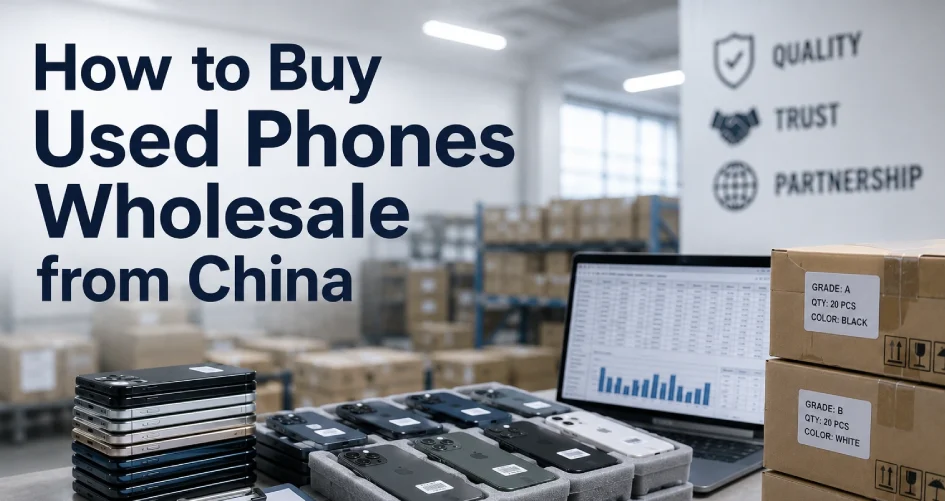
If you sell phones internationally, you already know that sourcing inventory is the single biggest factor separating profitable resellers from struggling ones. Buyers who want to buy used phones wholesale from China often face the same obstacles: unreliable suppliers, inconsistent grading, hidden IMEI or battery issues, and confusing shipping terms. This guide walks importers, distributors, and phone store owners through the entire process, from evaluating a China used phone supplier to placing your first bulk order, so you can source with confidence and protect your margins.
Why China Is the Leading Source for Wholesale Used Phones?
China remains the world’s largest hub for refurbished and secondhand phone trading, and for good reason. Millions of used devices are collected, tested, and graded every month across facilities in Shenzhen, Guangzhou, and Hong Kong, giving buyers unmatched access to volume, model variety, and pricing. For overseas buyers, the appeal of used phones in bulk from China comes down to a combination of scale, standardization, and cost efficiency. Suppliers stock everything from entry-level Android models to the latest flagship iPhones and Samsung devices, often in mixed grades and quantities to match any budget, and this scale means buyers rarely struggle to find the exact model mix their market demands.
On top of this, Chinese refurbishment hubs have developed standardized cosmetic and functional grading systems, such as A/A+, B, and C, which make it far easier to compare stock consistently across different suppliers rather than relying on vague, subjective descriptions. Finally, because of the sheer volume processed through these hubs, suppliers can offer lower per-unit costs than buying secondhand devices domestically, which is essential for resellers working on thin margins. That said, scale alone isn’t enough. The market also includes inconsistent sellers, so knowing how to evaluate a supplier properly is the real key to long-term success.
How to Choose a Reliable China Used Phone Supplier?
Finding a trustworthy China used phone supplier is the foundation of a sustainable import business. A low price means nothing if the phones arrive with dead batteries, blacklisted IMEIs, or mismatched grading. The following considerations will help you evaluate potential partners before committing to an order.
Verifying a Supplier’s Business Credentials and Track Record
Before entering into any wholesale partnership, thoroughly verify the supplier’s legal status and international trading experience. Request a copy of their business license, company registration certificate, export credentials, and any relevant certifications that demonstrate they are authorized to conduct international business. In addition, ask for references from existing overseas customers or examples of previous export shipments. A supplier with an established history of shipping to regions such as Africa, the Middle East, Latin America, Southeast Asia, or Europe is typically far more familiar with customs documentation, import regulations, commercial invoices, packing lists, and shipping procedures required by international buyers.
Their experience helps reduce the likelihood of documentation errors, customs delays, and communication issues, making the entire procurement process smoother and more reliable. Choosing a supplier with a proven export track record significantly lowers operational risk and provides greater confidence when placing larger wholesale orders.
A Reliable Supplier Operates Its Own Testing and Sorting Facility
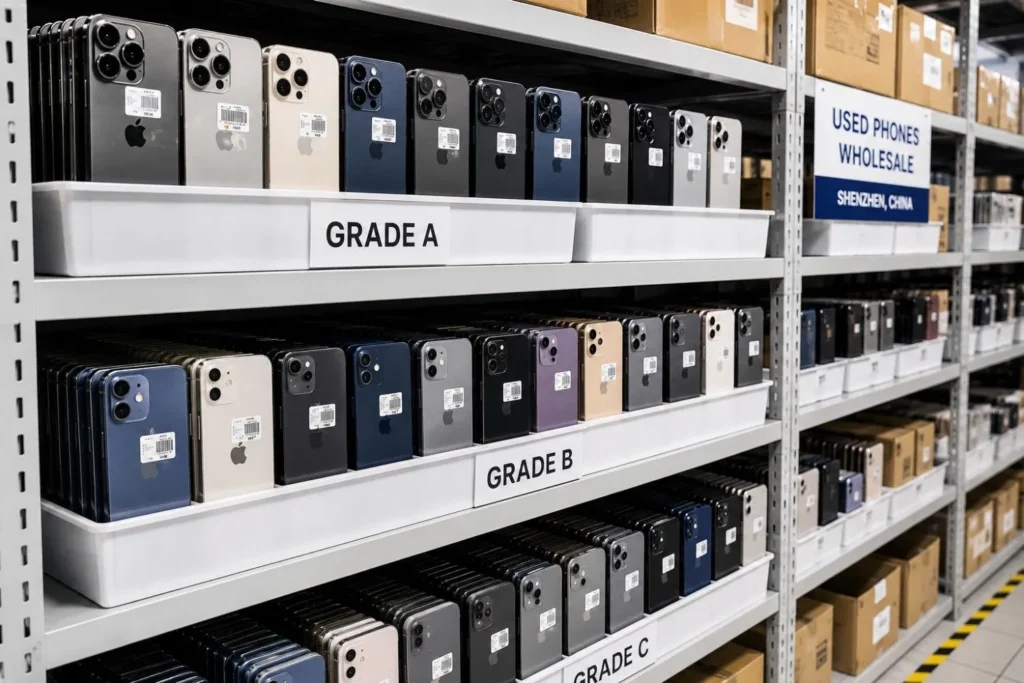
Reliable wholesale suppliers usually operate their own in-house testing, grading, and sorting facilities instead of relying on third-party contractors. Maintaining full control over quality inspection allows them to apply consistent grading standards and monitor every device before shipment. Before committing to a supplier, request recent photos or videos of their warehouse, testing laboratory, sorting area, and packaging department. Even better, arrange a live video call so you can observe their operations in real time.
During the inspection, pay attention to the testing equipment being used, the organization of inventory, labeling systems, grading workflow, cleanliness of the facility, and the professionalism of the staff. A well-organized operation demonstrates that the supplier follows structured quality control procedures and has the capacity to handle large wholesale orders while maintaining consistent product quality.
Clearly Documented Grading Standards Set Reliable Suppliers Apart
One of the most important factors when purchasing used smartphones in bulk is having clearly defined and documented grading standards. Ask the supplier to provide a written grading guide that explains exactly how devices are classified into each cosmetic grade. The documentation should include detailed information about screen condition, housing and frame wear, camera quality, button functionality, charging performance, speaker and microphone testing, Face ID or fingerprint functionality where applicable, network connectivity, battery health requirements, and any additional functional tests performed before shipment. A professional supplier should also explain how defects are categorized and what conditions qualify a device for each grade.
Transparency in grading minimizes misunderstandings, ensures consistency across repeat orders, and reduces the risk of receiving products that fail to meet your expectations. Suppliers who are unwilling or unable to provide detailed grading documentation often deliver inconsistent inventory, creating unnecessary disputes and additional quality control costs for buyers.
Requesting a Sample Order Before Buying in Bulk
Before investing a significant amount of capital into a large wholesale purchase, always begin the relationship with a paid sample order. A sample batch devices across the cosmetic grades and models you intend to purchase regularly allows you to independently verify the supplier’s quality claims. During your evaluation, inspect the cosmetic appearance, battery health, screen quality, hardware functionality, accessories (if included), packaging standards, and overall consistency of grading. Compare the received devices against the supplier’s written grading standards to determine whether they accurately represent the advertised quality.
This initial investment serves as a practical quality assurance step and helps identify potential issues before committing to a larger wholesale order. Successfully evaluating a sample order builds confidence in the supplier’s quality standards, reduces purchasing risk, and establishes a solid foundation for a reliable long-term business partnership.
What Do Grading Standards Mean for Used Phones?
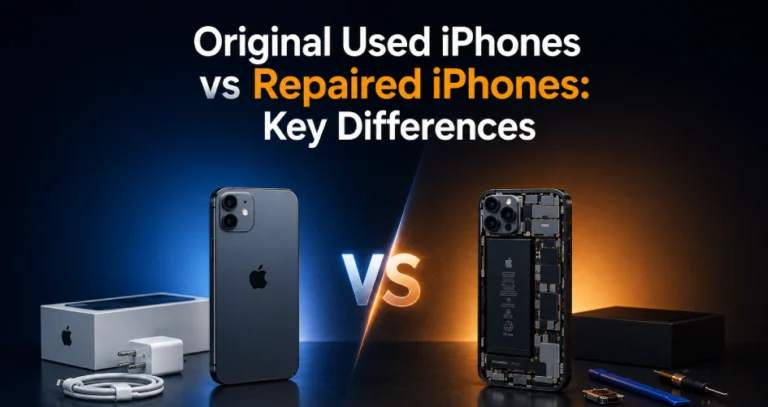
The Difference Between Used Phones and Refurbished Phones
Many first-time buyers use the terms “used” and “refurbished” interchangeably, but in the wholesale trade they refer to two distinctly different products with different sourcing processes, price points, and buyer expectations. A used phone is typically sold in the same condition it was collected in, having passed a basic functional check but without any repair, part replacement, or cosmetic restoration. A refurbished phone, by contrast, has gone through an active restoration process, which may include screen or battery replacement, housing polishing or shell replacement, software reset and firmware verification, and a more rigorous multi-point inspection before it is regraded and resold.
Understanding which category a batch falls into is essential, because it directly affects your pricing tier, the warranty or return terms a supplier is willing to offer, and how you should position the stock to your own customers downstream.
| Aspect | Used Phones | Refurbished Phones |
|---|---|---|
| Definition | Sold as collected with basic functional testing only. | Professionally cleaned, repaired, and restored before resale. |
| Cosmetic Condition | Original cosmetic wear varies by grade. | Cosmetic appearance improved through refurbishment. |
| Battery Condition | Original battery (typically Grade A: 85%+, Grade B: 80%+). | Battery may be replaced or restored to meet quality standards. |
| Functional Repairs | No repairs beyond functional testing. | Faulty components such as screens, cameras, or charging ports may be repaired or replaced. |
| Typical Price | Lower purchase cost. | Higher price due to refurbishment labor and replacement parts. |
| Best Suited For | Wholesalers, resellers, exporters, and budget-conscious markets. | Retail stores, premium marketplaces, and warranty-backed sales. |
| Warranty | Limited or no warranty; usually sold as-is. | Often includes a supplier warranty after refurbishment. |
When requesting a quotation, always confirm whether the batch you are being offered is genuinely used stock or refurbished stock, since suppliers sometimes use the terms loosely. Asking for this clarification in writing, along with the specific repairs performed on refurbished units, protects you from mismatched buyer expectations later in the sales cycle.
Grading is the language of the wholesale used phone trade, and misunderstanding it is one of the most common causes of buyer disputes. While terminology varies slightly between suppliers, most use a version of the grading system summarized below.
| Grade | Cosmetic Condition | Typical Use Case | Price Position |
|---|---|---|---|
| Grade A+ / Like New | No visible scratches, minimal signs of use | Premium resale, retail display | Highest |
| Grade A | Very light scratches, screen flawless | General retail resale | High |
| Grade B | Light-to-moderate scratches, fully functional | Mid-tier resale, online marketplaces | Medium |
| Grade C | Visible wear, scratches, minor dents | Budget resale, parts recovery | Lower |
| Grade D / For Parts | Heavy wear or partial function issues | Repair shops, component harvesting | Lowest |
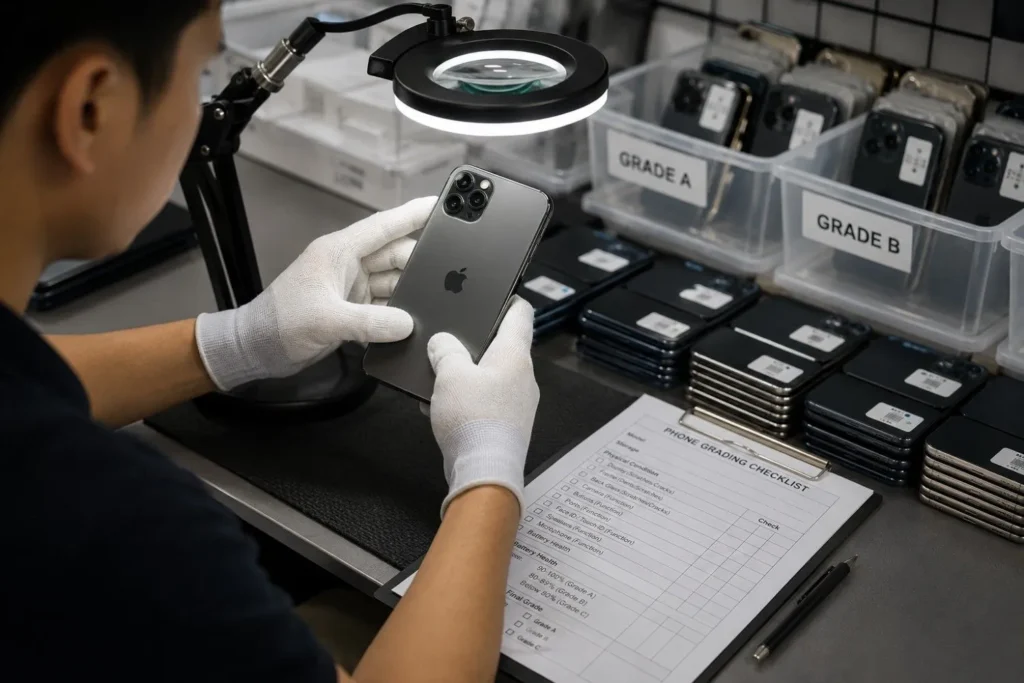
Before you buy, always request grading photos or a short video for at least a sample of each batch, and confirm whether “grade” refers to cosmetic condition only, or whether it also includes functional and battery performance, since this distinction affects both pricing and buyer expectations significantly.
How Is Quality Controlled for Battery Health, IMEI, and Functionality?
Quality control is where most disputes in the used phones wholesale trade originate. A trustworthy supplier will build these checks into their process, but as the buyer, you should also understand what to verify yourself before payment is finalized.
Battery Health Verification Before Shipment
Battery health is one of the most critical quality indicators when purchasing used smartphones in bulk, as it has a direct impact on customer satisfaction, device performance, and long-term reliability. Since batteries naturally degrade over time, wholesale buyers should always establish a minimum battery health requirement before placing an order. It is standard industry practice to request that the supplier provide the battery health percentage for every device in the shipment.
Most reputable suppliers maintain a minimum battery health of 85% or above for Grade A devices and 80% or above for Grade B devices, although some buyers may specify even higher thresholds based on their target market. Ask the supplier to identify and separate any devices that fall below your required battery health criteria rather than mixing them into standard inventory. Clearly defined battery health standards reduce warranty claims, improve customer confidence, and ensure the used phones inventory you receive is reliable and ready for resale.
Checking IMEI and Blacklist Status
Verifying the IMEI status of every device before shipment is an essential step in protecting your business from legal, financial, and operational risks. Each smartphone should be checked against international blacklist databases to confirm that it has not been reported as lost or stolen, financed under an unpaid contract, or restricted by a carrier lock. Request an IMEI verification report or spreadsheet covering every device included in your order so you have documented proof of its status before shipment.
This additional level of transparency helps ensure that all phones can be legally activated and resold in your destination market. Performing IMEI verification before export significantly reduces the risk of customer complaints, product returns, and inventory losses caused by unusable or restricted devices.
Functional Testing Coverage
A comprehensive functional inspection is essential when purchasing used phones wholesale. Reputable China used phone suppliers should perform complete diagnostic testing on every device, including the display, touchscreen, cameras, speakers, microphones, charging port, battery, Wi-Fi, Bluetooth, cellular connectivity, Face ID or fingerprint, buttons, SIM reader, and other key hardware functions.
Before you buy used phones wholesale from China, confirm whether the supplier performs 100% functional testing or only random sampling. Reliable suppliers fully test used phones to ensure consistent quality, reduce defects, and deliver used phones in bulk that are ready for resale.
What Are the MOQ, Pricing, and Quotation Terms?
Understanding how pricing and minimum order quantities work will help you negotiate confidently and avoid overcommitting on your first order. Every supplier has different pricing structures, order requirements, and quotation policies, making it important to understand what factors influence the final cost. Reviewing these terms in advance allows you to compare suppliers more effectively, manage your purchasing budget, and build a reliable long-term sourcing strategy.
Minimum Order Quantities Explained
Minimum Order Quantities (MOQs) vary considerably depending on the supplier, product availability, and the popularity of each smartphone model. Older Android devices and slower-moving inventory often have relatively low MOQs, with some suppliers accepting orders of as few as 20 to 50 units per model. In contrast, high-demand iPhone models such as the iPhone 13, iPhone 11, or newer Pro series may require larger commitments because of strong global demand and limited supply.
Many suppliers also offer mixed-model or mixed-grade orders, allowing buyers to source a wider selection of devices without meeting high minimum quantities for each individual model. This flexibility is particularly beneficial for new wholesalers, retailers, and distributors who want to test market demand, diversify their inventory, and gradually increase their purchasing volume as their business grows.
How Wholesale Pricing Is Determined
Wholesale pricing for used smartphones is determined by several important factors rather than a single fixed price. The final cost per device typically depends on the smartphone model, release year, storage capacity, cosmetic grade, battery health level, functional condition, order quantity, current market availability, and the agreed payment terms. Devices with higher storage capacities, premium cosmetic grades, stronger battery health, and newer release dates naturally command higher prices. Suppliers also commonly offer volume-based discounts, meaning that larger orders generally receive more competitive per-unit pricing. Understanding these pricing variables enables buyers to forecast purchasing costs more accurately, negotiate better deals, and develop long-term procurement strategies that improve overall business profitability.
Requesting an Accurate Quotation
Providing detailed and accurate purchasing requirements allows suppliers to prepare faster and more precise quotations. Instead of requesting a general price list, buyers should clearly specify the smartphone models they require, preferred storage capacities, desired cosmetic grades, minimum battery health threshold, estimated quantity for each model, preferred colors if applicable, destination country, preferred shipping method, and any regional certification or network compatibility requirements. Including this information enables suppliers to check real-time inventory availability and prepare an accurate commercial quotation based on current market conditions. A detailed request also reduces unnecessary back-and-forth communication, speeds up the procurement process, and helps both parties establish clear expectations before production, quality inspection, and shipment begin.
How Are Orders Packaged, Shipped, and Prepared for Export?
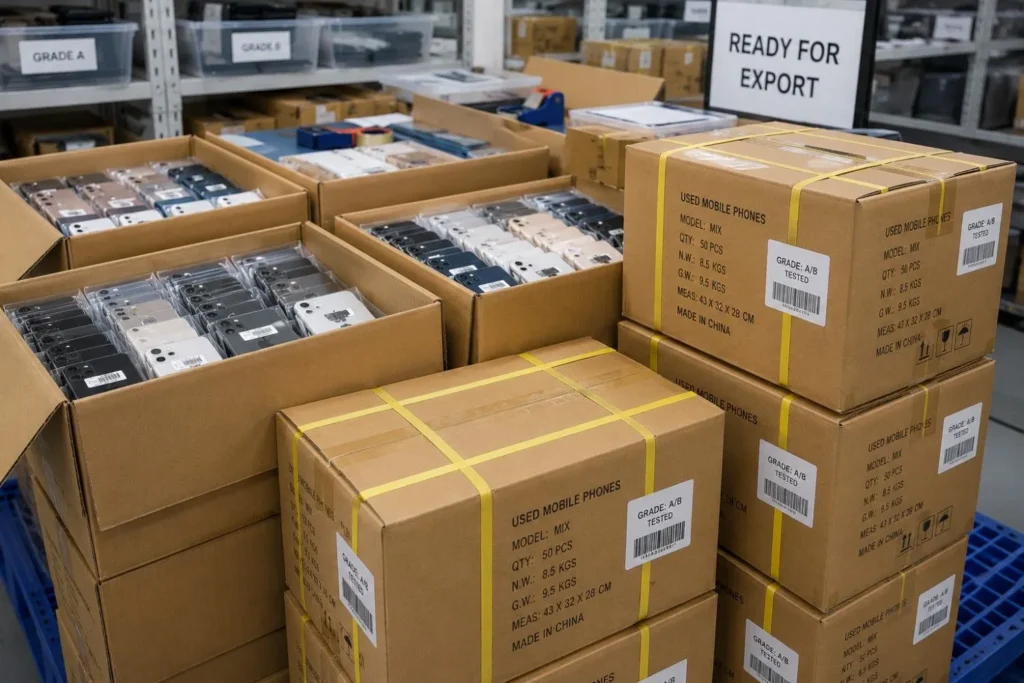
Once quality and pricing are confirmed, the final stage is making sure your shipment arrives intact and clears customs smoothly. Professional China wholesale used phones suppliers follow standardized packaging, labeling, and export procedures to protect devices during transit and ensure compliance with international shipping requirements. Understanding these processes helps buyers reduce shipping risks, avoid customs delays, and receive used phones in the expected condition.
Packaging Standards to Expect
It is worth asking whether phones are individually bubble-wrapped or boxed, and whether cartons include moisture-proof lining, since this matters significantly for long sea-freight transit times. Bulk cartons should also be clearly labeled with model, grade, quantity, and an IMEI manifest to allow for easy inspection on arrival.
Which Shipping Method Is Right for Your Order?
| Shipping Method | Typical Transit Time | Best For | Relative Cost |
|---|---|---|---|
| Air Freight | 3–7 days | Urgent, high-value, smaller shipments | Higher |
| Sea Freight (FCL/LCL) | 20–40 days | Large bulk orders, lower urgency | Lower |
| Express Courier (DHL/FedEx) | 3–5 days | Sample orders, small restocks | Highest |
Export Documents Needed for Customs Clearance
For smooth customs clearance, confirm that your supplier can provide a commercial invoice, packing list, and IMEI manifest, along with any certificates required for your destination market’s import regulations. Buyers importing into regions with strict device certification requirements, such as certain EU or Gulf countries, should confirm compliance details before finalizing an order.
What Common Mistakes Should You Avoid When Buying Bulk Used Phones?
Even experienced buyers fall into these traps. Avoiding them will save you significant time, money, and customer complaints.
Skipping the sample order stage can increase purchasing risk, as relying solely on photos or supplier descriptions may not accurately reflect the actual quality of the devices. Since grading standards can vary between suppliers, placing a small sample order is a practical way to verify product quality, confirm grading consistency, and make a more informed decision before placing a larger wholesale order.
Choosing price over supplier transparency is a mistake that tends to surface only after the damage is done. The lowest quoted price often reflects lower testing standards, mixed grading, or hidden battery issues, so comparing suppliers on transparency and quality control process, rather than price per unit alone, tends to produce far better long-term outcomes. Not verifying IMEI status before payment is another frequent misstep. Buyers who skip this step risk receiving blacklisted or network-locked devices that are difficult, or in some cases illegal, to resell, which often leads to disputes with their own downstream customers later on.
Ignoring battery health specifications is a subtle but costly oversight. Failing to set a minimum battery health threshold in your purchase order means you have no contractual grounds to dispute a batch that arrives with poor battery performance, leaving you to absorb the loss yourself.
Underestimating import compliance requirements rounds out the list of common errors. Some countries require specific certifications, network band compatibility, or import permits for used electronics, and confirming these requirements before shipping is the only reliable way to avoid costly customs delays or rejected shipments at the border.
What Should Be on Your Wholesale Used Phone Buyer Checklist?
Before confirming any bulk purchase order, it helps to run through a final verification pass. The checklist below summarizes the key points covered in this guide into one quick reference so nothing slips through the cracks before you commit your budget.
| Checklist | Why It Matters |
|---|---|
| Supplier business license and export history verified | Confirms legitimacy and cross-border shipping experience |
| Grading standards received in writing with sample photos or video | Prevents disputes over cosmetic condition on arrival |
| Battery health minimum threshold agreed upon | Protects against underperforming batteries in bulk batches |
| IMEI and blacklist check report requested for the batch | Avoids stolen, financed, or network-locked devices |
| Functional testing coverage confirmed (100% vs. sampled) | Ensures every unit is verified, not just a sample subset |
| Sample order placed and inspected before bulk commitment | Validates supplier claims before large capital outlay |
| MOQ and pricing confirmed in a written quotation | Locks in terms and avoids mid-order price changes |
| Packaging and labeling standards agreed upon | Reduces transit damage and speeds up inspection on arrival |
| Shipping method and estimated transit time confirmed | Aligns delivery timing with your sales and stocking plans |
| Export documentation requested (invoice, packing list, IMEI manifest) | Ensures smooth customs clearance on your end |
| Destination country import and certification requirements checked | Prevents customs delays or shipment rejection |
Want to See What’s Available Right Now? Get Latest Stock List
Finding the right models at competitive wholesale prices starts with access to accurate, up-to-date inventory. By reviewing the latest stock availability, you can plan your purchases more effectively and secure the devices that best match your market demand.
Current inventory changes weekly across models, grades, and quantities. Request our latest wholesale stock list to see real-time availability and pricing tailored to your target market, and take the next step toward a reliable, long-term sourcing partnership with INENG TECHNOLOGY CO., LIMITED.
Frequently Asked Questions
What is the typical MOQ to buy used phones wholesale from China?
The minimum order quantity (MOQ) to buy used phones wholesale from China depends on the supplier, smartphone model, and current inventory availability. Common Android models often have MOQs of 20–50 units, while premium iPhone models may require larger orders due to higher global demand. Many China used phone suppliers also offer mixed-model cartons, allowing buyers to purchase used phones with a lower initial investment.
How do I verify phone grading before placing a used phones order in bulk?
Before purchasing used phones in bulk, ask the supplier to provide detailed written grading standards along with sample photos or videos for each grade. A reputable China used phone supplier should clearly explain cosmetic grading, functional testing, and battery requirements. It is also recommended to place a small paid sample order to confirm the quality before committing to larger used phones wholesale purchases.
What battery health percentage should I require for Grade A used phones wholesale?
When sourcing used phones wholesale, most reputable suppliers recommend a minimum battery health of 85% or higher for Grade A and 80% or higher for Grade B devices. Many buyers specify an even higher requirement depending on their market. To avoid receiving lower-quality inventory, include your required battery health threshold in your purchase agreement before you buy used phones wholesale from China.
How can I check if used phones are IMEI-clean before shipment?
Before making payment, request an IMEI verification report covering every device in your order. A professional China used phone supplier should verify that all bulk used phones are free from blacklist records, unpaid financing, and carrier locks. IMEI verification helps ensure the devices can be legally activated and resold in your destination market.
Is air freight or sea freight better for shipping bulk used phones from China?
The best shipping method depends on your order size, budget, and delivery timeline. Air freight is ideal for smaller or urgent shipments of bulk used phones, with typical transit times of 3–7 days. Sea freight is a more economical option for large-volume used phones wholesale orders, although transit times usually range from 20–40 days depending on the destination country.
What documents do I need to import bulk used phones from China?
When you buy used phones wholesale from China, the required documents generally include a commercial invoice, packing list, IMEI manifest, and shipping documents such as the bill of lading or air waybill. Depending on your country’s regulations, additional certifications or import permits may also be required. An experienced China used phone supplier can help prepare the necessary export documentation to support smooth customs clearance.
How do I find a reliable China used phone supplier as a first-time buyer?
To find a trustworthy China used phone supplier, verify the company’s business license, export experience, and customer references. Request a live video tour of the warehouse and testing facility, review the supplier’s written grading standards, and place a small sample order before making a larger purchase. These steps significantly reduce risk and help ensure you receive high-quality bulk used phones that meet your business requirements.