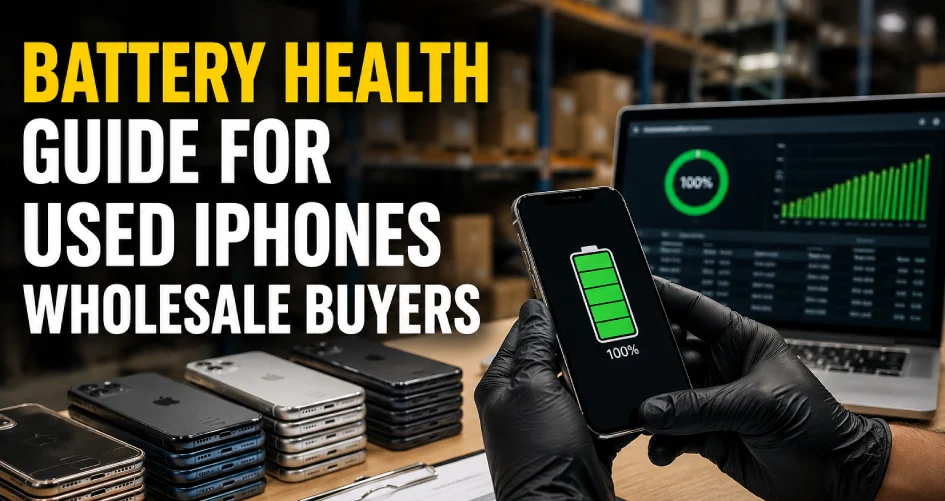
Sourcing used iPhones in bulk comes with one recurring buyer concern: battery performance. Overseas importers, distributors, and phone store owners often ask the same question before confirming an order — what battery health can I realistically expect, and how is it verified? This guide breaks down practical used iPhone battery health wholesale standards, explains how battery health used iPhones is measured and graded, and outlines the refurbished iPhone battery replacement policies that serious suppliers follow. You will also find the used iPhone QC questions to ask before paying a deposit, a buyer mistake checklist, and answers to the most common battery-related sourcing questions from B2B buyers like you.
Why Battery Health Matters in Every Wholesale iPhone Order
Battery health is one of the first things end customers check after unboxing a used iPhone, and it is one of the fastest ways a wholesale deal can go wrong. A device that looks flawless but reports 74% battery health will generate returns, negative reviews, and warranty disputes for the retailer who bought it. For distributors and repair shop owners, battery condition directly affects resale price, customer trust, and repeat business, so it cannot be treated as a minor cosmetic detail.
This is why battery health used iPhones data should be part of every quotation, not an afterthought discussed after payment. A transparent supplier will disclose battery percentage per grade, cycle count ranges, and replacement policy up front, allowing buyers to calculate landed cost, expected resale margin, and after-sales risk before the container even ships. Buyers who skip this step often discover battery issues only after the shipment clears customs, when renegotiation is no longer realistic.
Used iPhone Battery Health Standards
Grading terminology varies across suppliers, which is exactly why wholesale buyers need a clear, numeric battery health used iPhones standard rather than vague labels like “good” or “like new.” At INENG Technology, battery health thresholds are tied directly to grade so buyers can plan resale pricing with confidence and compare our quotations against other suppliers on an apples-to-apples basis.
| Grade | Battery Health Range | Cosmetic Condition | Typical Buyer Use Case |
| Grade A | 85% and above | Minimal to no visible wear, screen and housing near-original | Premium resale, flagship retail display units |
| Grade B | 80% and above | Light scratches or minor marks, fully functional | Mid-range retail, value-focused resale markets |
| Grade C | Below 80% (disclosed) | Visible wear, may include minor cosmetic defects | Budget resale, parts recovery, repair shop stock |
It is worth noting that battery health is measured independently from cosmetic grading. A phone can be cosmetically Grade A but still fail the 85% threshold, in which case it should be re-classified rather than sold under the higher grade. Buyers evaluating a new used iPhone battery health wholesale supplier should always ask whether battery percentage is checked unit-by-unit or estimated in batches, since batch estimates leave room for inconsistency across a large order.
How Battery Health Is Tested and Verified Before Shipment
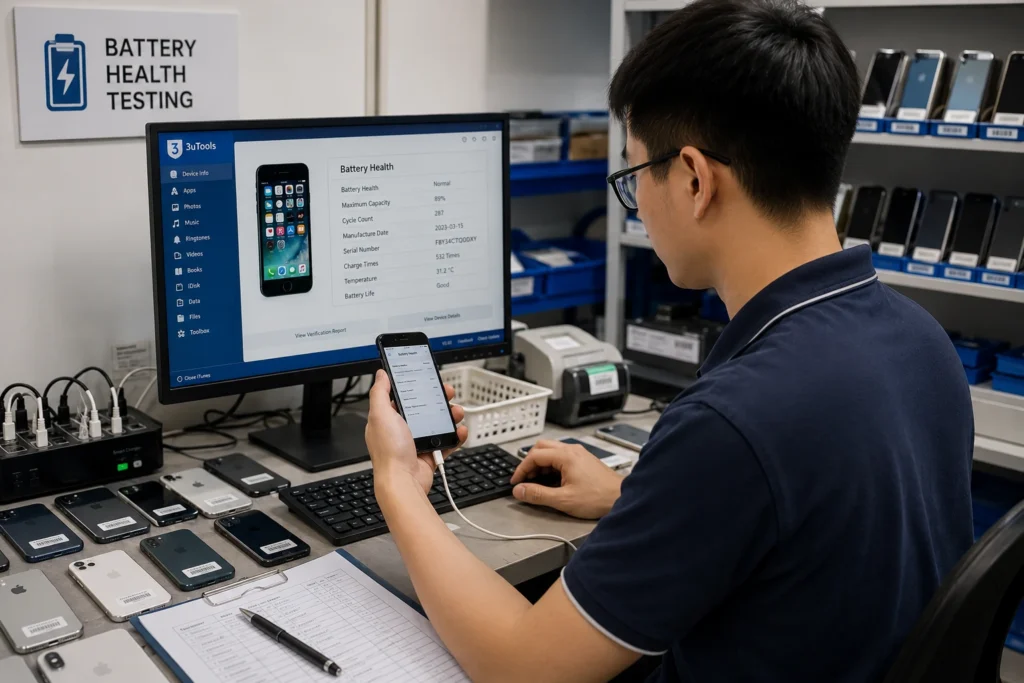
A trustworthy used iPhone QC process tests every unit individually rather than relying on visual inspection or sample checks. Battery verification should happen at multiple stages: after intake grading, after any repair or replacement work, and again immediately before packing, so the percentage reported on the packing list matches the device the buyer actually receives.
Diagnostic Software Testing
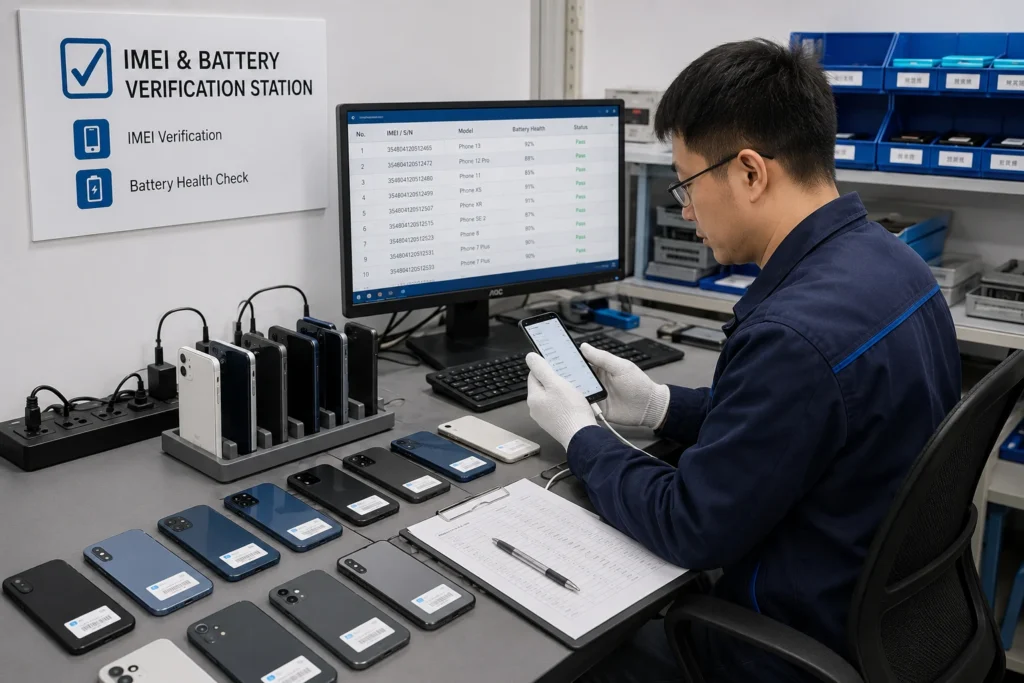
Each device is connected to diagnostic software that reads battery health percentage, maximum capacity, and charging cycle count directly from the phone’s internal battery management data. This is the same type of data visible in the iPhone’s own Battery Health settings menu, so buyers or their local QC agents can independently confirm the reading on arrival.
IMEI and Battery Cycle Verification
IMEI verification is run alongside battery testing to confirm the device is not blacklisted, reported lost or stolen, or still tied to an iCloud or carrier lock. Cross-checking IMEI records with battery cycle count also helps flag inconsistencies, such as a battery cycle count that does not match the phone’s claimed age or usage history.
Functional Testing Before Packing
Beyond the battery itself, functional testing covers charging speed, wireless charging response, and power management behavior under load, since a battery can read a healthy percentage but still charge slowly due to a faulty charging port or controller chip. Only units that pass both battery health and functional testing are approved for wholesale packing.
Refurbished iPhone Battery Replacement Policy
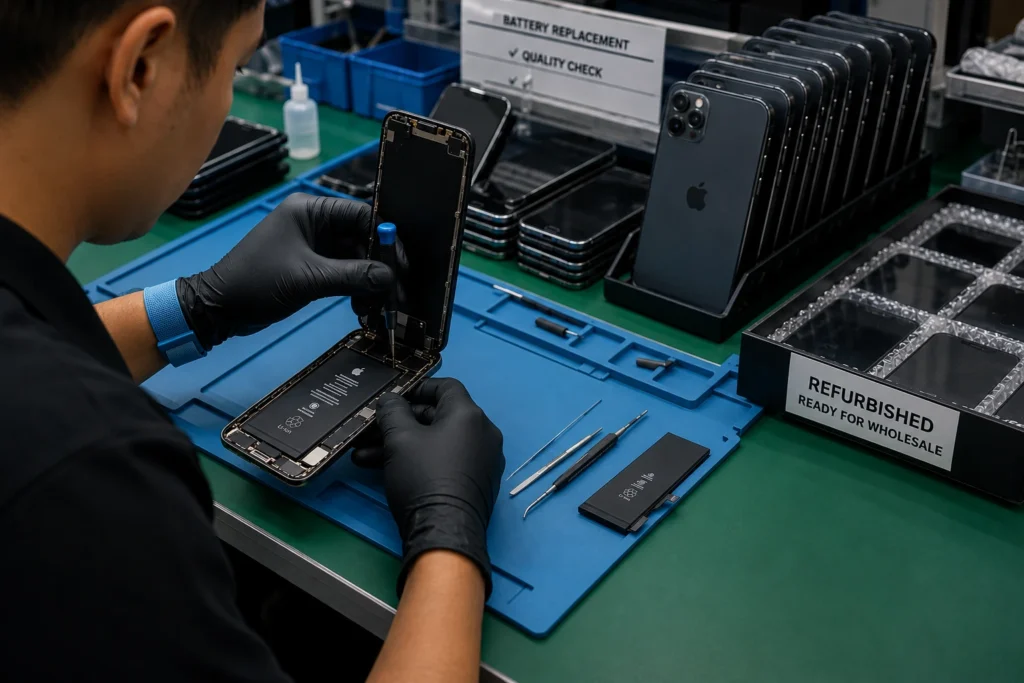
When cells fall below grade threshold: Any unit that tests below the 80% minimum required for Grade B is either replaced with a new battery cell or re-graded and disclosed to the buyer at a lower price point, never sold silently at a higher grade.
For refurbished iPhone battery replacement, we prioritize original-specification cells that match the device’s power management system to avoid the false battery health readings or rapid degradation associated with low-cost aftermarket batteries. This distinction matters for wholesale buyers because a mismatched battery may initially show a good percentage but drop sharply within weeks, creating warranty claims for the retailer.
Buyers sourcing refurbished stock specifically for repair shops or battery-sensitive markets, such as ride-share driver phones or point-of-sale devices, can request battery replacement across an entire order as an add-on service. This raises unit cost slightly but standardizes battery health across the whole shipment, which simplifies pricing and warranty terms for the buyer’s own customers.
Buyer Checklist Before Placing a Bulk Order
Before confirming a purchase order, wholesale buyers should request written answers to the questions below. A supplier’s willingness to answer clearly and put terms in the contract is often a better indicator of reliability than the price quoted alone.
| Buyer Checklist | Why It Matters |
| What is the minimum battery health % included in this grade? | Confirms the pricing basis and prevents disputes on arrival |
| Is battery health tested per unit or per batch sample? | Per-unit testing reduces variance across large orders |
| What happens if battery health is below the stated grade? | Establishes replacement, refund, or re-grading terms in advance |
| Are IMEI records checked against blacklist databases? | Protects against unsellable or locked devices |
| Can I receive a battery health report or testing video? | Gives independent proof before payment or shipment |
| What is the MOQ and lead time for this battery grade? | Aligns order size with realistic production and packing timelines |
Keeping a copy of these answers alongside the quotation makes it far easier to resolve any discrepancy after the shipment arrives, since both sides agreed to specific terms rather than general assurances.
Common Mistakes Wholesale Buyers Make With Battery Health
Assuming All Suppliers Grade Battery Health the Same Way
Grading labels like Grade A or Grade B are not standardized industry-wide, so a Grade B unit from one supplier may have a very different battery health range than a Grade B unit from another. Buyers who compare quotations purely by grade name, without checking the underlying battery percentage, often end up comparing two very different products and are surprised when quality does not match expectations.
Not Requesting a Battery Health Report or Testing Video
Verbal assurances about battery condition are not enforceable once a shipment has left the warehouse. Buyers should always request a written battery health report, ideally supported by a testing video or spreadsheet showing IMEI, battery percentage, and cycle count for each unit, before final payment is released.
Ignoring Battery Cycle Count
Two batteries can show the same health percentage while having very different remaining lifespans if their cycle counts differ significantly. A battery with a high percentage but a very high cycle count may degrade faster after resale than a slightly lower percentage battery with fewer cycles, so cycle count should be reviewed alongside percentage, not instead of it.
Ordering Without Any Third-Party or On-Site QC Verification
Some buyers skip independent verification to save time or cost, relying entirely on the supplier’s internal report. For first-time orders or larger bulk quantities, arranging a third-party inspection or requesting live video QC before shipment significantly reduces the risk of receiving units that do not match the agreed battery health used iPhones specification.
Overlooking Storage and Shipping Conditions
Batteries are sensitive to extreme temperature and prolonged storage at very high or very low charge levels. Devices held in poorly controlled warehouses or shipped without partial-charge storage practices can show measurable battery degradation between testing and delivery. Buyers should ask suppliers how devices are stored and shipped, not only how they are tested.
Packaging, MOQ, and Getting an Accurate Quotation
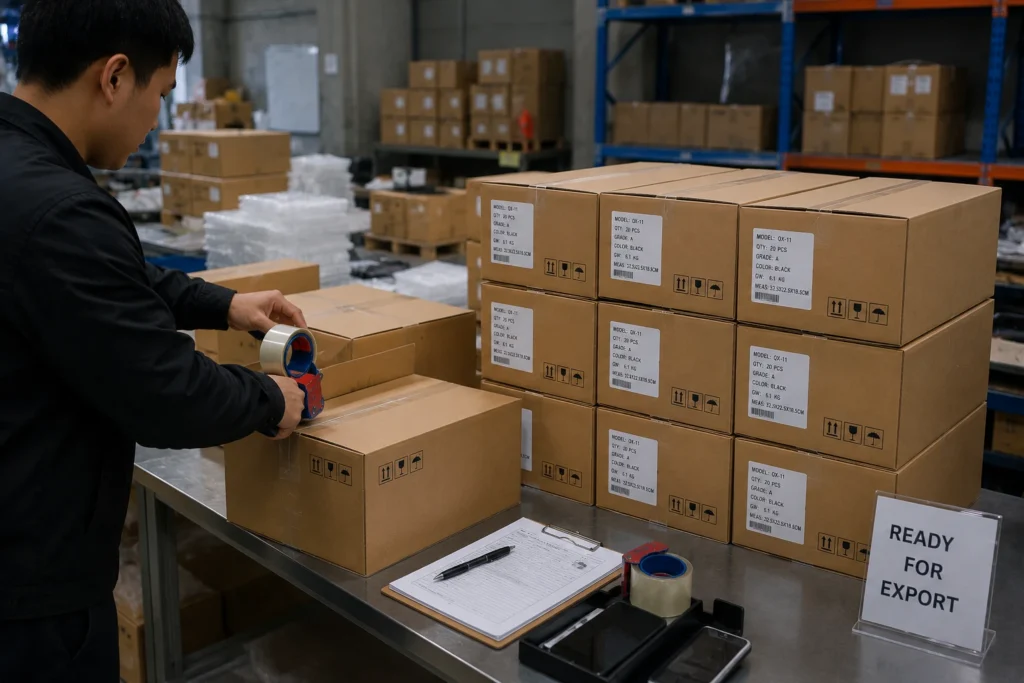
Once battery health and grading terms are confirmed, the remaining wholesale details — MOQ, packaging, and export documentation — determine the final landed cost. INENG Technology packs each unit individually with anti-static protection and labels cartons with grade and quantity for faster customs clearance and warehouse sorting on arrival. For buyers who want to review grading definitions in more depth, see our iPhone grading standards page, or check our current wholesale iPhone pricing list for grade-by-grade cost comparisons. To understand exactly how every unit is inspected before it reaches your warehouse, visit our full used iPhone QC process overview, including our IMEI verification service details.
Get Battery Options
Battery health should never be a guessing game in a wholesale iPhone order. Clear grading thresholds, unit-level testing, transparent replacement policy, and documented QC reports give buyers the confidence to price, market, and warranty their stock without unpleasant surprises after arrival. Whether you are placing your first trial order or scaling up container volumes, asking the right battery health used iPhones questions up front protects your margin and your customer relationships.
INENG Technology grades every device against a strict 85%+ Grade A and 80%+ Grade B battery health standard, backed by IMEI verification, unit-level diagnostic testing, and refurbished iPhone battery replacement where needed. If you are ready to review current stock and battery-verified options for your next bulk order, our team can walk you through grade availability, pricing, and lead times.
Contact INENG Technology Co., Limited to receive current battery-graded stock lists and a tailored wholesale quotation.
Frequently Asked Questions
What battery health percentage is acceptable for used iPhone battery health wholesale orders?
For used iPhone battery health wholesale purchases, most reputable suppliers set 85% battery health and above for Grade A devices and 80% and above for Grade B. Any device below 80% should be clearly disclosed as a lower-grade unit or offered with a refurbished iPhone battery replacement option before shipment.
Do you replace a refurbished iPhone battery before shipping wholesale orders?
Yes. During our used iPhone QC process, any device that tests below the minimum battery health requirement for its assigned grade is either fitted with a refurbished iPhone battery or re-graded and priced accordingly before being included in a wholesale order.
Can I request a battery health used iPhones report for my order?
Yes. We can provide a detailed battery health used iPhones report that includes battery health percentage, IMEI, and battery cycle count for each device. For larger wholesale orders, we can also provide testing video documentation upon request.
Is used iPhone battery health wholesale testing performed on every unit or just a sample?
Every device undergoes individual used iPhone battery health wholesale testing as part of our comprehensive used iPhone QC process. We do not rely on batch sampling, ensuring the packing list accurately reflects the battery condition and quality of every iPhone in the shipment.
How is battery health used iPhones different from cosmetic grading?
Battery health used iPhones measures the remaining battery capacity and expected battery performance, while cosmetic grading evaluates the physical condition of the screen, frame, and housing. A phone may look like new but still require a refurbished iPhone battery, which is why our used iPhone QC process evaluates both factors independently.
What happens if used iPhone battery health wholesale standards do not match the agreed grade on arrival?
If the used iPhone battery health wholesale condition does not match the agreed specifications, buyers should report the issue with supporting evidence, such as diagnostic screenshots or photos. Depending on the agreed terms, the issue can typically be resolved through replacement units, account credit, or a partial refund.
Does battery cycle count affect battery health used iPhones pricing?
Yes. Battery cycle count is an important factor when evaluating battery health used iPhones because it influences the remaining lifespan of the battery. During our used iPhone QC process, cycle count is considered alongside battery health percentage to ensure accurate grading and fair wholesale pricing.