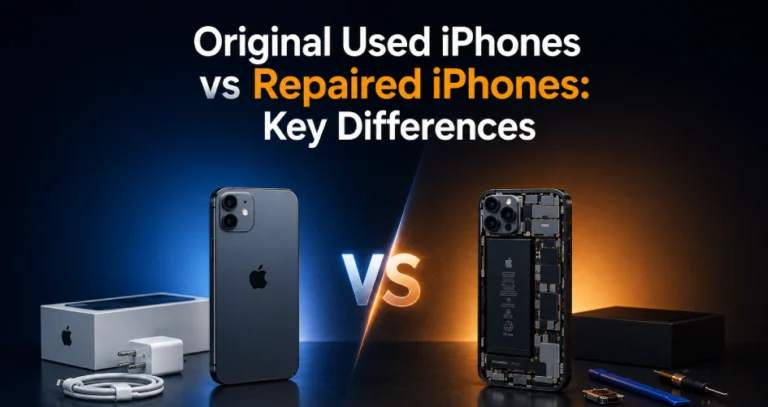
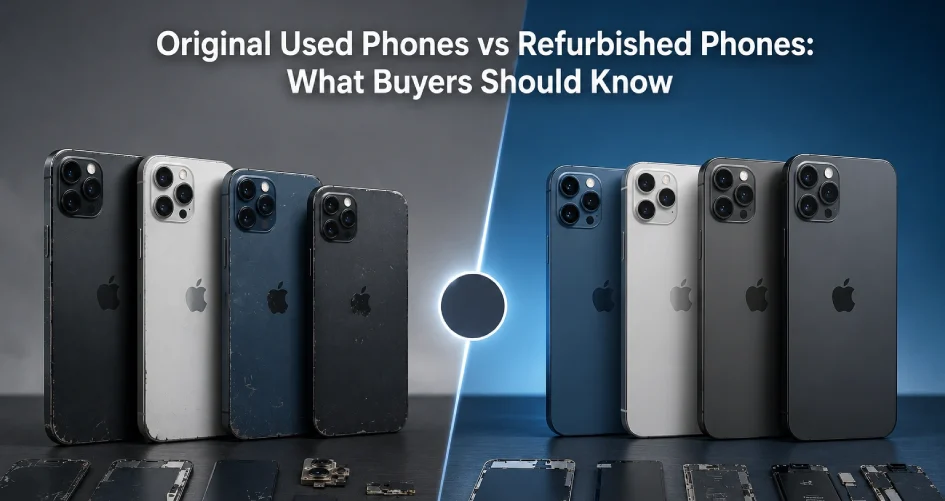
Original used phones vs refurbished phones is one of the most important comparisons every wholesale buyer should understand before placing a bulk order. Many buyers use the terms “used” and “refurbished” interchangeably, but the two categories can behave very differently once they reach your resale market. Confusing original used phones wholesale with refurbished phones wholesale can lead to mismatched customer expectations, inconsistent part quality, and disputes that eat into your margin. This guide breaks down exactly what separates original used phones from refurbished stock, how to verify which one you are actually buying, and how to choose the right category for your business model.
Original Used Phones
An original used phone is a previously owned device that has not had its core components replaced or swapped. The screen, battery, back cover, and internal parts are all the same ones the phone shipped with from the factory, even though the unit has visible or minimal signs of wear depending on its cosmetic grade. Original used phones wholesale stock is tested and graded like any other used inventory, but the key distinction is that nothing structural has been repaired or substituted.
Buyers often prefer original stock because it preserves the manufacturer’s original build quality, display calibration, and battery chemistry, which can translate into more predictable long-term performance for the end customer. The trade-off is that an original used phone with a lower battery health or a cracked component stays that way; it has not been improved through repair, only cosmetically and functionally graded as-is.
Refurbished Phones
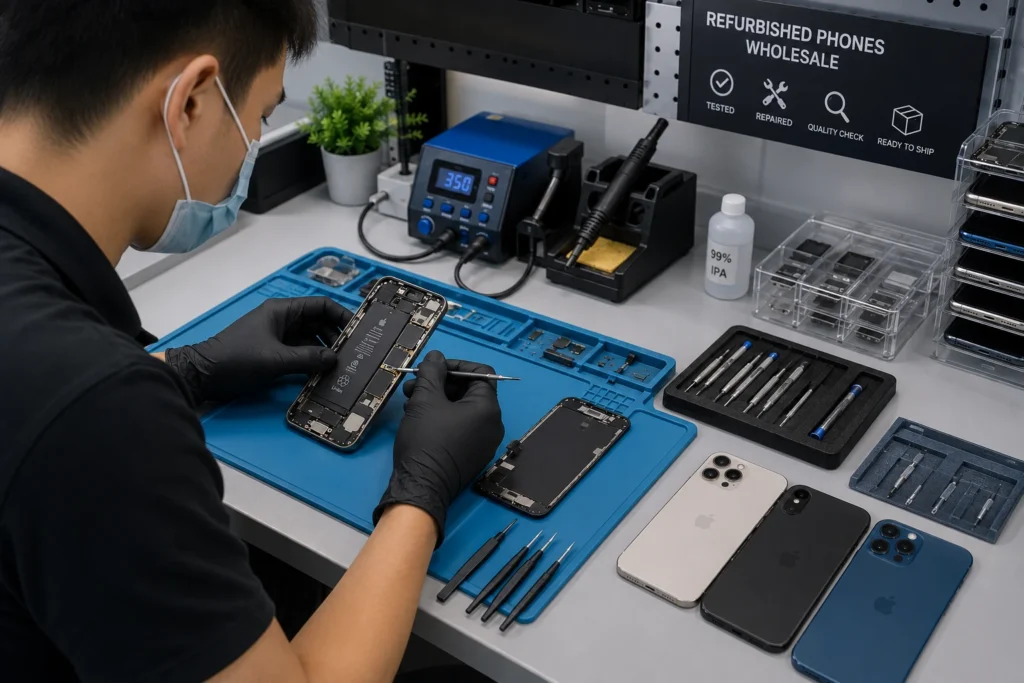
A refurbished phone is a used device that has gone through a repair and restoration process before resale. This typically includes replacing a worn battery, repairing or swapping a damaged screen, cleaning internal components, and reflashing or resetting the software. Refurbished phones wholesale stock is intentionally restored to a higher functional and cosmetic standard than the device would otherwise be in, which is precisely why refurbishment exists as a category.
The quality of refurbished stock depends heavily on the parts used during repair. A refurbishing supplier using original manufacturer parts or high-grade OEM-equivalent components will produce a very different result than one using low-cost aftermarket parts. This is why buyers sourcing refurbished phones wholesale should always ask which parts were used in any repaired unit, since this single detail has the biggest impact on long-term reliability.
Common Refurbishment Work
Typical refurbishment work includes battery replacement to restore healthy capacity, screen replacement to remove cracks or dead pixels, back cover replacement for heavily worn housings, and a full software reset with the latest compatible operating system. Reputable suppliers document which repairs were performed on each unit, so buyers can pass accurate information to their own customers rather than guessing at what was changed.
| Factor | Original Used Phones | Refurbished Phones |
| Components | All original factory parts, unmodified | One or more parts may be repaired or replaced |
| Battery | Original battery, health varies by grade | Often replaced with a new or tested battery |
| Screen | Original screen, condition matches grade | May be replaced; quality depends on part source |
| Cosmetic Consistency | Reflects genuine age and usage | Can look better than actual age suggests |
| Price Positioning | Usually priced by cosmetic/functional grade alone | Often priced higher due to added repair value |
| Best For | Buyers who want factory-original components | Buyers who want improved condition at scale |

Which One Should You Buy?
The right choice depends on what your end customers value most and how your resale channel is structured. Buyers who market their stock as genuinely original, factory-condition devices should source original used phones wholesale and disclose the exact cosmetic and functional grade honestly. Buyers who want to offer a more polished, ready-to-sell product — particularly for retail counters or premium online listings — often prefer refurbished phones wholesale because the repair work raises the baseline condition across a batch.
Repair shop owners frequently work with both categories: original used stock for parts recovery or budget resale, and refurbished stock for higher-margin retail sales where a restored battery and screen justify a stronger price point. The decision table below can help you match your business model to the right category before you request a quotation.
| Buyer Type | Better Fit | Why |
| E-commerce sellers (transparent grading) | Original used phones | Authenticity and original parts match buyer expectations |
| Retail stores / premium resale | Refurbished phones | Restored battery and screen support higher price points |
| Repair shops | Both, split by use case | Original for parts/budget resale, refurbished for retail |
| Budget / bundle distributors | Original used phones (lower grades) | Lowest landed cost without added repair markup |
| Markets requiring long battery life | Refurbished phones | New or tested batteries reduce early battery complaints |
How to Verify Whether Stock Is Truly Original
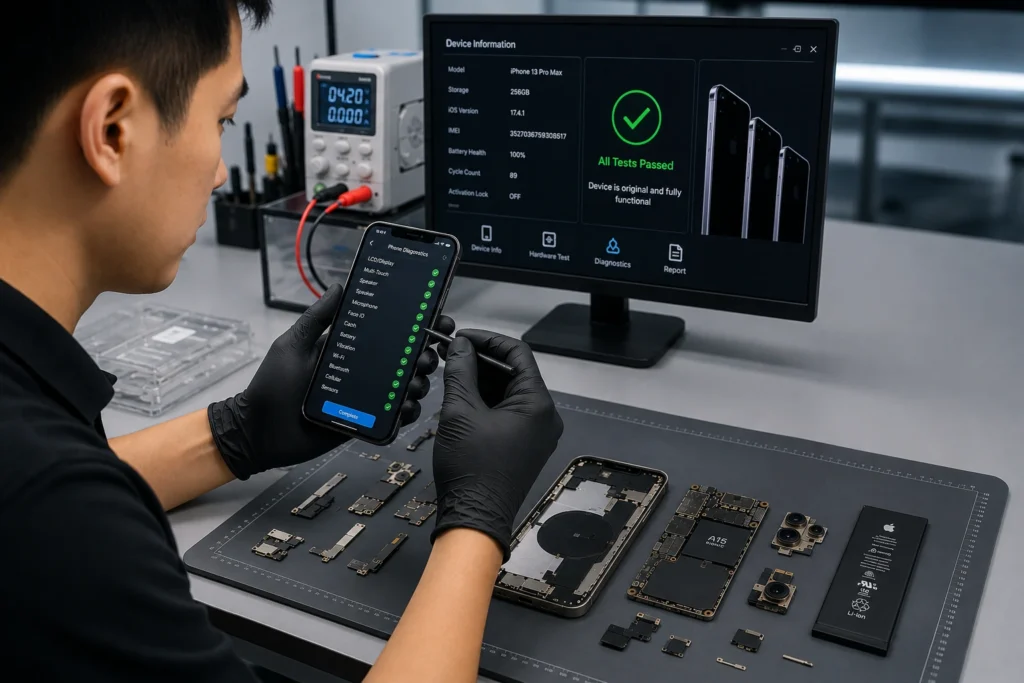
Because refurbished units can be cosmetically indistinguishable from original stock at a glance, buyers need a verification process rather than a visual judgment alone. Reliable suppliers can confirm part authenticity through serial number matching, battery cycle and health diagnostics, and screen calibration checks that reveal whether a component is original or has been swapped. Asking for this documentation before ordering protects you from paying original-stock pricing for units that have actually been repaired.
Serial Number and Part Matching
Every major internal component, including the screen and battery, carries data that can be checked against the device’s original specifications using diagnostic tools. A mismatch between the recorded part data and the phone’s original configuration is a reliable signal that a component has been replaced, even if the repair work looks clean cosmetically.
Battery Health and Cycle Count
Battery diagnostics reveal not just current health percentage but also charge cycle count, which can indicate whether a battery is original to the device or a newer replacement. This is one of the fastest ways to confirm whether you are looking at original used phones wholesale stock or a refurbished unit with a swapped battery.
| Check Point | What It Reveals | Buyer Action |
| IMEI / serial lookup | Confirms device identity and blacklist status | Request IMEI report for every batch |
| Screen calibration data | Indicates original vs replaced display | Ask supplier for diagnostic screenshots |
| Battery health & cycle count | Shows if battery is original or replaced | Request battery diagnostic report |
| Housing / back cover fit | Poor alignment can indicate a swapped cover | Ask for close-up photos of seams and edges |
| Repair documentation | Confirms which parts, if any, were replaced | Request a written disclosure per batch or unit |
MOQ, Pricing, and Shipping
Pricing structures differ between the two categories, so buyers should request separate quotations rather than assuming one price list covers both. Original used phones wholesale is typically priced by cosmetic and functional grade alone, while refurbished phones wholesale carries an additional cost layer reflecting the parts and labor used in restoration. Minimum order quantities can also differ, since refurbished stock may be processed in smaller batches due to the extra repair workflow involved.
Packaging and export preparation should follow the same rigorous standard for both categories — anti-static protection, secure cartons, and complete documentation including packing lists, commercial invoices, and IMEI manifests. Buyers importing regularly should confirm whether refurbished units come with any documentation of the specific repair work performed, since this record can be valuable for your own after-sales support and warranty conversations with customers.
| Factor | Original Used Phones | Refurbished Phones |
| Pricing Basis | By cosmetic/functional grade | Grade plus repair and parts cost |
| MOQ | Often flexible, varies by model | May run in smaller processed batches |
| Documentation | Grading report, IMEI manifest | Grading report, IMEI manifest, repair disclosure |
| Packaging | Anti-static bags, secure cartons | Anti-static bags, secure cartons |
| Lead Time | Based on available stock | May include added processing time for repairs |
Common Mistakes Buyers Make When Choosing Between Original and Refurbished Stock
The line between original used phones and refurbished phones is easy to blur, and a few recurring mistakes can cost buyers both money and customer trust. Reviewing these before your next order helps you source the right category with confidence.
Assuming all “used” listings are original
Some suppliers use “used” as a catch-all term that includes refurbished units. Always ask directly whether any components have been replaced, and request written confirmation for original used phones wholesale orders specifically.
Not asking which parts were used in refurbishment
Not all refurbished stock is equal — original manufacturer parts and low-cost aftermarket parts can look identical but perform very differently over time. Always ask your supplier to specify the part source for any repaired components.
Paying original-stock pricing for refurbished units
Because refurbished phones can look better cosmetically, buyers sometimes overpay by assuming the batch is original stock. Verification through serial matching and battery diagnostics protects you from this pricing mismatch.
Overlooking battery cycle count during inspection
A battery health percentage alone does not tell the whole story — cycle count reveals whether the battery is original or a fresh replacement. Skipping this check can lead to inaccurate assumptions about a unit’s true history.
Failing to disclose the category to end customers
Reselling refurbished stock as original, or vice versa, damages trust and increases return rates. Clear, honest disclosure of whether a device is original used or refurbished should carry through your own product listings.
Request Stock List |Source the Right Category with Confidence
Original used phones and refurbished phones both have a legitimate place in a well-run wholesale strategy, but only when buyers understand exactly what they are ordering. Original used phones wholesale preserves factory-original components at a price reflecting genuine condition, while refurbished phones wholesale offers a restored, higher baseline condition at an added cost. The key to avoiding disputes and protecting your margin is verification — serial checks, battery diagnostics, and clear supplier documentation — rather than relying on appearance alone.
INENG TECHNOLOGY CO., LIMITED clearly distinguishes original used phones wholesale from refurbished phones wholesale in every quotation, with documented grading and part verification available on request. Ready to see what’s currently available in both categories?
Tell us whether you need original used phones, refurbished phones, or both, and our team will send current availability and pricing.
Frequently Asked Questions
What is the main difference between original used phones vs refurbished phones?
The main difference between original used phones vs refurbished phones is that original used phones retain all factory-installed components, while refurbished phones have had one or more parts, such as the battery, screen, or housing, repaired or replaced before resale.
Are refurbished phones wholesale lower quality than original used phones wholesale?
Not necessarily. The quality of refurbished phones wholesale depends on the replacement parts used and the refurbishment process. Professionally refurbished devices using high-quality or original parts can sometimes outperform original used phones wholesale units with poor battery health or heavy wear.
How can I tell if a battery has been replaced on used phones wholesale?
When buying used phones wholesale, battery diagnostics can provide useful clues. An unusually low battery cycle count compared with the phone’s age or cosmetic grade is often a strong indication that the battery has been replaced rather than remaining original.
Is refurbished phones wholesale stock more expensive than original used phones wholesale?
In most cases, yes. Refurbished phones wholesale generally costs more because the refurbishment process includes replacement parts, labor, and additional quality checks. Original used phones wholesale is usually priced according to cosmetic grade and functional condition without the added refurbishment cost.
Can I request only original used phones wholesale with no refurbished units mixed in?
Yes. If you only want original used phones wholesale, clearly state this requirement in your inquiry and ask your supplier to confirm that no components have been replaced. Requesting documentation or inspection reports can provide additional assurance.
Do refurbished phones wholesale come with any repair documentation?
Reliable suppliers of refurbished phones wholesale should be able to provide records showing which components were repaired or replaced for each unit or batch. This documentation can help with quality verification and after-sales support.
Which option is better for price-sensitive resale markets: original used phones vs refurbished phones?
When comparing original used phones vs refurbished phones, original used phones wholesale often provides the lowest landed cost for distributors and resellers targeting highly price-sensitive markets. However, refurbished phones wholesale may offer better value in markets where buyers prioritize appearance and battery performance over the lowest purchase price.