
If you import or resell used devices, you already know that not all “refurbished” stock is equal. A phone labeled Grade A from one supplier may look nothing like Grade A from another, and that inconsistency can quietly erode your margins and damage customer trust. This guide breaks down how refurbished phone grades are defined, how grading affects pricing and resale positioning, and what to check before you commit to a bulk order — so you can buy with confidence and sell with certainty.
What Are Refurbished Phone Grades and Why They Matter
Refurbished phone grades are a standardized way of describing a device’s cosmetic condition, functional performance, and overall market value. Grading typically ranges from premium “Like New” units down to heavily used “Grade C” or “Grade B-minus” stock sold for parts or budget resale. For wholesale buyers, understanding these grades isn’t just about cosmetics — it directly determines your landed cost, your retail markup potential, and how quickly inventory moves in your target market.
Because grading terminology varies between suppliers, two phones both labeled “Grade A” can differ significantly in screen condition, battery health, or functional reliability. This is why working with a transparent refurbished phone supplier who documents grading criteria clearly is one of the most important decisions in your sourcing process. A clear grading system protects both parties and reduces disputes after shipment.
Standard Refurbished Phone Grading Criteria
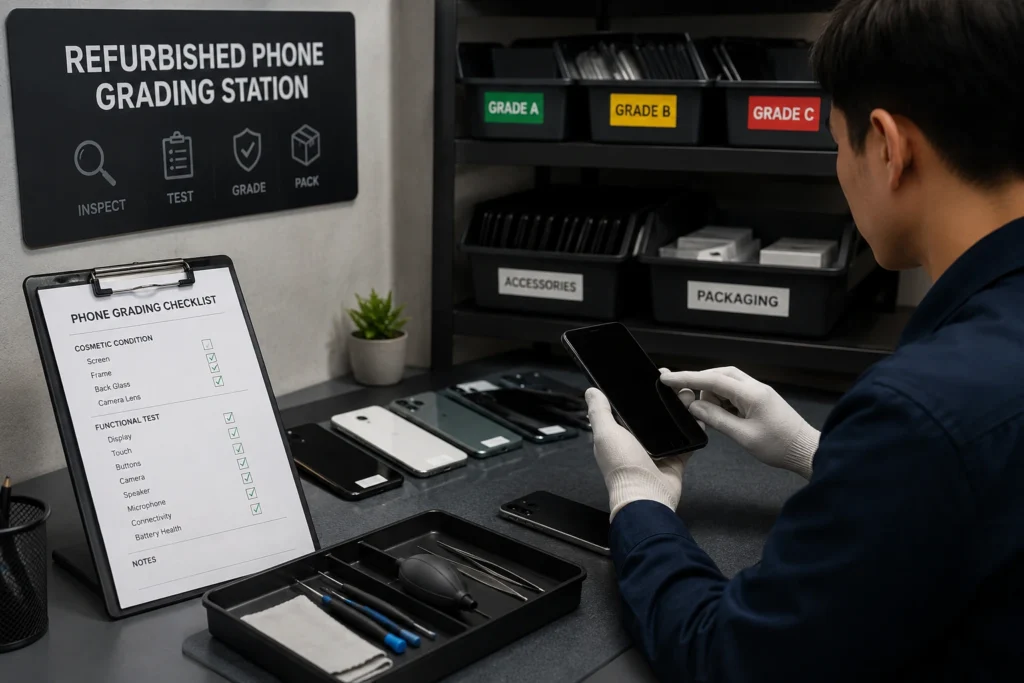
Most established suppliers in the refurbished phones wholesale trade use a tiered grading system based on screen condition, housing wear, and functional testing results. While exact labels vary, the industry generally converges around four to five recognizable tiers. Knowing these tiers helps you translate a supplier’s grading sheet into real expectations for your buyers.
Grade A / A+ (Like New / Excellent)
These units show minimal to no visible wear, with screens free of scratches visible from a normal viewing distance. Battery health is typically above 85%, and all functions — camera, buttons, charging port, biometrics — perform like a new device. Grade A stock commands the highest resale price and is best positioned for premium resellers or export markets with high quality expectations.
Grade B (Good / Fair)
Grade B phones may have light scratches on the frame or back panel, and the screen might show minor marks not easily visible when the display is on. Functionally, these units are fully working with battery health generally above 80%. This tier is the sweet spot for most refurbished phones wholesale buyers, balancing affordability with solid resale appeal.
Grade C (Used / Working)
Grade C units show noticeable cosmetic wear — visible scratches, minor dents, or scuffed edges — but remain fully functional. Battery health may sit closer to 75–80%, sometimes requiring disclosure or battery replacement before resale. These phones suit budget markets, bundle deals, or buyers targeting price-sensitive regions.
Grade D / Scrap (Parts / As-Is)
This lowest tier includes phones with cracked screens, non-working components, or heavy damage. They are typically sold for parts recovery or repair-shop resale rather than end-user use. Reputable suppliers separate this tier clearly so it never gets mixed into standard wholesale pallets by mistake.
How Grading Affects Price and Resale Positioning
Grading isn’t just a quality label — it’s a pricing mechanism. Each grade step down typically reduces unit cost by 10–25%, depending on the model and market. Buyers who understand this relationship can strategically mix grades within a single order to serve multiple market segments simultaneously, from premium retail to budget resale channels.
| Grade | Cosmetic Condition | Typical Battery Health | Best Resale Channel | Relative Price Position |
| A+ / Like New | No visible wear | 90%+ | Premium retail, export | Highest |
| A | Minimal wear | 85%+ | Retail stores, e-commerce | High |
| B | Light scratches | 80%+ | General resale, online marketplaces | Mid |
| C | Visible wear | 75–80% | Budget resale, bundles | Low |
| D / Scrap | Damaged / non-functional | Varies | Parts, repair shops | Lowest |
Positioning your inventory correctly against these grades helps set accurate customer expectations, reduces return requests, and protects your brand reputation in competitive resale markets.
Quality Control Checks Beyond the Grade Label
A grade label alone doesn’t guarantee a device is safe to resell. Serious wholesale buyers should request supporting documentation and verification steps as part of their sourcing process, especially when ordering in bulk container quantities.
Battery Health Verification
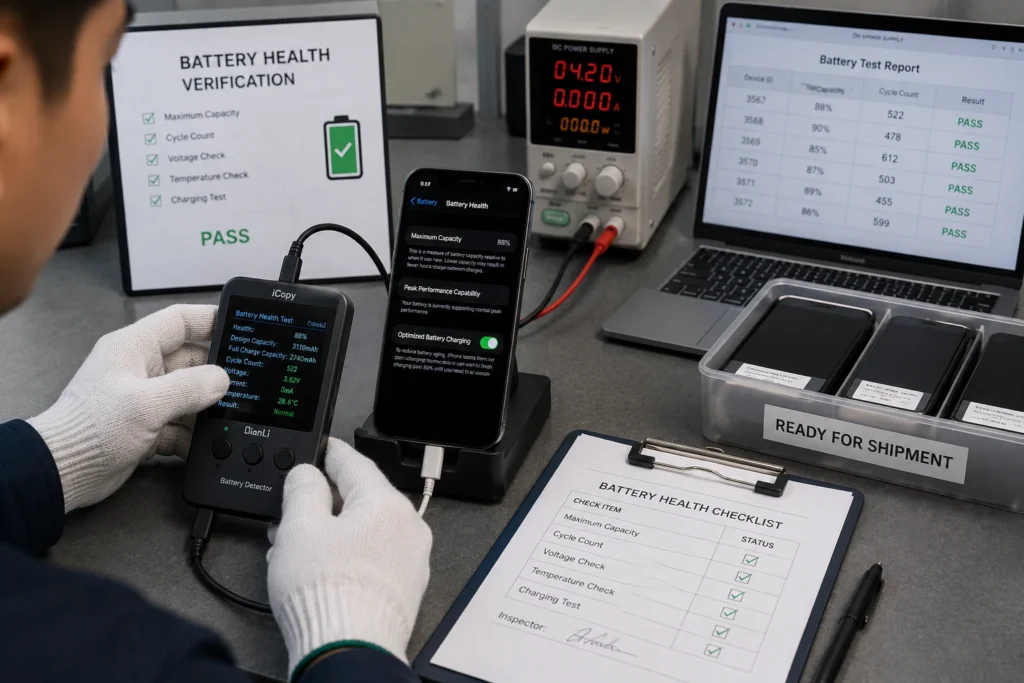
Battery health should be measured and reported as a percentage, ideally through diagnostic software output rather than a verbal claim. Ask your refurbished phone supplier to include battery health reports per unit or per batch sample, particularly for orders above Grade B, since battery performance is one of the most common post-sale complaints from end customers.
IMEI and Network Status Checks
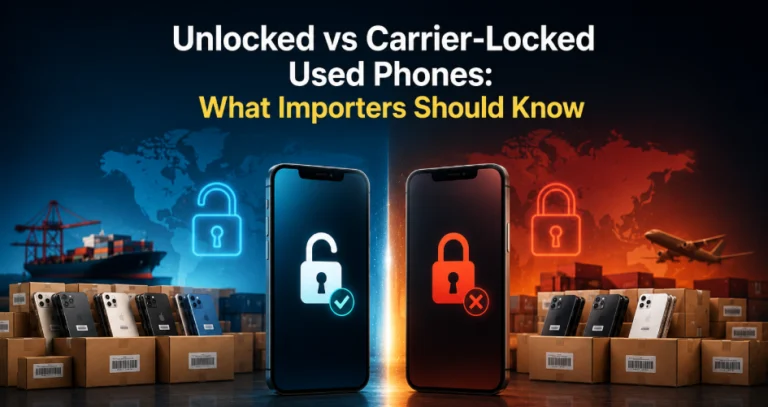
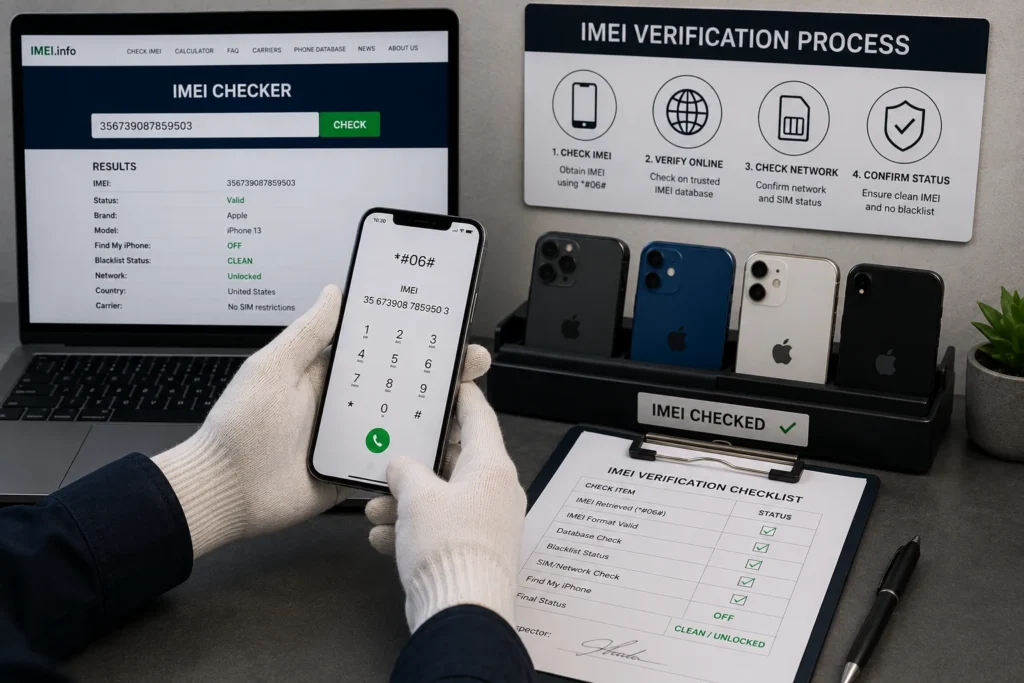
Every unit should pass an IMEI check confirming it is not blacklisted, reported lost or stolen, or carrier-locked in a way that limits resale. Bulk buyers should request IMEI check reports or access to a verification tool before shipment, since this single step prevents costly compliance and customer trust issues after import.
Functional Testing Protocols
Functional testing should cover the display, touch response, cameras, speakers, microphone, charging port, Wi-Fi, Bluetooth, and biometric sensors. Ask suppliers whether testing is done manually, through automated diagnostic software, or both — automated testing tends to produce more consistent, repeatable results across large batches.
Checklist For Refurbished Phone Buyers
Before committing to a bulk purchase order, run through this checklist to confirm your supplier’s grading and quality process meets wholesale standards.
- Grading standard is clearly documented in writing (not just verbal description)
- Battery health percentage is reported per unit or per verified sample batch
- IMEI status check is available before shipment
- Functional testing covers all major hardware components
- Sample photos or video inspection are offered before large orders
- Packaging protects screens and prevents shipping damage
- MOQ (minimum order quantity) and mixed-grade order options are flexible
- Export documentation and compliance support are provided
Common Mistakes Wholesale Buyers Make When Sourcing Graded Stock
Even experienced importers can fall into costly traps when sourcing refurbished inventory. Recognizing these mistakes early can save significant time and money on future orders.
Trusting grade labels without verification
Many buyers accept a supplier’s grade classification at face value without requesting sample inspection or third-party verification. Since grading standards aren’t universally regulated, this often leads to receiving stock that doesn’t match expectations, forcing costly re-grading or discounted resale.
Ignoring battery health data
Buyers frequently focus on cosmetic grade while overlooking battery condition, which is often the biggest driver of customer complaints and return requests. A cosmetically excellent phone with poor battery health will still generate dissatisfaction and damage repeat business.
Overlooking IMEI and compliance checks
Skipping IMEI verification can result in receiving blacklisted or locked devices that are effectively unsellable in your target market. This mistake can also create legal and customs complications during import, especially in regions with strict device registration requirements.
Choosing suppliers based on price alone
The lowest quoted price per unit often reflects lower testing standards, inconsistent grading, or hidden defects that surface after resale. Experienced buyers weigh total cost of ownership — including return rates and customer satisfaction — rather than unit price in isolation.
Underestimating packaging and shipping requirements
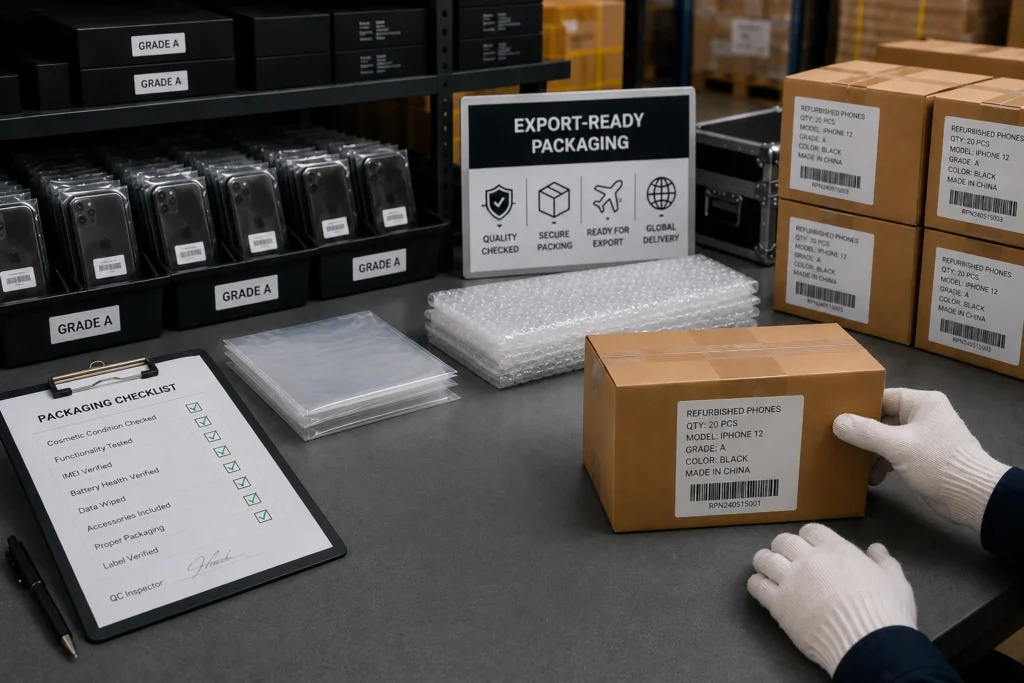
Inadequate packaging for screens and battery-containing devices leads to in-transit damage, particularly for long-distance ocean or air freight. Buyers should confirm anti-static packaging, cushioned trays, and export-compliant labeling before finalizing shipment.
Matching Grades to Your Target Market
Successful wholesale buyers don’t order a single grade — they build a portfolio strategy matched to their sales channels. Premium retail partners typically demand Grade A and A+ stock with strong warranties, while online marketplaces and budget retailers perform well with Grade B and C inventory at competitive price points.
| Buyer Profile | Recommended Grade Mix | Purchasing Priority |
| Retail store / brand-conscious market | 70% A/A+, 30% B | Cosmetic consistency, battery health |
| E-commerce reseller | 50% B, 50% A | Price competitiveness, fast turnover |
| Budget distributor / bundle seller | 60% C, 40% B | Low unit cost, functional reliability |
| Repair shop / parts recovery | Grade D / Scrap | Component availability |
Working with a supplier that offers flexible MOQ and mixed-grade container options makes it easier to execute this kind of segmented procurement strategy without managing multiple vendor relationships.
Get Refurbished Stock
Understanding refurbished phone grades gives wholesale buyers a real pricing and positioning advantage — but grading labels are only as reliable as the supplier standing behind them. Partnering with a transparent, quality-focused refurbished phone supplier who documents grading, battery health, and IMEI status protects your investment and strengthens your resale reputation.
Ready to source graded refurbished inventory you can trust? — Request our current grading sheet, sample photos, and wholesale pricing today.
Frequently Asked Questions
Is there a global standard for refurbished phone grades?
No single global standard exists for refurbished phone grades, so grading definitions can vary between suppliers. Always request a written refurbished phone grading guide before placing an order.
What grade is best for e-commerce resale?
Grade B is often the most cost-effective option for refurbished phones wholesale, offering reliable performance with cosmetic wear that helps resellers maintain competitive pricing and healthy margins.
How can I verify battery health before shipment?
Ask your refurbished phone supplier to provide battery health reports or diagnostic test results for each device or a representative sample before shipment.
Can I order a mixed-grade container?
Yes. Many refurbished phone suppliers offer mixed-grade orders, allowing buyers to purchase different refurbished phone grades in one wholesale shipment.
What’s the difference between Grade C and scrap-grade phones?
Grade C phones are fully functional but show noticeable cosmetic wear, while scrap-grade phones may have damaged or non-working components intended only for parts recovery.
How do I avoid receiving blacklisted phones?
Request IMEI verification reports before shipment and confirm that the devices are not reported lost, stolen, or carrier-locked. A reliable refurbished phone supplier should provide this information.
Does refurbished phone grading affect import compliance?
Refurbished phone grading itself does not determine import compliance, but IMEI verification, functional testing, and accurate documentation may be required to meet your country’s import regulations.