Importing used smartphones can widen your margins and secure steady stock, yet a first order carries real risk. Wholesalers who buy used phones from China often struggle with unclear grading, unverified suppliers, hidden costs, and customs rules that surface only after goods are already in transit. Each of these problems can turn a promising deal into unsold inventory.
This guide shows you how to import used phones from China in a clear, step-by-step way. You will learn how to prepare your business, communicate with a China used phone exporter, compare grades and quotations, and plan used phones international shipping, so you can buy with confidence and protect your budget at every stage of the order.
What Should You Prepare Before You Import Used Phones from China?
Strong preparation is the cheapest form of risk control. Before contacting any supplier, decide what you want to sell, where you will sell it, and which import rules apply in your country. Buyers who skip this step often receive quotations that cannot be compared, because each supplier is answering a slightly different question.
Confirm Import Rules and Your Business Setup
Start by checking whether your country allows used electronics imports and under what conditions. Some markets require import licenses or pre-shipment inspection certificates, and others restrict devices by age or type. Confirm the duty rate and customs classification with a licensed broker before ordering. Smartphones are typically classified under HS code 8517.13, but your broker should verify the correct code for your market.
Define Your Model, Grade, and Volume Requirements
Next, write a short buying specification. List the brands and models you want, storage sizes, acceptable grades, network lock status, minimum battery health, and target monthly volume. A precise specification lets a supplier quote accurately and lets you compare offers fairly. It also protects you later, because any dispute can be checked against your written requirements rather than memory.
| Preparation Item | What to Confirm |
|---|---|
| Import permission | Whether used phones are allowed, and any license or inspection certificate required |
| Customs and duty | HS code, duty and VAT rates, and the clearance process with your broker |
| Product specification | Models, storage, grade, lock status, and minimum battery health |
| Volume and budget | Trial order size, monthly demand, and total landed-cost budget |
| Sales channel | Retail, repair, e-commerce, or wholesale resale, which guides grade choice |
| Payment method | Currency, bank transfer arrangements, and deposit and balance timing |
How Do You Buy Used Phones from China from a Reliable Supplier?
Finding a supplier is easy, but finding a dependable one takes structured checking. Marketplaces, trade shows, and referrals all produce leads, yet none of them prove reliability. When you buy used phones from China, judge each company by evidence, such as real stock photos and testing records. Our guide to sourcing refurbished phones from China offers additional market context.
Evaluate a China Used Phone Exporter
Ask for a company profile, business license, and export experience with your region. Request recent photos or a short video of the actual warehouse, not catalog images. A professional China used phone exporter will describe its testing process, explain how phones are sorted, and offer sample units before a large order. Vague answers or slow replies at this stage are an early warning sign.
| Criteria | What to Ask | Strong Sign | Warning Sign |
| Business identity | Business license, export history, company address | Verifiable documents and consistent details | Refuses documents or only uses chat apps |
| Stock proof | Live video or dated photos of current inventory | Real stock with visible grade labels | Catalog photos copied from other sites |
| Grading terms | Written definitions for cosmetic and function criteria | Clear definitions with photo examples | “All Grade A” with no definition |
| Testing process | Test items, IMEI checks, battery reports | Test report for each batch | No testing records offered |
| After-sales policy | Defect allowance, return, or replacement terms | Written terms before payment | Verbal promises only |
Communicate Your Requirements Clearly
Send one structured request instead of many short messages. Include the model list, quantity per model, grade, lock status, battery minimum, accessories, and destination country. Ask suppliers to reply in the same format, with unit price, available stock, and lead time. Written, comparable replies reduce misunderstanding and create a record you can rely on if a shipment differs from what was agreed.
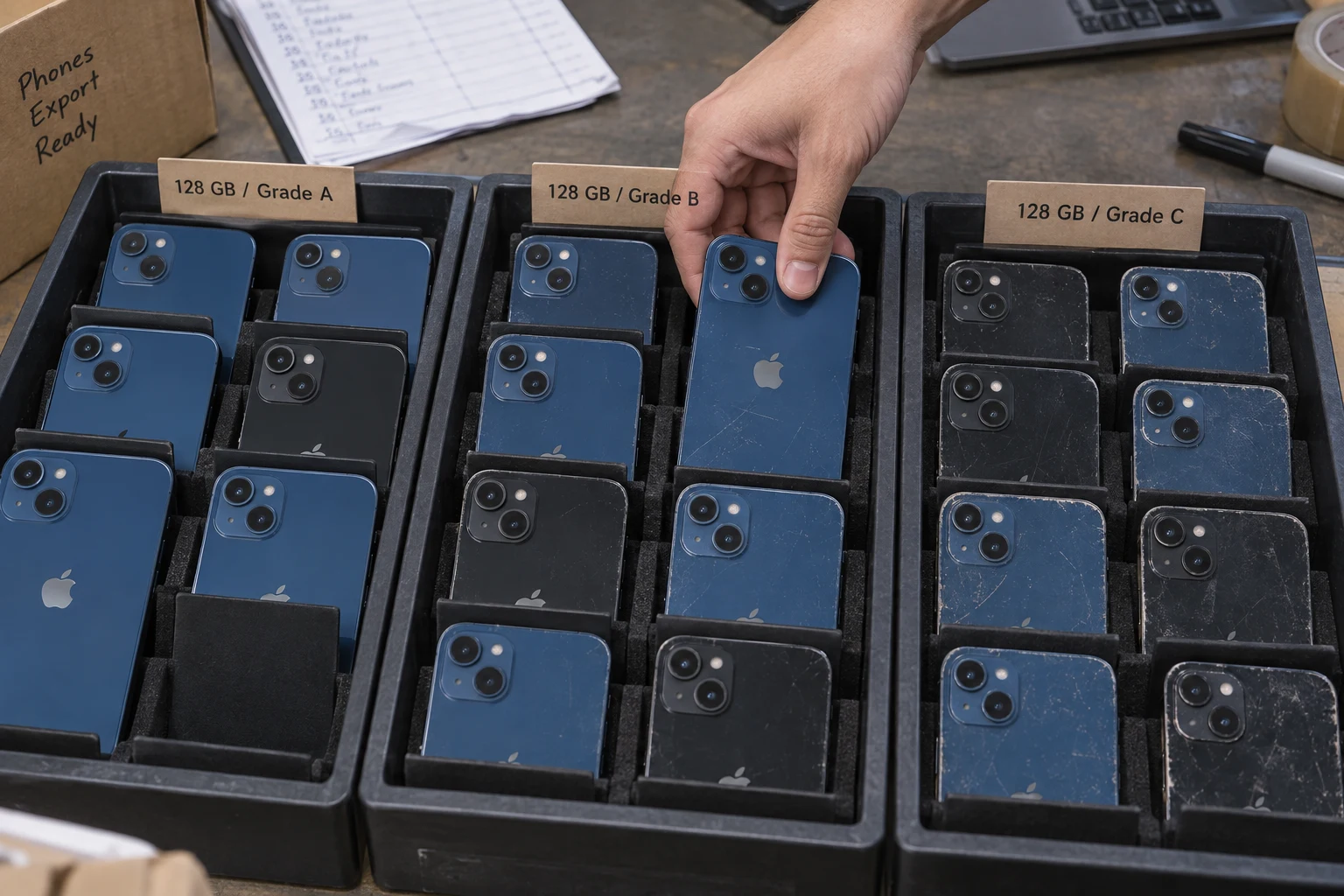
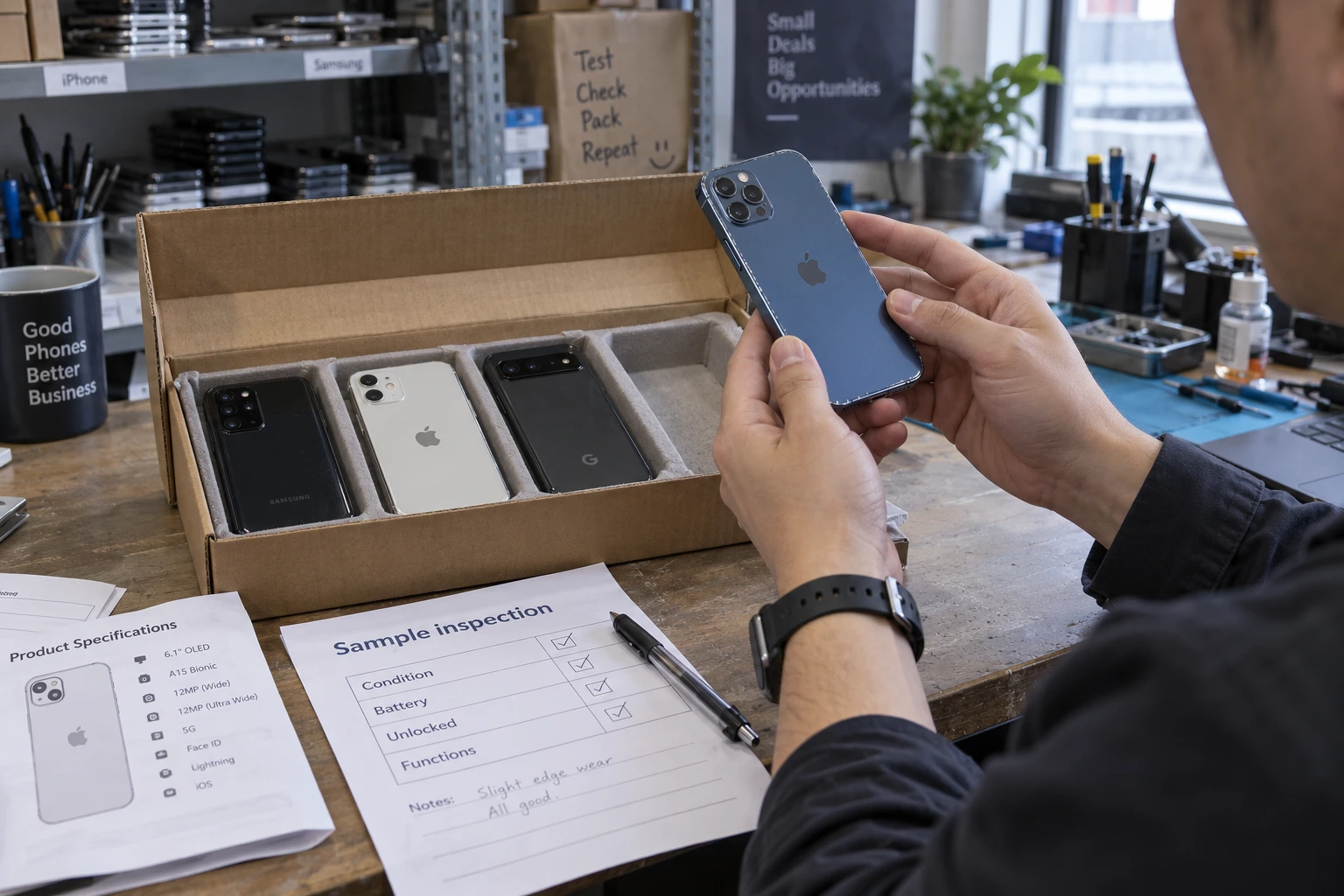
Whenever possible, hold a video call to review stock and testing in real time. Then order a small sample batch of each key model and compare it with the supplier’s written description. This inexpensive step often reveals more than weeks of messaging. For a deeper inspection routine, use our bulk buying checklist for used phones.
How Do Grading, Testing, and Battery Checks Protect Your Purchase?
Grading and testing decide how much profit each phone actually earns. A phone called Grade A by one supplier may be Grade B elsewhere, so never rely on labels alone. Ask for written definitions, test records, and photos that show each condition level. Then match the grade to your sales channel, whether retail, repair, or export resale.
Understand Grading Standards Before Comparing Prices
Grading systems are not universal, which is why definitions matter more than letters. Most suppliers judge cosmetic wear on the screen and body, together with full functional performance. Our used phone grading guide explains how Grade A and Grade B differ in practice. Use the table below as a starting framework, then adjust it to match each supplier’s written standard.
| Grade | Cosmetic Condition | Function and Battery | Best Buyer Use |
| Grade A | Minimal to light signs of use, no deep scratches | Fully functional, battery above an agreed minimum | Premium retail and e-commerce |
| Grade B | Visible light scratches or scuffs, no cracks | Fully functional, battery threshold agreed in writing | Mainstream retail and reseller stock |
| Grade C | Heavier wear, dents, or marks | Fully functional, lower battery level allowed | Budget markets and price-sensitive channels |
| Repair / Parts | Cracks or visible damage | One or more faults present | Repair shops for parts and refurbishment |
Verify IMEI, Functions, and Battery Health
Every phone should pass a documented test before shipping. This includes an IMEI check against blacklist databases, account lock status, touchscreen, cameras, speakers, sensors, charging, and network connection. For iPhones, request the maximum battery capacity figure. Our guides to IMEI verification and used iPhone battery health explain each check and the results buyers should accept.
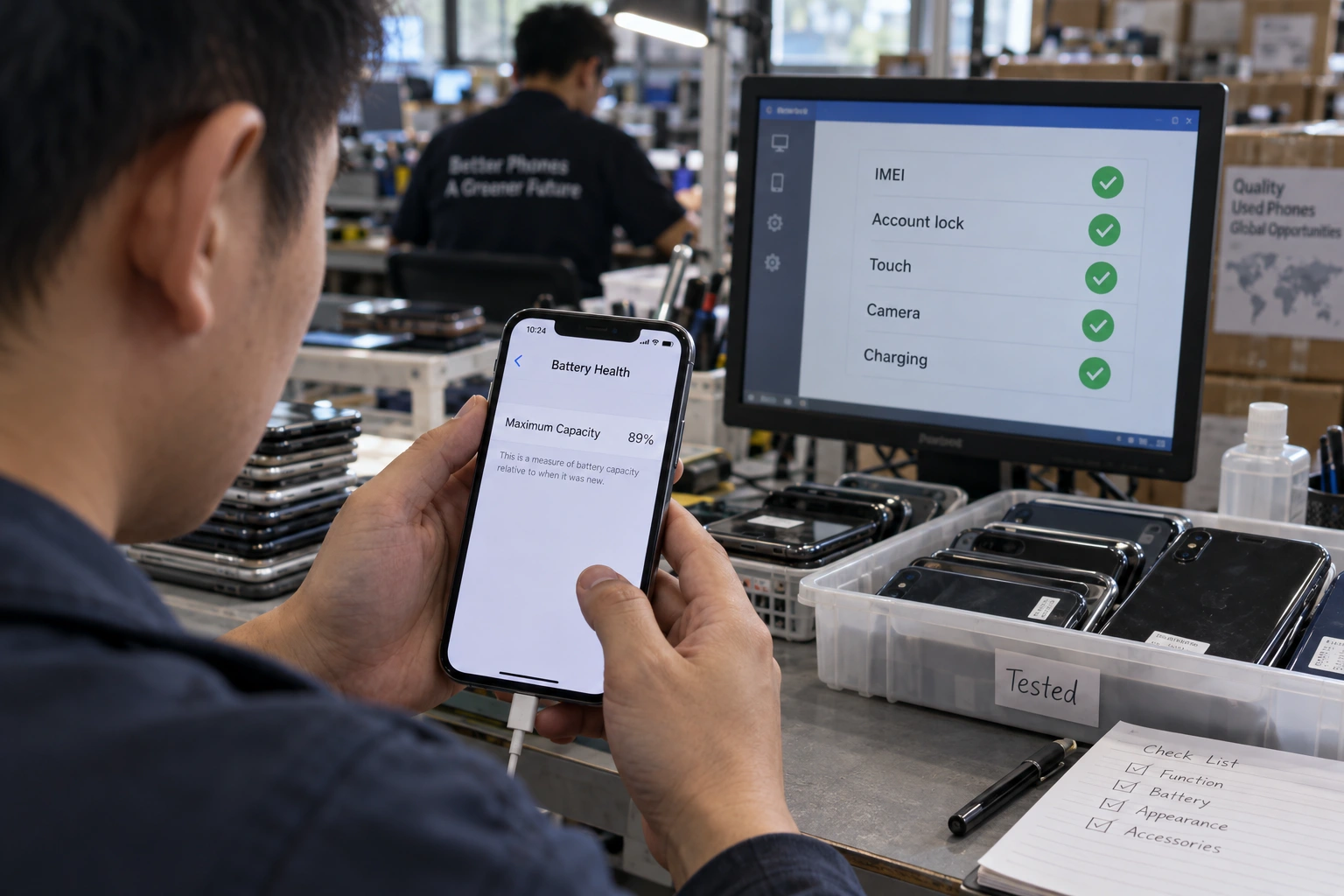
Ask the supplier to share a test report that matches IMEI or serial numbers to each batch. A random inspection on arrival then confirms the report. Agree in advance on an acceptable defect rate and the replacement process, so any deviation is handled by contract rather than negotiation. Our pre-shipment testing guide shows what a solid report includes.
How Do MOQ, Pricing, and Quotations Work for Wholesale Used Phones?
Used phone stock behaves differently from new inventory. Each lot is limited, so available quantities and prices can change within days. Suppliers usually set a minimum order quantity by model or by total order, and price varies with model, grade, storage, and market demand. Understanding these variables helps you negotiate realistically and avoid quotes that look cheap but exclude key costs.
Compare Quotations on a Like-for-Like Basis
A useful quotation states more than a unit price. Check whether the price is FOB, CIF, or DDP, because these terms decide who pays for freight, insurance, and duties. Ask for a proforma invoice before payment, and compare landed cost rather than only the factory price. The table below lists the items every complete quotation should confirm.
| Quotation Item | What to Verify | Risk If Missing |
| Model and storage | Exact model, capacity, and any color requirement | Wrong stock delivered |
| Grade and lock status | Written grade definition and unlocked status | Disputes over condition |
| Battery and test terms | Minimum battery health and test report | Lower resale value |
| Quantity and stock | Available units per model and lead time | Delays and partial shipments |
| Price terms | Currency, unit price, Incoterm, and validity period | Hidden freight or duty costs |
| Payment and warranty | Deposit, balance timing, and defect policy | Weak recourse after delivery |
Start with a Trial Order to Reduce Risk
A phone store owner plans a first import covering several models. Instead of ordering in bulk, they request a trial lot from two suppliers using one written specification. On arrival they test each unit, compare battery readings and cosmetic grades, and estimate repair costs. The results show which supplier matches its claims, and the main order goes there.
Payment terms deserve equal attention. Bank transfer is common in wholesale, often with a deposit before preparation and the balance before shipment. Confirm that the beneficiary name matches the company on the invoice, and avoid paying large orders into personal accounts. To reduce risk further, follow the steps in our guide on importing used phones safely.
How Does Used Phones International Shipping Work?
Shipping is where many first imports succeed or fail. Used phones are compact and valuable, and they contain lithium batteries, so packing, documents, and carrier choice all matter. Understanding the basics of used phones international shipping helps you compare freight quotes, prepare for customs clearance, and reduce the chance of damage, loss, or delay.
Prepare Packaging and Export Documents
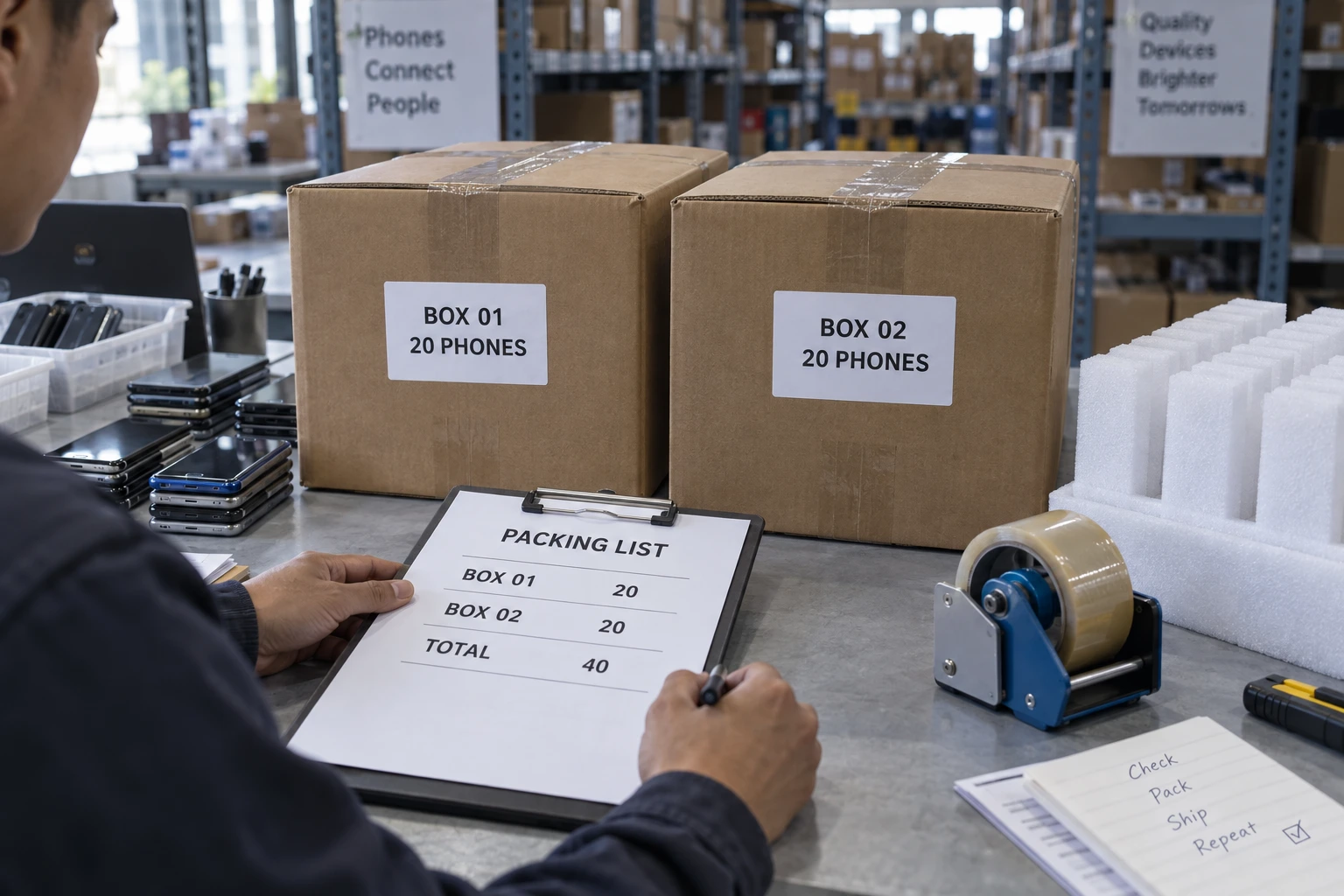
Phones should be packed in protective trays or bags, placed in strong cartons with cushioning, and labeled by model and quantity. Ask the supplier to seal cartons, record an IMEI or serial list for each box, and photograph the packing before dispatch. Because phones contain lithium batteries, your forwarder must confirm carrier rules and required labels before booking air transport.
Compare Shipping Methods
Most buyers choose express or air freight for phones because of their high unit value and faster delivery. Sea freight is possible for very large volumes but requires longer planning, stronger cargo security, and a reliable local clearing agent. Use the table below to compare the main options before requesting freight quotes from your forwarder.
| Method | Indicative Transit | Best For | Key Consideration |
| Express courier | About 3 to 7 days, door to door | Trial orders and small lots | Higher cost per kilogram, simpler customs handling |
| Air freight | About 5 to 10 days to airport, plus clearance | Regular mid-size orders | Needs a forwarder and a local clearing agent |
| Sea freight | About 25 to 45 days, depending on route | Very large volumes | Lowest cost per unit, longer exposure and planning |
Understand Customs Documents and Incoterms
Ask the supplier for a commercial invoice, packing list, and any certificates your country requires. Confirm that the HS code and declared value match across every document, since mismatches cause clearance delays. Under FOB you arrange freight from the Chinese port or airport, while under DDP the supplier handles delivery and duties. Choose the term that fits your experience.
Once cargo ships, request the tracking number, airway bill, and final packing photos. On arrival, inspect cartons for damage before signing, and record any issue immediately with photos. Then test a sample of units against the original report. A consistent inspection routine supports insurance claims and gives you solid evidence when discussing replacements or credits.
What Common Mistakes Should You Avoid When You Import Used Phones from China?
Most import problems come from a few repeated errors, and nearly all of them are preventable. The four mistakes below appear often among first-time buyers, from small phone shops to established distributors. Each one is far easier to avoid when you address it before the order is confirmed and any deposit is paid.
Choosing a Supplier on Price Alone
A very low price often signals lower grades, weaker testing, or hidden charges. Compare the full package instead: grade definitions, test records, packaging quality, and after-sales terms. A supplier that costs slightly more but delivers consistent quality usually produces better resale margins, fewer customer complaints, and far fewer disputes over the life of your business.
Accepting Vague Grading and Testing Terms
Terms such as “like new” or “perfect condition” mean different things to different suppliers. Without written standards, you cannot prove that a shipment differs from the agreement. Insist on grade definitions, sample photos, and a test report before you pay. Then inspect arrival stock against those documents, and raise any difference within the agreed claim period.
Ignoring Local Import Rules and Lock Status
Some markets restrict used electronics or require inspection certificates, and a blocked shipment can cost more than the goods themselves. Confirm the rules first. Also verify that phones are unlocked and free of account locks or blacklist records, because a locked device is difficult to resell and quickly becomes dead stock that ties up your working capital.
Paying in Full Without a Trial Order
Large prepayments to an unverified supplier place all the risk on you. Begin with a small trial order, verify the results, and only then increase volume. Use clear payment terms, confirm the bank account matches the company name, and keep every commitment in writing. This discipline protects your cash flow and builds a stronger long-term relationship with a good supplier.
Start Import Inquiry
Plan Your Used Phone Import with a Clear Process. Share your target models, grades, quantities, and destination country with INENG TECHNOLOGY CO., LIMITED to begin a structured, comparable quotation discussion. To import used phones from China successfully, prepare your rules and specifications first, then verify suppliers, grading, testing, and quotation terms before any payment. Treat shipping and customs as part of the purchase plan rather than an afterthought. A trial order, written standards, and a reliable exporter turn a risky purchase into a repeatable supply process.
Frequently Asked Questions
Is it legal to import used phones from China?
In many countries, yes, but rules differ. Some markets allow used phones with normal duties, while others require import licenses, inspection certificates, or restrictions on certain devices. Before you import used phones from China, confirm the requirements with your customs broker or local authority, and keep all supplier documents ready for clearance.
What is a typical MOQ when you buy used phones from China?
MOQ depends on the supplier, model, and grade. Some suppliers set a minimum per model, while others use a total order value or unit count. When you buy used phones from China, always confirm the MOQ in the quotation and ask whether a smaller trial order is possible before committing to volume. Prices and availability can change quickly, so reconfirm stock before payment.
How do I check that used phones are not blacklisted or locked?
Run each IMEI through a blacklist database, and confirm account lock status, such as Activation Lock on iPhones. Ask the China used phone exporter for a test report, then repeat random checks on arrival. Written unlocked-status terms in the quotation give you recourse if a device fails. This approach helps protect resale value and customer trust.
How do I choose a reliable China used phone exporter?
Verify the business license, request live stock video, and ask for written grading and testing standards. Compare responses from at least two suppliers, order samples, and check that payment details match the company name. When selecting a China used phone exporter, consistent and documented answers are a stronger signal than a low price.
What is the best method for used phones international shipping?
Express courier suits trial orders, while air freight fits regular mid-size shipments. Sea freight is usually reserved for very large volumes. For used phones international shipping, ask your forwarder to confirm packaging and labeling rules before booking because phones contain lithium batteries, and insure high-value cargo. Compare at least two freight quotes, including insurance and local clearance fees.
Should I order samples before placing a large order?
Yes. A small sample or trial lot lets you check grade accuracy, battery health, functions, and packaging against the supplier’s claims. It costs little compared with a full order and gives you real data for negotiating price, terms, and quality standards. Keep a few sample units aside as a reference for later shipments when you buy used phones from China.
Which documents are needed to import used phones?
Typically a commercial invoice, packing list, and airway bill or bill of lading, plus any import license or certificates required by your country. Make sure the HS code, description, and declared value match across all documents to avoid customs delays when you import used phones from China. Your customs broker can confirm any extra paperwork before shipment.