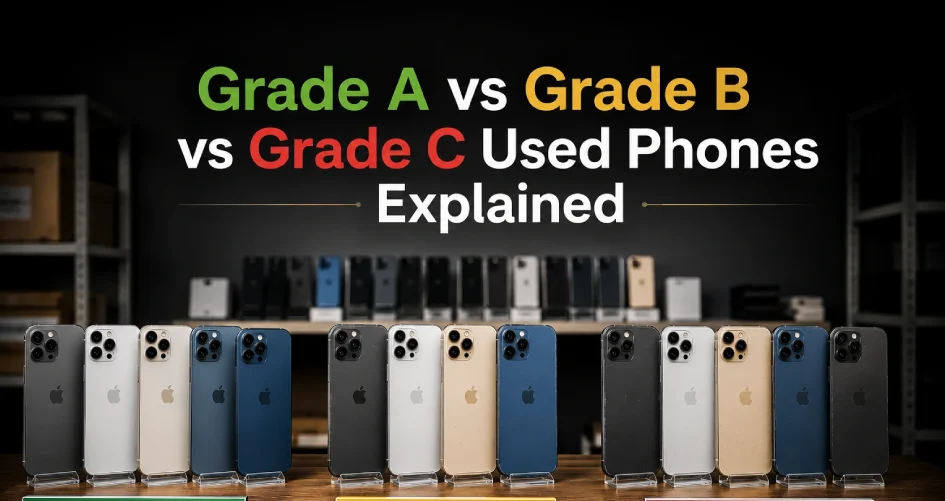
Choosing between Grade A B C used phones is one of the most common points of confusion for overseas buyers sourcing wholesale inventory from China. Grading terms sound simple, but definitions vary from supplier to supplier, and ordering the wrong grade for your market can mean unsold stock, refund requests, or unhappy retail customers. This guide breaks down the used phone grading system in plain terms, explains exactly what separates Grade A, Grade B, and Grade C devices, and shows how to match refurbished phone grades to your target market and price point. Whether you stock a repair shop, run an e-commerce store, or supply regional distributors, this article gives you the grading clarity needed to order with confidence.
Why Understanding Grade A B C Used Phones Matters
Grading is the language that connects a supplier’s warehouse to a buyer’s resale shelf, and getting it wrong at the sourcing stage creates problems that are expensive to fix later. Buyers who don’t clearly understand Grade A B C used phones often end up over-paying for cosmetic quality their customers don’t need, or under-ordering the functional quality their customers expect. A precise grasp of grading also protects you during disputes, since a documented grading standard is the reference point both you and your supplier can point to if a shipment doesn’t match expectations.
Different markets respond to different grades. A premium retail market may only accept Grade A or A+ stock, while a budget resale or repair-parts market can profitably move Grade C inventory at the right price. Understanding the used phone grading system lets you buy strategically rather than defaulting to the highest, and most expensive, grade out of caution, or the cheapest grade out of pure price-chasing without considering resale fit.
What Is a Used Phone Grading System?
A used phone grading system is a standardized way of describing a device’s cosmetic condition, functional status, and often battery health, using a simple letter scale, most commonly A+, A, B, and C. The purpose is to let buyers assess device condition in bulk, without physically inspecting every unit, based on written and photographic standards agreed with the supplier. Reliable suppliers document their phone condition grading criteria clearly and apply them consistently across every batch, which is exactly what protects you as a bulk buyer.
Cosmetic Grading vs Functional Grading
Cosmetic grading covers screen condition, back housing, frame, and overall visible wear, while functional grading covers whether the touchscreen, cameras, speakers, buttons, and network connectivity all work correctly. These two are not always the same: a phone can look like Grade A but have a functional issue, or look like Grade B while working perfectly. Always ask your supplier whether their grading combines both factors or scores them separately, since combined grading is a common source of confusion when comparing refurbished phone grades across suppliers.
Grade A Used Phones Explained
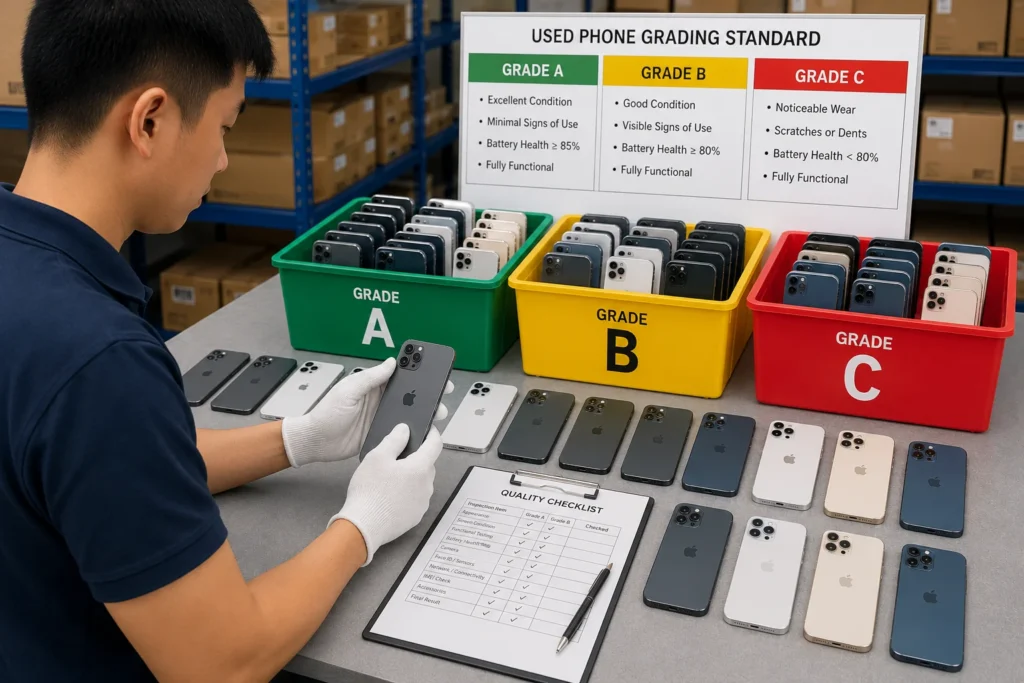
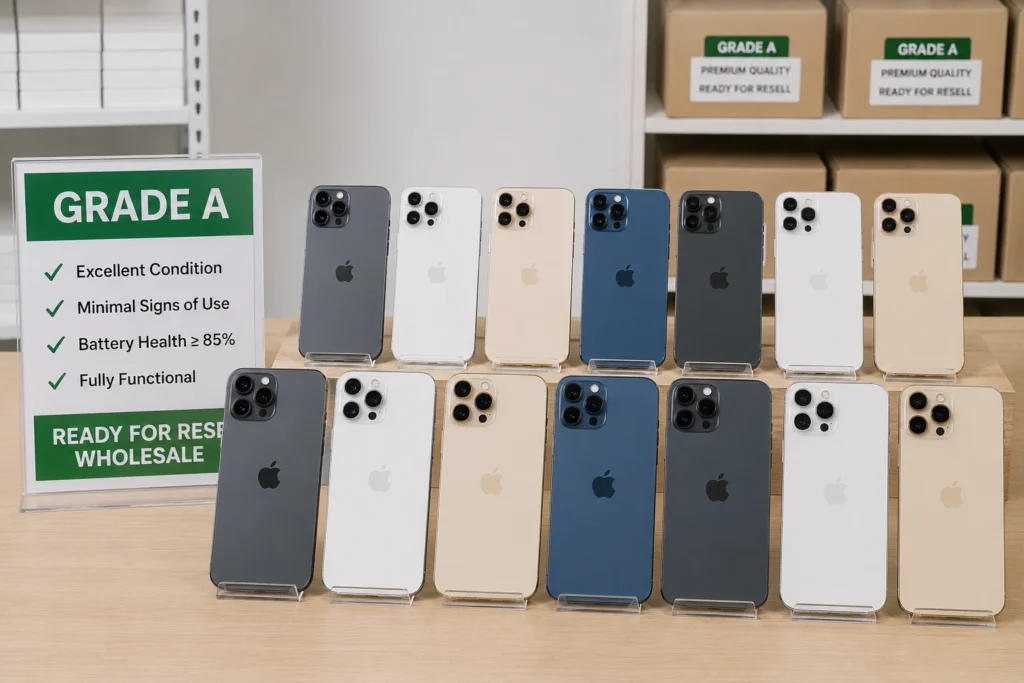
Grade A used phones represent the highest commonly available commercial grade, typically showing minimal signs of wear. Screens have no visible scratches under normal use conditions, the body and frame show light signs of use at most, and all original functions test fully operational. Battery health on Grade A stock is usually verified at 85% or higher. This grade suits premium resale, flagship product listings, and buyers targeting customers who expect near-new condition at a mid-range price point.
Some suppliers also offer a Grade A+ or “like new” tier above standard Grade A, reserved for devices with no visible wear at all and full original accessories. If your supplier offers this tier, request separate photos and separate pricing, since A+ stock is often blended into standard Grade A listings in a way that makes vague quotations hard to compare accurately.
Grade B Used Phones Explained
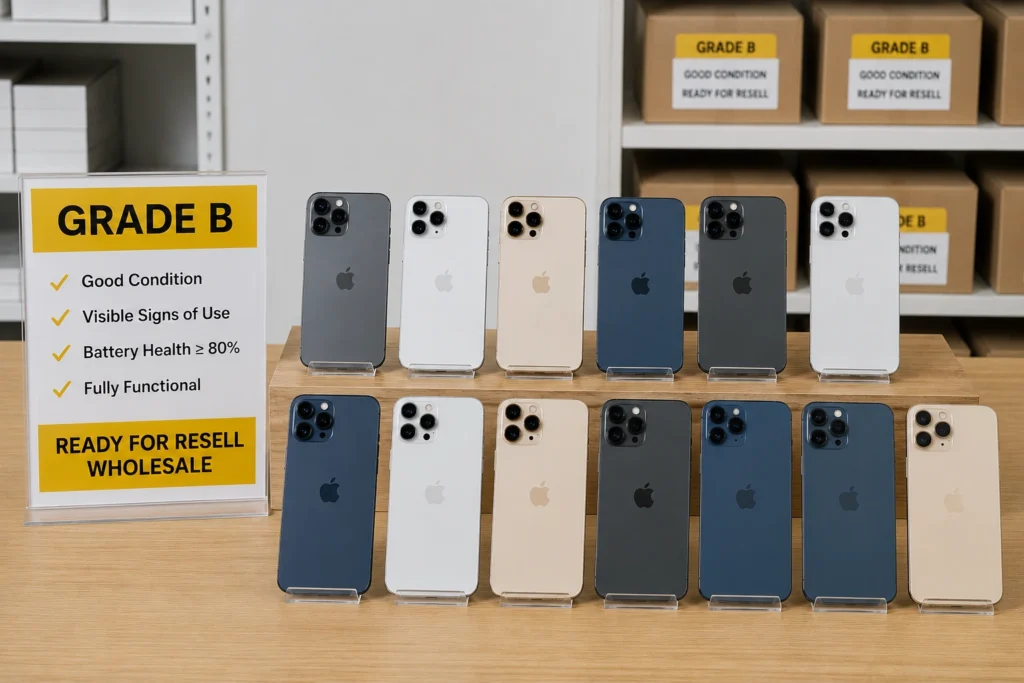
Grade B used phones show clearly visible, light-to-moderate cosmetic wear, such as fine scratches on the screen or body, but remain fully functional across all core features. This grade typically carries a slightly lower minimum battery health threshold, often 80% or higher, and represents the largest share of wholesale used phone volume because it balances price and condition well. Grade B stock works well for general resale, bundle promotions, and markets where customers prioritize value over cosmetic perfection.
Grade C Used Phones Explained
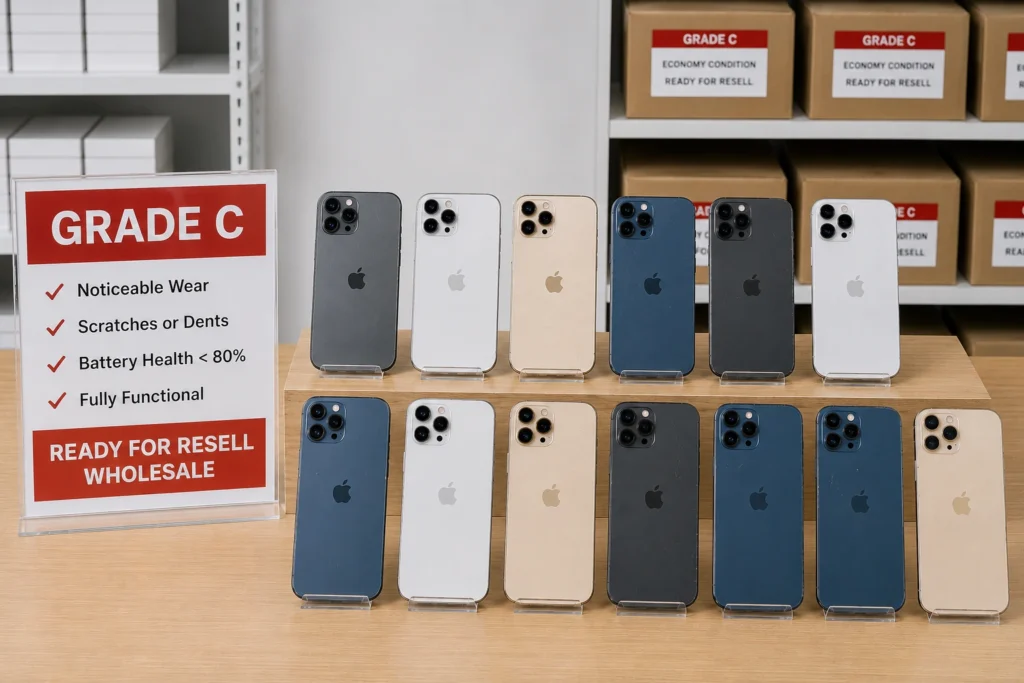
Grade C used phones carry visible wear, which may include noticeable scratches, small dents, or minor cracks, and can sometimes include non-original replacement parts from prior repairs. Functional status should still be confirmed unit by unit, since Grade C is where functional issues are most likely to appear if a supplier’s quality control process is weak. This grade is typically sourced for budget resale, bundle deals, or repair-parts inventory, and should be priced accordingly with clear condition disclosure to your own customers.
Understanding how these three grades differ in practice is easier with a direct side-by-side reference. Use the comparison table below when reviewing a supplier’s quotation, and confirm that each line item specifies grade, battery health, and functional status separately rather than as one bundled description.
Grade A vs Grade B vs Grade C: Side-by-Side Comparison
| Criteria | Grade A | Grade B | Grade C |
| Screen condition | No visible scratches | Fine, light scratches visible | Noticeable scratches or minor cracks possible |
| Body/frame condition | Light wear at most | Moderate visible wear | Heavy wear, possible small dents |
| Typical battery health | 85% or higher | 80% or higher | 75-80%, confirm per unit |
| Functional status | Fully operational | Fully operational | Confirm unit by unit |
| Original parts | Original throughout | Mostly original | May include non-original parts |
| Typical price position | Premium tier | Mid tier | Budget tier |
| Best for | Premium resale, flagship listings | General resale, bundle deals | Budget resale, repair parts |
How to Choose the Right Refurbished Phone Grades for Your Market
The right grade depends on your customers, not just your budget. Buyers who order the highest grade available regardless of market fit often see slower turnover and tied-up capital, while buyers who order strictly on lowest price often face higher return rates and support costs. Matching refurbished phone grades to actual demand is a procurement strategy, not just a purchasing decision, and it should be revisited as your customer base and market position evolve.
Match Grade to Target Customer
Premium retail storefronts and customers expecting near-new devices are best served by Grade A or A+ stock, even at a higher per-unit cost, since returns and complaints are costlier than the price difference. Value-focused resellers, marketplace sellers, and bundle promotions typically perform best with Grade B stock. Repair shops and parts resellers can often source Grade C profitably, provided pricing and condition are disclosed clearly to avoid disputes.
Consider MOQ and Pricing by Grade
Minimum order quantities and pricing structures often shift by grade, with Grade A stock sometimes available in smaller trial quantities due to higher per-unit value, while Grade B and Grade C are frequently sold in larger bulk lots to reach competitive per-unit pricing. Always request a grade-by-grade quotation rather than a single blended price, so you can compare cost per grade against your expected resale margin for each category.
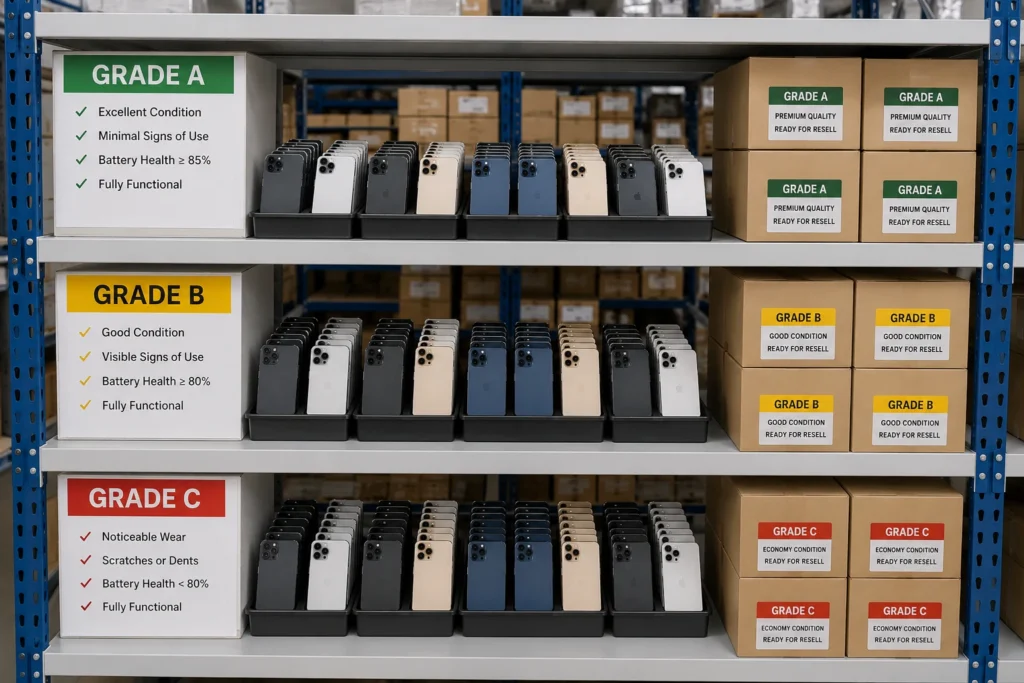
Once you know which grade fits your market, use the decision table below as a quick reference for future purchase orders, especially when onboarding new team members into your sourcing process.
| Buyer Goal | Recommended Grade | Why |
| Premium retail / flagship resale | Grade A or A+ | Matches customer expectation of near-new condition |
| General wholesale resale | Grade B | Best balance of price and functional reliability |
| Budget resale or bundle deals | Grade B or C | Lower cost per unit supports thinner margins |
| Repair parts / component sourcing | Grade C | Cosmetic condition is secondary to part usability |
| Testing a new market or supplier | Small Grade A or B sample | Limits risk while validating grading accuracy |
Common Mistakes Buyers Make When Ordering by Grade
Assuming “Grade A” Means the Same Thing at Every Supplier
Grading terminology is not universally regulated, so one supplier’s Grade A may match another supplier’s Grade A+, or even their Grade B. Always request the supplier’s written phone condition grading criteria with reference photos before comparing prices, rather than assuming grade labels are interchangeable across different sourcing partners.
Ordering Only by Price Without Checking Functional Grading
Cosmetic grade and functional grade are not always reported together, and buyers who focus purely on the lowest price per grade sometimes receive cosmetically acceptable units with functional defects. Always confirm that functional testing, not just cosmetic sorting, is included in the grade definition and reflected in the quotation.
Mixing Grades in One Bulk Order Without Separate Documentation
Combining Grade A, B, and C units into a single shipment without clear per-grade quantities and pricing makes quality disputes difficult to resolve later. Request separate line items, separate packaging where possible, and separate test reports for each grade included in a mixed order.
Not Requesting Sample Units Before Large Grade-Based Orders
Grading consistency varies between suppliers and even between batches from the same supplier. A small sample order across the grades you plan to purchase lets you verify that the physical units match the written grading standard before committing to a full container or bulk purchase order.
Ignoring Battery Health Thresholds Tied to Grade
Buyers sometimes evaluate grade purely on cosmetic photos and skip battery health entirely, even though battery condition is one of the most common causes of post-sale complaints. Always request the battery health threshold tied to each grade in writing, and treat it as a required field on every quotation, not an optional detail.
Grade Verification Checklist
Use this checklist whenever you review a quotation or confirm a purchase order involving Grade A B C used phones, whether from a new supplier or a long-term partner.
| Pre-Shipment Grading Verification Checklist | Status (✓ / ✗) |
|---|---|
| Written grading standard with reference photos obtained for each grade | ☐ |
| Cosmetic and functional grading confirmed as separate criteria | ☐ |
| Battery health threshold specified per grade in writing | ☐ |
| Grade-by-grade pricing and MOQ requested, not a blended quote | ☐ |
| Sample units ordered before scaling to bulk purchase | ☐ |
| Mixed-grade orders documented with separate line items | ☐ |
| IMEI and functional test reports requested for Grade B and Grade C units | ☐ |
| Packaging and labeling confirmed to match each grade separately | ☐ |
Order Refurbished Phone Grades with Confidence
Understanding Grade A B C used phones is not just a technical detail, it is a core part of building a profitable and predictable wholesale sourcing strategy. When you know exactly what each grade means, how battery health and functional status factor in, and which grade fits your target market, you reduce disputes, improve margins, and build stronger long-term supplier relationships.
At INENG TECHNOLOGY CO., LIMITED, we apply a documented, consistent used phone grading system across every batch we export, with cosmetic and functional grading, battery health, and IMEI status reported separately for full transparency. If you are ready to see exactly how our grading works and match it to your target market, view our grading system today.
Want full clarity before you order?
View Grading System to see detailed criteria, photos, and pricing for Grade A, B, and C used phones from INENG TECHNOLOGY CO., LIMITED.
Frequently Asked Questions
What is the difference between Grade A and Grade A+ used phones?
Grade A+ typically means a device with no visible cosmetic wear at all and full original accessories, while standard Grade A allows very minor signs of use. Not all suppliers offer an A+ tier, so confirm whether it exists in their used phone grading system before comparing prices.
Is Grade B a good choice for wholesale resale?
Yes, Grade B is often the best balance of price and functional reliability for general wholesale resale, since it remains fully functional while carrying visible but minor cosmetic wear that most value-focused customers accept.
Can Grade C used phones still be fully functional?
Yes, Grade C refers primarily to cosmetic condition and does not automatically mean a device is faulty. However, functional status should always be confirmed unit by unit or through a batch test report, since Grade C is where inconsistent supplier QC is most likely to surface.
Do all suppliers use the same phone condition grading standards?
No. Grading terminology is not standardized industry-wide, which is why buyers should always request a supplier’s specific written grading criteria with photos rather than assuming grades match across different sourcing partners.
What battery health should I expect for each grade?
As a general guideline, Grade A stock commonly tests at 85% battery health or higher, Grade B at 80% or higher, and Grade C should be confirmed per unit since it can vary more widely. Always get this threshold in writing as part of your quotation.
Should I order multiple grades in one purchase order?
You can, but each grade should be documented as a separate line item with its own quantity, pricing, and test reports. Mixing grades without clear documentation makes it difficult to resolve quality disputes if part of the shipment does not meet expectations.
How do I verify a supplier’s grading claims before a bulk order?
Request a small sample order across the grades you intend to purchase, along with written grading criteria and reference photos. Comparing the physical sample against the documented standard is the most reliable way to confirm grading accuracy before scaling up.