

Used Galaxy S vs A series wholesale decisions can determine whether a reseller’s purchasing budget produces healthy cash flow or becomes trapped in slow-moving inventory. Galaxy S flagships may deliver higher profit per unit, while Galaxy A models can provide lower-cost inventory for price-sensitive markets. However, purchase price alone cannot reveal which series offers the stronger financial return.
For wholesalers, importers and electronics distributors, successful planning requires a balance of repair-adjusted margins, sell-through speed, grading consistency and customer demand. This guide explains three practical methods for allocating capital, controlling purchasing exposure and building a more resilient used Samsung portfolio mix.
Quick take: In used Galaxy S vs A series wholesale, treat the S series as your margin engine and the A series as your volume engine. Then let your own transaction and repair records, not habit, set the ratio.
Used Galaxy S vs A Series Wholesale: Why Capital Comes First

The harder question is capital. One flagship lot can absorb money that would buy many more midrange units, so a single wrong grade or slow model hurts more. In used Galaxy S vs A series wholesale, the real question is not which line is better. It is which line earns more per dollar of cash tied up, and how quickly that cash comes back.
Two measures make used Galaxy S vs A series wholesale concrete:
- Cash cycle: the days between paying for a lot and collecting from your buyer.
- Repair-adjusted margin: profit after grading losses, parts and returns, not the margin on the quote sheet.
How the Two Lines Differ in Used Galaxy S vs A Series Wholesale

| Factor | S series (flagship) | A series (midrange) |
|---|---|---|
| Unit cost | Higher | Lower |
| Inventory exposure | Fewer units, larger value per lot | More units, more SKUs to track |
| Grading risk | Costly screens and glass | Cheaper parts, but repeated defects across a batch |
| Price risk | Larger drops after a successor launches | Smaller drops per unit |
| Capital recovery | Often slower | Often faster |
These are general tendencies, not guarantees. In used Galaxy S vs A series wholesale, confirm each one against your own SKU records before you commit budget.
Samsung Resale Budget Allocation: 3 Ways to Cut Risk
1. Allocate Capital by Profit and Turnover, Not Unit Price

Do not start with a fixed ratio. Compare repair-adjusted profit against the capital each model ties up, and against the days it takes to sell. A used Galaxy S vs A series wholesale split such as 30% S series and 70% A series is only a first test for your next two or three orders. Replace it with a ratio built from your own sale dates as soon as you have them.
2. Control Exposure With Model-Level Purchasing Limits

Pull your last 90 days of SKU transactions and repair logs. For every model, set a maximum spend, a minimum acceptable margin and a stop-buy condition, such as a return rate or inventory age that triggers a pause. A model that sells fast but returns often may deserve a smaller cap than the quote sheet suggests.
3. Rebalance Inventory Using QC Results and Sell-Through Data

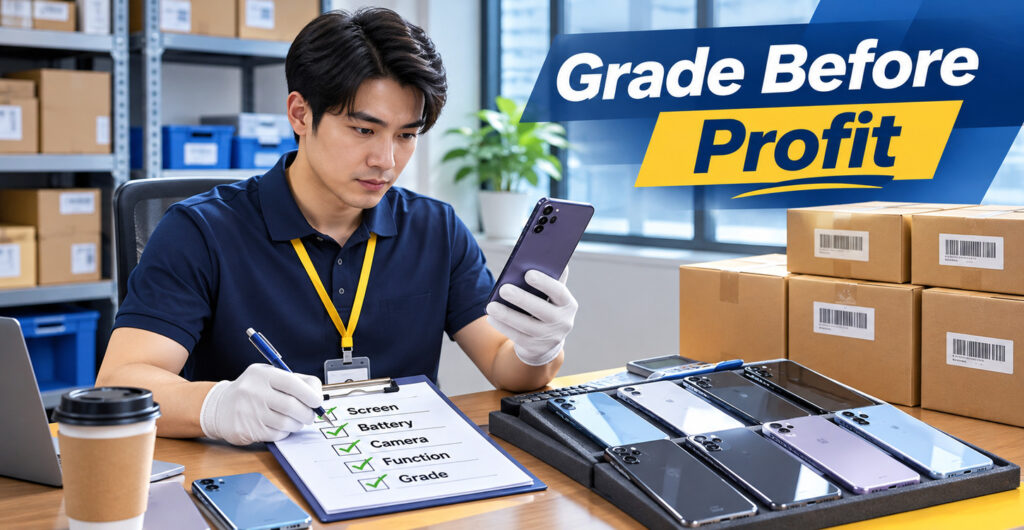
Inspection results should feed the next purchase. If a batch of one model shows high screen or battery rejection, shift budget to a model with a cleaner record. A documented Quality Control process makes those comparisons possible, and it keeps your used Galaxy S vs A series wholesale numbers honest.
Used Galaxy S vs A Series Wholesale Profit: An Illustrative Example
Hypothetical figures only. These are not current wholesale prices or verified market averages.
| Metric | Galaxy S series | Galaxy A series |
|---|---|---|
| Purchase cost | $220 | $85 |
| Repair and grading allowance | $15 | $7 |
| Shipping and fees | $5 | $3 |
| Total adjusted cost | $240 | $95 |
| Resale revenue | $275 | $110 |
| Profit per unit | $35 | $15 |
| Return on unit cost | 14.6% | 15.8% |
| Illustrative days to sell | 45 | 20 |
Return on unit cost is profit divided by total adjusted cost, before overhead and financing. A higher dollar profit per phone does not make a better use of limited capital. Under these example numbers, the A series earns a similar return and recovers cash in less than half the time. This does not mean every A series phone sells faster. For a stronger comparison, calculate profit per dollar of capital per inventory cycle from actual transaction and sale dates.
Galaxy S vs A Series: Quality Risks That Affect Wholesale Profit
A successful used Samsung portfolio mix needs more than balanced purchase prices. In used Galaxy S vs A series wholesale, defects can erase the expected margin before the phones reach customers.
- S series: check AMOLED display condition, screen burn-in, touch response, camera function and previous repair quality. Premium parts create large exposure when defect rates are underestimated.
- A series: check display condition, battery performance, charging ports, network connectivity and the availability of model-specific parts.
- Both series: verify IMEI status, account locks, carrier restrictions, regional compatibility and the agreed cosmetic grade.
Define acceptable defects, inspection steps and return conditions in writing before shipment. Then let repair costs and rejection rates shape the next Samsung resale budget allocation.
Matching the Mix to Buyer Segments
In used Galaxy S vs A series wholesale, customer demand should shape the mix more than model popularity. Prepaid and price-sensitive retail suits A series models with proven sell-through. Premium and trade-in channels suit recent S series models in consistent grades. Export buyers need the exact regional variant, since network bands and features differ by region.
Before you buy any model, check Samsung’s official model and support information. Security update scope and schedules vary by device and region, so verify the exact model rather than relying on a generic S series or A series claim.
Pre-Purchase Checklist for Used Galaxy S vs A Series Wholesale

- Confirm the exact model number and regional variant.
- Check software update support on Samsung’s official support pages.
- Compare the quoted price with your last transaction price for that SKU.
- Set a maximum unit count and stop-buy trigger for the model.
- Agree grading standards and return terms in writing.
Quick Answers
Should a small reseller start with S or A series? If your orders are mostly price-sensitive, begin with A series and add a small S series pilot batch.
How often should the used Galaxy S vs A series wholesale split change? Review it after each completed order or monthly, whichever comes first.
Plan Your Next Used Samsung Wholesale Order
A profitable used Galaxy S vs A series wholesale strategy begins with realistic budgets, transparent grading requirements and a clear view of customer demand. Whether you source flagship Galaxy S models, midrange Galaxy A devices or a mixed lot, compare condition and landed costs before committing capital.
Browse our Used Samsung Phones Wholesale range, then Send RFQ with your preferred models, target grades, estimated quantities and destination market.


