

Choosing the right used phones for Africa market resale is one of the biggest decisions a wholesale buyer makes each quarter. Order the wrong models or grades, and stock sits unsold or comes back with complaints. Order the right mix, and margins improve while customers keep coming back. This guide walks distributors, importers, and shop owners through the models, grading standards, and price levels that consistently sell across African retail markets, backed by the sourcing practices INENG uses on every export shipment.
Why the African Market Requires a Different Sourcing Approach
African buyers face a different set of conditions than resellers in Europe or North America. Retail prices are more sensitive, currency fluctuations affect landed cost quickly, and network infrastructure varies widely between urban centers like Lagos or Nairobi and smaller regional towns. A phone that sells well in one country may be a poor fit in another due to network bands, dual-SIM habits, or local brand preference.
Successful wholesale used phones for Africa strategies start with matching device specifications to real usage patterns. Most buyers want dependable dual-SIM handsets, strong battery life, and affordable repair parts, rather than the newest flagship release. Understanding this demand shape before placing an order prevents costly overstock of premium models that move slowly.
INENG works with resellers across West, East, and Southern Africa, and the pattern is consistent: mid-range Android devices and older-generation iPhones move fastest, provided the grading is accurate and the batteries are verified before shipment. The sections below break down exactly which models and grades perform best.
Best-Selling Used Phone Models and Brands for African Resale
Samsung and Apple dominate the used smartphones Africa segment, but the specific models matter more than the brand name alone. Buyers should prioritize devices with strong parts availability, since local repair shops need affordable screens, batteries, and charging ports to keep resold units serviceable for years, not months.
| Model Range | Market Tier | Typical Grade | Avg. Wholesale Price (USD) | Demand Level |
| Samsung Galaxy A10 / A20 / A30 series | Entry-level | Grade B / C | $28 – $45 | Very High |
| Samsung Galaxy A50 / A51 / A52 | Mid-range | Grade A / B | $60 – $95 | High |
| iPhone 7 / 8 / SE (2nd gen) | Entry-to-mid | Grade A / B | $65 – $100 | High |
| iPhone XR / 11 | Mid-to-premium | Grade A | $120 – $165 | Moderate–High |
| Samsung Galaxy S10 / Note 10 | Premium | Grade A | $140 – $190 | Moderate |
| iPhone 12 / 13 (used) | Premium | Grade A | $210 – $280 | Growing |
Entry-level Samsung A-series devices consistently lead demand across most African countries because they balance affordable pricing with acceptable performance for social media, mobile money, and messaging apps. These models also tend to have the widest network of local repair technicians already trained on the hardware.
iPhones remain attractive for resellers targeting urban buyers who value brand status and resale value retention. Older iPhone models with verified battery health and unlocked status sell reliably, particularly in markets like Nigeria, Ghana, Kenya, and South Africa where secondhand Apple demand has grown steadily over recent years.
Understanding Grading Standards Before You Order Wholesale Used Phones for Africa
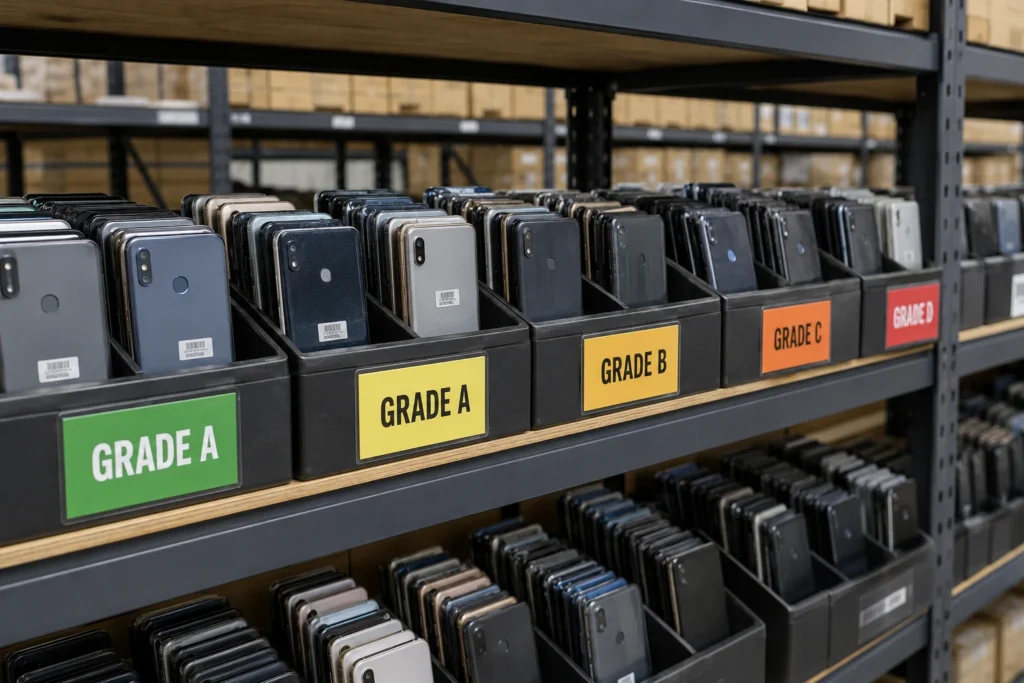
Grading is the single biggest factor separating a profitable shipment from one full of returns. INENG follows a standard A/B/C grading system, and buyers sourcing wholesale used phones for Africa should always request grade breakdowns rather than accepting a single blended price for mixed-condition stock.
| Grade | Cosmetic Condition | Functional Standard | Resale Fit |
| Grade A | Little to no visible wear, screen free of scratches | 100% functional, battery health 85%+ | Premium retail, urban shops |
| Grade B | Light scratches or minor marks, fully usable | 100% functional, battery health 80%+ | Mainstream retail, best volume |
| Grade C | Visible wear, scuffs, or minor screen marks | Fully functional, battery health 75%+ | Budget retail, price-sensitive zones |
For a deeper walkthrough of how each grade is inspected and verified, buyers can refer to INENG’s dedicated guide on used phone grading standards, which explains the inspection checkpoints used before any device is approved for export.
Price Levels, MOQ, and Quotation Guidance for Africa-Bound Orders
Price expectations across African markets vary by country, import duty structure, and local purchasing power. Buyers who understand realistic price bands before requesting a quotation can negotiate more effectively and avoid stock that is priced out of reach for their target customers.
| Price Tier | Recommended Grade | Typical MOQ | Best Suited Markets |
| Budget ($25–$60) | Grade B / C | 100–300 units | Rural and semi-urban retail, price-sensitive regions |
| Mid-range ($60–$150) | Grade A / B | 50–200 units | Urban retail, mobile money agents, general resellers |
| Premium ($150–$300) | Grade A | 20–100 units | City-center shops, e-commerce, brand-conscious buyers |
Requesting a sample order before committing to full-container volume is a practical way to validate a supplier’s grading accuracy. Most established suppliers, including INENG, offer trial quotations scaled to a buyer’s first shipment size so pricing and condition can be confirmed before scaling up future orders.
Quality Control: IMEI Checks, Battery Health, and Functional Testing
Quality control is where wholesale used phones for Africa shipments succeed or fail. Every device should pass three checkpoints before it leaves the warehouse: IMEI verification against blacklist and carrier-lock databases, battery health measurement, and a full functional test covering the screen, cameras, buttons, and connectivity.
| Quality Control Step | Verified | Why It Matters for African Buyers |
| IMEI checked against blacklist and lock status | ✔ | Prevents importing stolen or carrier-locked units that cannot be resold |
| Battery health tested and documented per unit | ✔ | Avoids early battery failure complaints from end customers |
| Screen, touch response, and camera function tested | ✔ | Reduces return rates and protects reseller reputation |
| Charging port and audio components tested | ✔ | Common failure points that affect resale value quickly |
| Network bands confirmed for destination country | ✔ | Ensures compatibility with local carrier frequencies |
| Factory reset and account lock removal confirmed | ✔ | Prevents devices being unusable due to prior owner accounts |
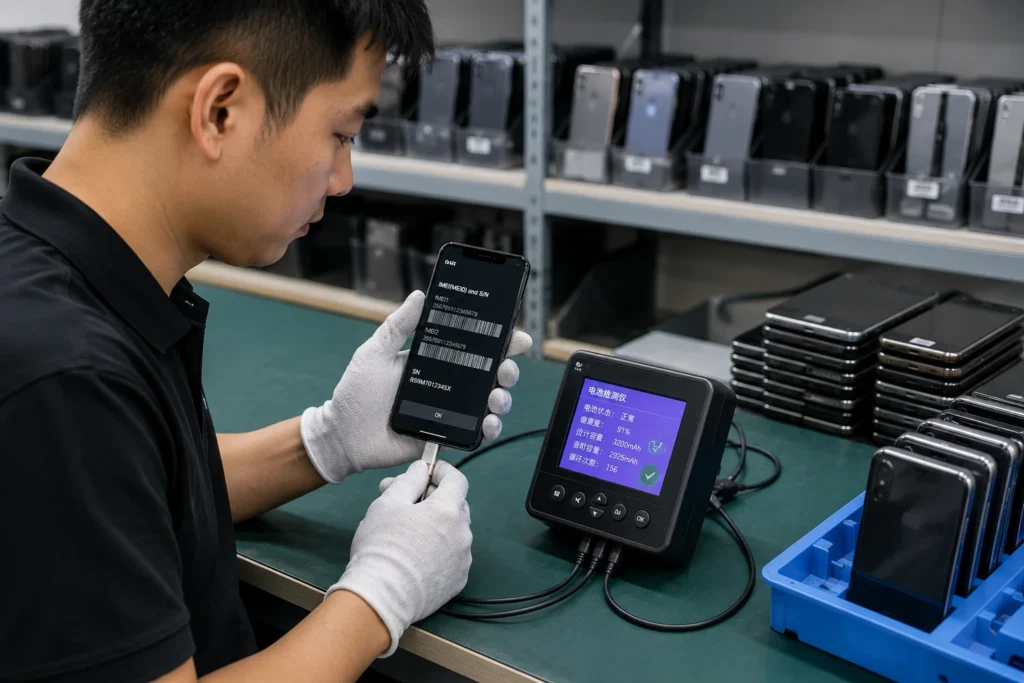
Buyers should ask suppliers for unit-level testing reports rather than a general quality statement covering the whole batch. A transparent supplier will provide IMEI logs and battery health percentages per device, which also gives resellers documentation to show their own customers at the point of sale.
Common Mistakes African Resellers Make When Sourcing Wholesale Phones
Even experienced importers repeat a handful of avoidable mistakes when sourcing used smartphones Africa markets demand. Recognizing these patterns before placing a large order protects margins and reduces the risk of a shipment that underperforms once it reaches the shelf.
Ordering Based on Price Alone
Choosing the lowest quoted price per unit without confirming grading accuracy often leads to a higher rate of returns and warranty claims. A slightly higher per-unit cost from a supplier with verified grading and testing typically produces better net margins once return and repair costs are factored in.
Skipping IMEI Verification on Arrival
Some buyers assume the supplier’s export checks are sufficient and skip a second verification once stock arrives. Re-checking IMEI status after customs clearance catches any unit that was swapped, damaged in transit, or mismatched from the original packing list before it reaches a paying customer.
Ignoring Network Band Compatibility
Not every used phone model supports the LTE bands used across African carriers. Buyers who overlook this detail may receive phones that only support 3G connectivity in a market where customers expect full 4G access, resulting in complaints and difficult return conversations.
Overordering Premium Grade A Stock
Grade A units carry the highest cost per unit, and overordering them without matching real local demand ties up working capital in slow-moving inventory. Blending Grade A with Grade B and C stock based on the price-tier table above generally produces faster overall sell-through.
Not Confirming Packaging and Export Documentation Early
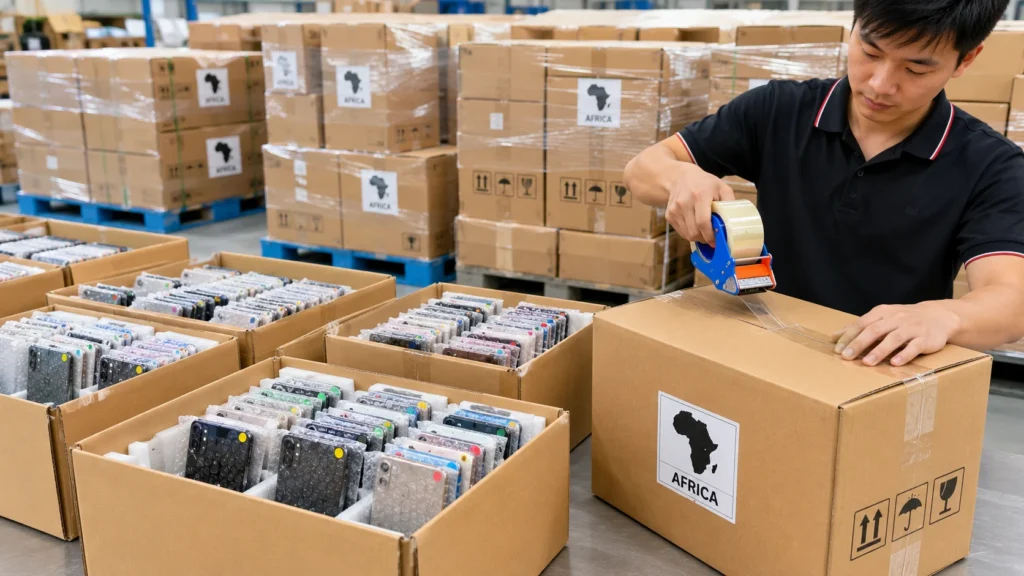
Packaging that is not suited for long-distance shipping leads to cosmetic damage that changes a phone’s grade before it even reaches the buyer. Confirming anti-static packaging, carton labeling, and export documentation in advance avoids delays at customs and disputes over condition on arrival.
Get African Market Stock
The most successful resellers treat model selection, grading, and quality control as a single connected process rather than separate decisions. Matching entry-level and mid-range Samsung devices with a smaller share of premium iPhones, verified through proper IMEI and battery testing, consistently produces the strongest sell-through across diverse African markets.
INENG Technology supplies verified, graded used and refurbished phones tailored to Africa market demand, with transparent quality control documentation on every shipment. Reach out to discuss current stock availability, grading options, and pricing suited to your target market. Contact INENG Technology today to request current Africa market stock lists, grading breakdowns, and a tailored wholesale quotation.
Frequently Asked Questions
What are the best used phones for Africa market resale right now?
Samsung Galaxy A-series models and iPhone 7 through 11 remain popular choices for buyers looking for used phones for Africa market resale. They offer a strong combination of affordability, parts availability, repairability, and steady demand across many African retail markets.
What grade of used phone should I order for a price-sensitive market?
Grade B and C devices are often suitable for price-sensitive rural and semi-urban markets. When sourcing used smartphones Africa buyers should prioritize devices with verified battery health, working functions, clean displays, and acceptable cosmetic condition before shipment.
How do I verify IMEI status before buying wholesale used phones?
Request an IMEI verification report from the supplier covering blacklist status, carrier lock, and device identification. Buyers sourcing used phones wholesale Africa should also re-check a representative sample using a reputable third-party IMEI checking service after receiving the shipment.
What is a reasonable MOQ for a first order of used smartphones from China?
A practical starting MOQ depends on the supplier, phone models, grades, and order value. Some suppliers, including INENG, may accept trial orders of around 20 to 50 units for premium-grade stock or 100 to 300 units for entry-level Grade B and C devices. This allows buyers to evaluate wholesale used phones for Africa before scaling to larger orders.
How important is battery health when sourcing wholesale used phones for Africa?
Battery health is one of the most important factors affecting customer satisfaction and resale value. When purchasing used phones for Africa market distribution, devices below 80% battery health should be identified, repaired, or priced accordingly rather than being sold at standard rates.
Do used iPhones or Samsung phones sell better in African markets?
Samsung generally leads in overall unit volume because of its broad range of affordable models, while used iPhones can perform particularly well in urban markets where brand preference and resale value are important. Both brands remain significant categories within the used smartphones Africa resale market.
How can I reduce the risk of receiving mismatched or damaged stock?
Choose suppliers experienced in wholesale used phones for Africa and request unit-level testing records, IMEI verification, battery-health information, and pre-shipment photos or videos. You should also confirm grading criteria, packaging requirements, and shipment details in writing before finalizing the order.