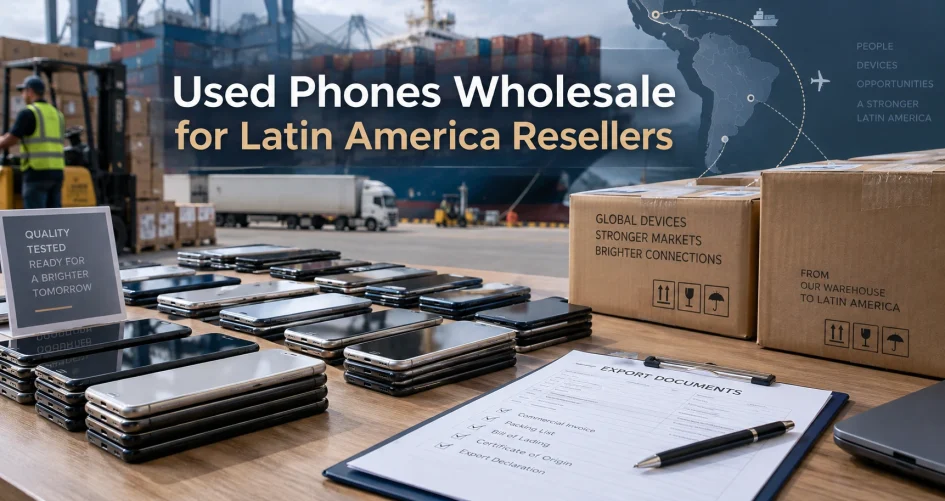
Sourcing used phones wholesale for Latin America comes with real risk: inconsistent grading, unverified IMEIs, and shipments that fail customs inspection can erase a reseller’s margin before the stock ever reaches a shelf. Resellers, distributors, and repair shop owners across Brazil, Mexico, Colombia, and Chile need suppliers who grade consistently, test every unit, and document exports properly. This guide walks through grading standards, quality control, supplier evaluation, stock selection, and shipping so Latin America buyers can order used and refurbished phones wholesale with confidence.
Grading Standards: What “Grade A” and “Grade B” Really Mean
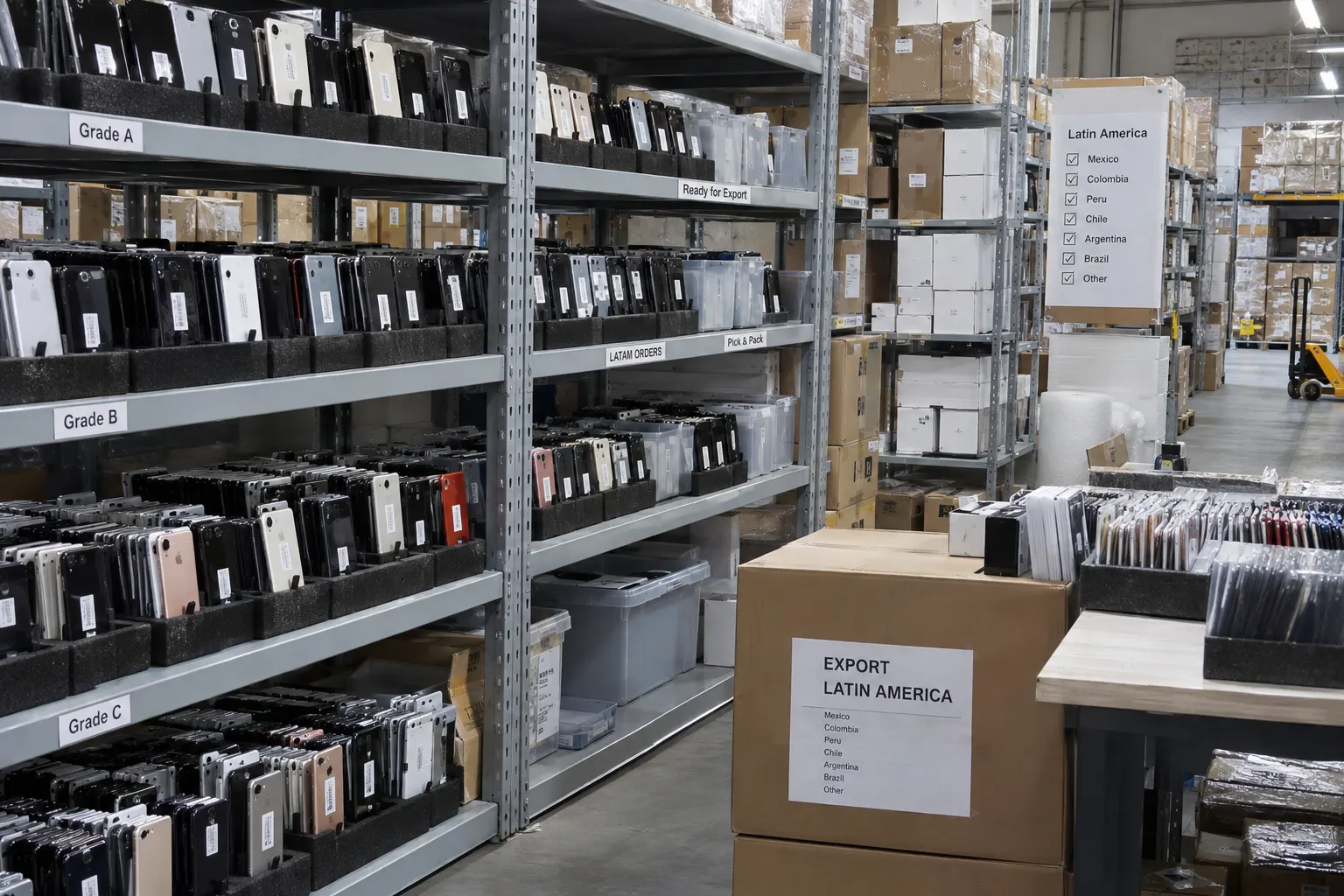
Grading is the foundation of any used phones wholesale Latin America order, yet grading definitions vary widely between suppliers. A device labeled “Grade A” from one factory may show cosmetic wear that another factory would classify as “Grade B.” Before placing an order, resellers should ask for the supplier’s written grading manual, reference photos for each grade, and sample units that match the description. This single step prevents most disputes that arise after a container has already shipped.
Grade A, A+, and B Explained
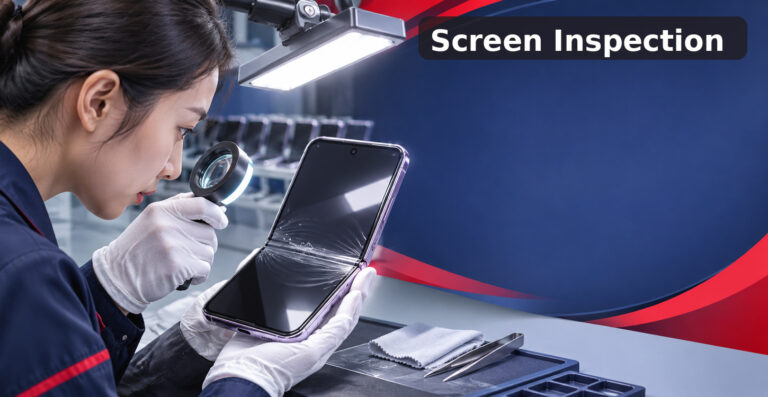
Grade A+ units typically show no visible scratches, an intact screen, and a battery health rating above 85 percent, making them suitable for resale as “like new.” Grade A units may carry light micro-scratches visible only under close inspection, while Grade B units show noticeable wear such as scuffed edges or minor screen marks but remain fully functional. Understanding these tiers lets a reseller match stock to the right price point in their local market, from premium retail counters to value-focused kiosks.
Why Grading Consistency Matters for Repeat Orders
A supplier that grades consistently across every shipment protects a reseller’s reputation with their own customers. Inconsistent grading leads to higher return rates, disputes over refurbished phones Latin America orders, and lost trust with end buyers who expected a specific cosmetic condition. Ask any prospective supplier how many quality control staff inspect each unit and whether grading is done manually or cross-checked by a second inspector before packing.
| Grade | Cosmetic Condition | Battery Health | Typical Buyer |
| Grade A+ | No visible scratches, screen like new | 85%+ | Premium retail, e-commerce listings |
| Grade A | Light micro-scratches, minor wear | 80%+ | General retail, repair shop resale |
| Grade B | Visible scuffs, fully functional | 75%+ | Value-tier retail, bundled offers |
| Grade C | Heavy cosmetic wear, tested working | 70%+ | Budget resale, parts and repair stock |
Battery Health, IMEI Checks, and Functional Testing Before Shipment
Quality control is where used phones wholesale Latin America orders succeed or fail. A reliable supplier tests every unit for battery health, confirms a clean IMEI status, and runs a full functional check before packing. Skipping this step to save time almost always costs more later in returns, customer complaints, and damaged relationships with local retailers who depend on receiving working stock.
Battery Health Verification
Battery health should be tested with diagnostic software and stated as a percentage on the packing list, not estimated visually. Reputable suppliers replace batteries that fall below an agreed threshold, typically 80 percent for Grade A stock, before the unit is packed. Resellers should request battery health reports for bulk orders and compare a sample against the stated figures on arrival.
IMEI Status and Blacklist Checks
Every unit in a wholesale used iPhones South America wholesale order should be checked against GSMA and carrier blacklist databases before it ships. A blacklisted or previously reported-lost device is unsellable and can create legal exposure for the reseller who imports it. Ask the supplier to provide an IMEI report per unit or per pallet, and keep this documentation on file for customs and warranty purposes.
Functional Testing Checklist
Functional testing should cover the touchscreen, cameras, speakers, microphone, charging port, buttons, sensors, and network connectivity on every unit, not a sample percentage. Suppliers who test 100 percent of units and log results are far less likely to ship defective stock than those who spot-check a batch. The checklist below outlines the minimum testing points a Latin America buyer should confirm with any supplier before the first order.
| Test Point | What to Verify | Confirmed |
| Battery health | Reported as a percentage, 80%+ for Grade A | ✓ |
| IMEI / blacklist | Clean status verified against GSMA database | ✓ |
| Screen and touch | No dead pixels, full touch responsiveness | ✓ |
| Cameras and mic | Front and rear camera, microphone functional | ✓ |
| Charging port | Fast and stable charge, no loose connection | ✓ |
| Network and Wi-Fi | Signal, Wi-Fi, and Bluetooth all functional | ✓ |

Choosing a Reliable Used Phone Supplier in China
The right supplier relationship determines whether a used phones wholesale Latin America business scales smoothly or spends its margin fighting returns and shipping delays. Beyond price, resellers should evaluate a supplier’s testing process, export experience, communication speed, and willingness to provide sample units before a full order. A supplier that welcomes scrutiny and answers technical questions directly is usually a safer long-term partner than one that only quotes price.
Supplier Evaluation Criteria
Ask for business registration documents, export history to Latin America specifically, and references from existing resellers in the region if possible. A supplier experienced in shipping to Brazil, Mexico, or Colombia will already understand documentation requirements and common customs questions, which reduces delays on the reseller’s side. Factory visits or video calls showing the grading and testing floor add another layer of confidence before a first order is placed.
Questions to Ask Before Placing a Trial Order
Before committing to a full container, ask how returns and DOA (dead-on-arrival) units are handled, what the warranty period covers, and how quickly replacement stock or credit is issued. Confirm whether pricing includes testing and grading or whether those are billed separately, since some low quotes exclude quality control entirely. These questions surface the difference between suppliers built for phones for resellers and those built for one-time liquidation sales.
| Evaluation Criteria | Question to Ask | Red Flag |
| Export experience | Have you shipped to my country before? | No Latin America shipping history |
| QC process | Is every unit tested or only a sample? | Vague or evasive answer |
| Grading manual | Can you share written grading standards? | No documented standards exist |
| Returns policy | How are DOA units and disputes handled? | No written warranty terms |
| Communication | How fast do you respond to order issues? | Slow or inconsistent replies |

Stock Selection: Which Used and Refurbished Phones Sell Best in Latin America
Stock selection should be driven by local demand data, not simply by what a supplier has the most inventory of. iPhone models tend to hold resale value strongly in urban markets across Brazil, Argentina, and Chile, while mid-range Android models often move faster in price-sensitive markets across Central America and rural distribution channels. A balanced order mixes both categories to serve a wider customer base and reduce reliance on a single brand’s supply fluctuations.
iPhone Demand vs Android Demand by Sub-Region
Coastal and metropolitan markets generally show stronger demand for used iPhones South America wholesale orders, particularly iPhone 11 through 14 models in Grade A and A+ condition. Inland and smaller-market resellers often see faster turnover on Android models such as Samsung Galaxy A and J series, where price point matters more than brand prestige. Reviewing sell-through data from a supplier’s other Latin America clients, where available, can help refine the mix before committing to a large order.
Balancing New Stock Arrivals With Reseller Cash Flow
Ordering a mix of fast-moving mid-range models alongside a smaller allocation of premium units helps resellers maintain cash flow while still capturing higher-margin sales. Many successful Latin America resellers structure recurring monthly or biweekly orders rather than large infrequent shipments, which keeps stock fresh and reduces the working capital tied up in slow-moving inventory. This approach also makes it easier to adjust the model mix as local demand shifts.
MOQ, Pricing, and Getting an Accurate Quotation
Minimum order quantities and pricing structures vary depending on whether a reseller wants a single model, a mixed-grade pallet, or a full container load. Understanding these tiers before requesting a quotation helps resellers compare suppliers on equal terms and avoid quotes that look attractive but exclude testing, grading, or packaging costs. Always request a line-item quotation that separates unit price from testing, packaging, and shipping fees.
Typical MOQs for Mixed and Single-Model Lots
Mixed-model pallets typically carry lower minimum order quantities and suit resellers who are testing a new supplier relationship or a new market segment. Single-model bulk orders, such as one specific iPhone model in Grade A condition, usually require a higher MOQ but offer better per-unit pricing and more predictable inventory for marketing and listing purposes.
How Wholesale Pricing Is Structured
Pricing for phones for resellers is generally structured by grade, storage capacity, and model generation, with battery health and cosmetic condition acting as the main price differentiators within a model line. Reputable suppliers price transparently by these factors rather than offering a single flat rate that obscures grade mixing within a shipment. Request a sample invoice or price list broken down by grade before finalizing an order.
| Order Type | Typical MOQ | Pricing Basis | Best For |
| Mixed-grade pallet | 50 to 100 units | Blended average per unit | New suppliers, market testing |
| Single-model, mixed grade | 100 to 300 units | Priced per grade tier | Established resellers, steady demand |
| Single-model, single grade | 300+ units | Fixed unit price | High-volume retail, e-commerce |
| Full container load | 1,000+ units | Negotiated volume pricing | Large distributors, national retailers |
Packaging, Shipping, and Import Preparation for Latin America
Export packaging and documentation are often the difference between a shipment clearing customs smoothly and one held for inspection or additional fees. Used and refurbished phones should be individually protected against static and impact damage, with pallets or cartons labeled clearly for customs classification. Buyers importing into Brazil, Mexico, Colombia, Chile, and other Latin America markets should confirm documentation requirements with their supplier and, where needed, a local customs broker before the shipment leaves China.
Export Packaging Standards
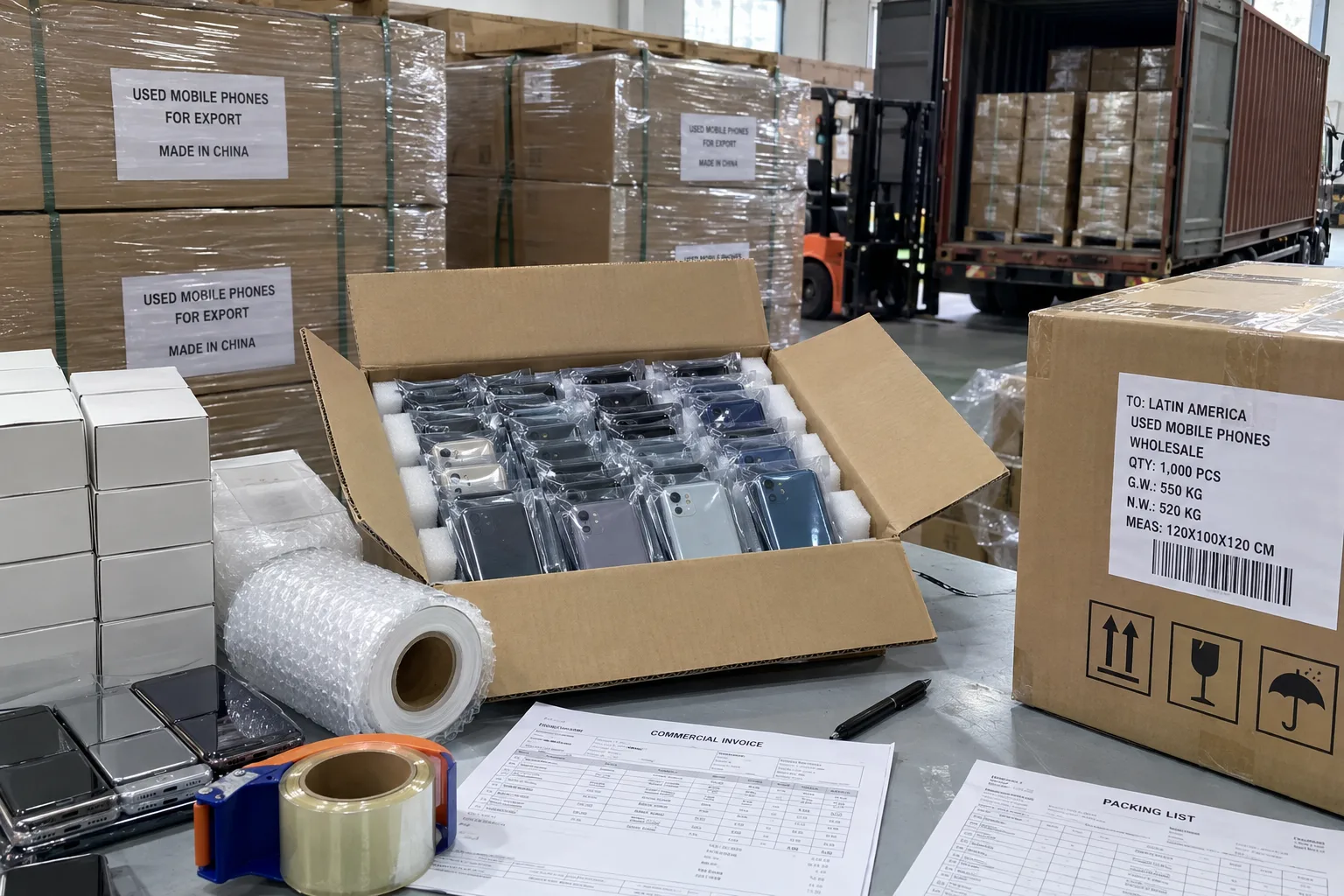
Each device should ship in an anti-static bag or individual box, with cushioning that prevents movement inside the outer carton during transit. Suppliers experienced with refurbished phones Latin America shipments typically use reinforced export cartons rated for ocean or air freight, reducing the risk of cosmetic damage that could downgrade a unit’s condition on arrival.
Shipping Routes and Customs Documentation
Air freight suits smaller, time-sensitive orders, while ocean freight offers lower per-unit shipping costs for full container loads, typically taking four to six weeks to major Latin America ports. Commercial invoices should list accurate HS codes, per-unit declared values, and IMEI manifests where required by the destination country, since undervaluation or missing documentation is a common cause of customs delays for wholesale used phones wholesale Latin America shipments.
5 Common Mistakes Latin America Resellers Make When Sourcing Used Phones Wholesale
Even experienced buyers run into avoidable problems when scaling a used phones wholesale Latin America operation. The mistakes below account for most of the disputes, delays, and margin loss reported by resellers working with new or unvetted suppliers, and each one is preventable with the right questions asked upfront.
Buying Based on Price Alone Without Checking Grading Consistency
The lowest quoted price per unit often reflects looser grading standards or reduced testing, not better sourcing efficiency. Resellers who compare quotes without first confirming grading definitions frequently receive stock that does not match expectations, leading to markdowns or returns that erase the initial savings.
Skipping IMEI Verification Before Payment
Paying a deposit or full balance before confirming IMEI and blacklist status on sample units leaves a reseller with little recourse if devices arrive unsellable. Always request an IMEI report, even for a small trial order, before scaling to larger volumes with a new supplier.
Ignoring Battery Health Percentages in Bulk Lots
Bulk lots priced attractively sometimes bundle a wide range of battery health percentages under a single grade label. Without a per-unit or per-batch battery report, resellers may unknowingly receive units well below the 80 percent threshold expected for Grade A stock, which shortens resale life and increases warranty claims.
Underestimating Import Duties and Documentation Requirements
Import regulations for used electronics differ by country, and some Latin America markets require additional certification or registration for used and refurbished phones. Resellers who do not confirm these requirements in advance risk shipments held at customs, unexpected duties, or in some cases confiscation, all of which are avoidable with proper documentation planning before the order ships.
Not Testing a Trial Order Before Committing to Full Container Loads
Jumping straight to a large container order with an unproven supplier removes the opportunity to catch grading, testing, or packaging issues while the financial exposure is still small. A trial order of 50 to 100 units, inspected carefully on arrival, gives a reseller real evidence of a supplier’s consistency before scaling to higher volumes.
Decision Guide: Matching Stock Mix to Your Market
Different reseller profiles benefit from different stock mixes. The table below offers a starting point for structuring an order based on the type of business and local market conditions, which can then be refined with supplier sell-through data over time.
| Reseller Type | Recommended Grade Mix | iPhone : Android Ratio | Notes |
| Premium retail / e-commerce | 70% Grade A+, 30% Grade A | 70 : 30 | Prioritize battery health and cosmetic photos |
| General retail store | 40% Grade A, 60% Grade B | 50 : 50 | Balance margin with price competitiveness |
| Repair shop resale | Grade B and C, parts-grade included | 30 : 70 | Functional testing matters more than cosmetics |
| Value / budget distributor | Mostly Grade B and C | 20 : 80 | High volume, price-driven end customers |
Request Latin America Stock
Ready to Stock Your Latin America Market? INENG Technology Co., Limited supplies graded, tested, and IMEI-verified used and refurbished phones in wholesale volume, with export documentation and packaging built for Latin America import routes.
Sourcing used phones wholesale for Latin America does not have to carry the risk that many first-time buyers experience. With clear grading standards, verified IMEI and battery health data, a vetted supplier, and export documentation prepared correctly, resellers can build a reliable, repeatable pipeline of refurbished phones Latin America customers trust. A structured trial order remains the safest way to confirm a supplier’s consistency before committing to full-volume purchasing.
Frequently Asked Questions
What is the minimum order quantity for used phones wholesale Latin America?
MOQs typically start around 50 to 100 units for mixed-grade pallets and rise to several hundred units for single-model, single-grade orders. Full container loads generally start at 1,000 or more units, with pricing improving as order size increases.
What’s the difference between Grade A and Grade B refurbished phones in Latin America?
Grade A units show little to no visible cosmetic wear and typically carry battery health above 80 percent, while Grade B units show noticeable but minor wear and remain fully functional, usually at battery health above 75 percent.
How do I verify IMEI and blacklist status before buying used phones wholesale Latin America?
Request a per-unit or per-batch IMEI report checked against the GSMA blacklist database, and confirm this is included as standard practice, not an optional add-on, with any supplier you evaluate.
Can I mix iPhone and Android models in one wholesale order for phones for resellers?
Yes, mixed-model pallets are common and often carry lower minimum order quantities, making them a practical way to test a new supplier or diversify stock for a broader customer base.
What documentation do I need to import refurbished phones in Latin America?
Requirements vary by country, but commercial invoices, accurate HS codes, and IMEI manifests are commonly required. Confirming country-specific certification rules with a local customs broker before shipment is strongly recommended.
How long does shipping take from China to Latin America for used iPhones South America wholesale orders?
Ocean freight typically takes four to six weeks to major Latin America ports, while air freight can arrive within one to two weeks for smaller or time-sensitive orders.
Do refurbished phones come with a warranty for phones for resellers?
Reputable suppliers offer a warranty period, commonly 90 to 180 days, covering functional defects such as battery or component failure, though warranty terms should always be confirmed in writing before an order is placed.