Importing used phones risk is one of the biggest concerns for overseas wholesalers, distributors, and phone store owners who source refurbished and second-hand devices from China. Between inconsistent grading, hidden battery damage, blocked IMEIs, unreliable suppliers, and shipping delays, a single bad order can cost thousands of dollars and damage customer trust. This guide walks B2B buyers through the exact steps to buy used phones safely — from supplier vetting and grading standards to quality control, payment protection, and export preparation. Whether you are a sourcing manager, e-commerce seller, or repair shop owner, these practical strategies will help you work with a reliable used phone supplier and reduce used phone import risk at every stage of the transaction.
Why Importing Used Phones Carries Real Risk for B2B Buyers
Used and refurbished phones move through more hands than new devices before they reach an export warehouse, and that creates multiple points where problems can occur. Importing used phones risk typically falls into four categories: quality risk (devices that don’t match their stated condition), grading risk (inconsistent or inflated grading standards), payment risk (paying upfront to an unverified supplier), and shipping risk (damage, delays, or customs issues). Each of these risks compounds when buyers purchase in bulk without a clear verification process, which is why understanding them individually is the first step toward learning how to buy used phones safely.
For international buyers, the challenge is amplified by distance. You cannot inspect every unit in person, language and time-zone differences slow down communication, and disputes are harder to resolve once goods have left China. This is why experienced importers build a repeatable risk-reduction process rather than relying on trust alone. The sections below break down exactly how to do that, starting with the single most important decision in the entire supply chain: choosing the right supplier.
Choose a Reliable Used Phone Supplier
Supplier selection is the foundation of reducing used phone import risk. A reliable used phone supplier should have a verifiable business license, a physical warehouse or sorting facility, and a track record of exporting to your region. Ask for company registration documents, export history, and references from existing overseas clients. Suppliers who hesitate to share this information, or who only communicate through personal messaging apps without a registered business email, are a warning sign worth taking seriously before you commit to a purchase order.
Verify Business Licenses and Export Experience
Request a copy of the supplier’s business license and check that the registered scope of business includes electronics trading or export. Cross-reference the company name on platforms such as Alibaba, Global Sources, or China’s National Enterprise Credit Information Publicity System. Ask how many years the supplier has exported used and refurbished phones, and to which countries, since export experience to your specific market often means the supplier already understands relevant compliance and labeling requirements.
Ask for a Factory or Warehouse Audit
Before placing a large order, request a live video call or a third-party inspection report showing the actual sorting, testing, and packaging facility. Genuine wholesale used phone suppliers are typically willing to show their grading stations, testing equipment, and warehouse stock on camera. This single step eliminates a large share of used phone import risk because it confirms the supplier actually handles physical inventory rather than reselling from unverified third-party sources.
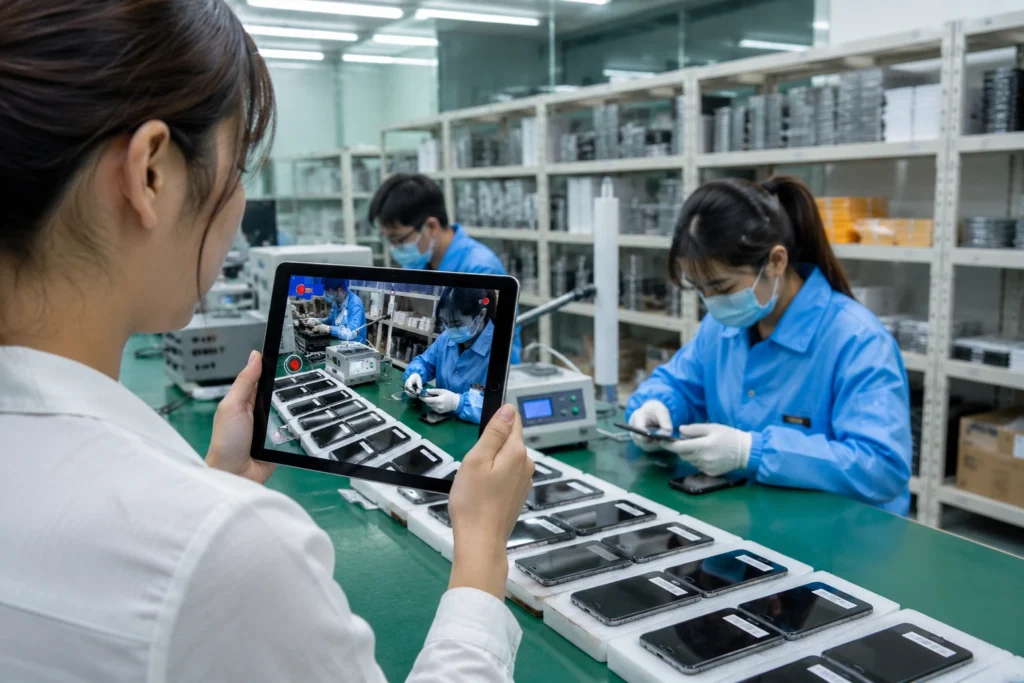
Use the checklist below during every supplier evaluation, whether you are vetting a new contact or re-confirming an existing partner ahead of a large order.
| Evaluation Point | What to Check | Why It Matters |
| Business license | Registered scope includes electronics/export trade | Confirms a legal, traceable business |
| Export history | Years exporting, destination countries served | Signals market experience and compliance knowledge |
| Facility verification | Live video call or independent inspection report | Confirms real inventory, not unverified drop-shipping |
| Grading process | Documented A+/A/B/C standards with photos | Prevents inconsistent quality claims |
| Testing equipment | IMEI scanners, battery diagnostic tools on site | Confirms genuine QC capability |
| Client references | Reviews or referrals from current overseas buyers | Validates a real reliability track record |
| Payment terms | Trade assurance, escrow, or verified T/T options | Protects buyer payment security |
Understand Grading Standards Before You Place an Order
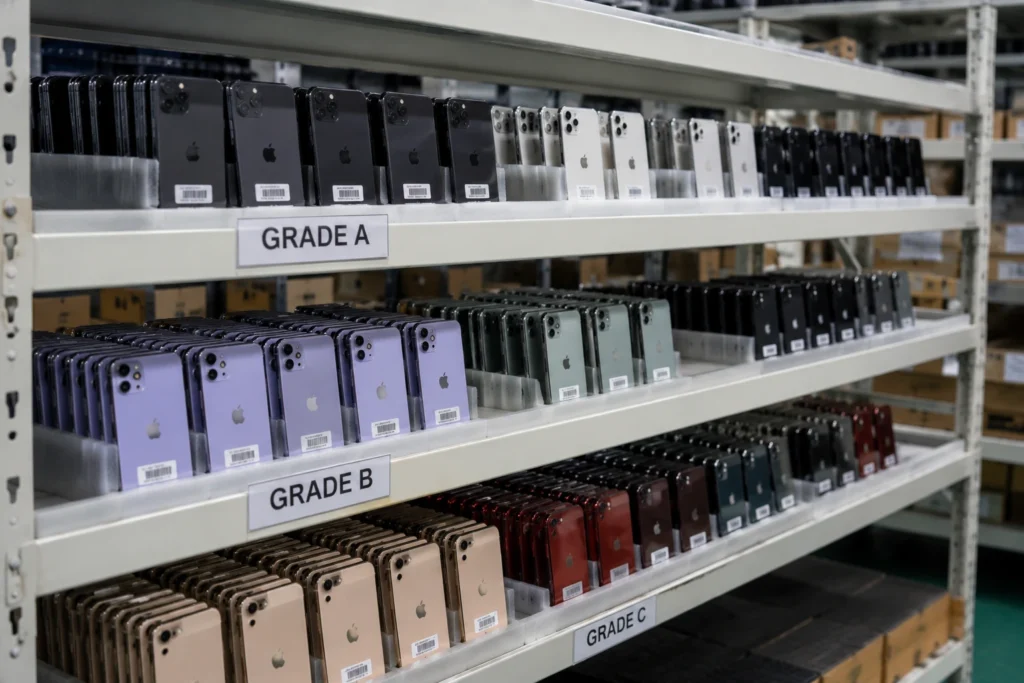
Grading disputes are one of the most common causes of used phone import risk, mainly because grading terminology is not standardized across suppliers. A phone labeled “Grade A” from one supplier may differ significantly from another supplier’s “Grade A.” Before ordering, ask your supplier for a written grading definition with photos for each grade, covering screen condition, body condition, and functional status separately. This written reference becomes your quality benchmark for every shipment going forward, and it gives you solid ground to stand on if a dispute arises later.
| Grade | Screen Condition | Body Condition | Typical Use Case |
| Grade A+ (Like New) | No visible scratches | Minimal to no wear, original parts | Premium resale, flagship listings |
| Grade A | Minor micro-scratches, not visible when on | Light wear, no dents | Standard retail resale |
| Grade B | Visible light scratches | Noticeable wear, minor dents possible | Budget retail, bundle deals |
| Grade C | Visible scratches or light cracks possible | Heavy wear, may include non-original parts | Repair parts, budget/refurb resale |
Buyers should also confirm whether grading applies only to cosmetic condition or includes functional testing, since a cosmetically “Grade A” phone can still have battery or software issues. Always request that your supplier grade cosmetic condition and functional condition separately, and keep the written grading criteria on file so you can reference it against every future shipment.
Quality Control Steps That Reduce Used Phone Import Risk
Strong quality control is what separates a reliable used phone supplier from a risky one. At minimum, every unit in a wholesale order should pass three checks before shipment: battery health verification, IMEI status verification, and full functional testing. Skipping any one of these checks significantly increases the chance of receiving devices that cannot be resold, which directly affects your margins and customer satisfaction on the other end of the supply chain.
Battery Health Verification
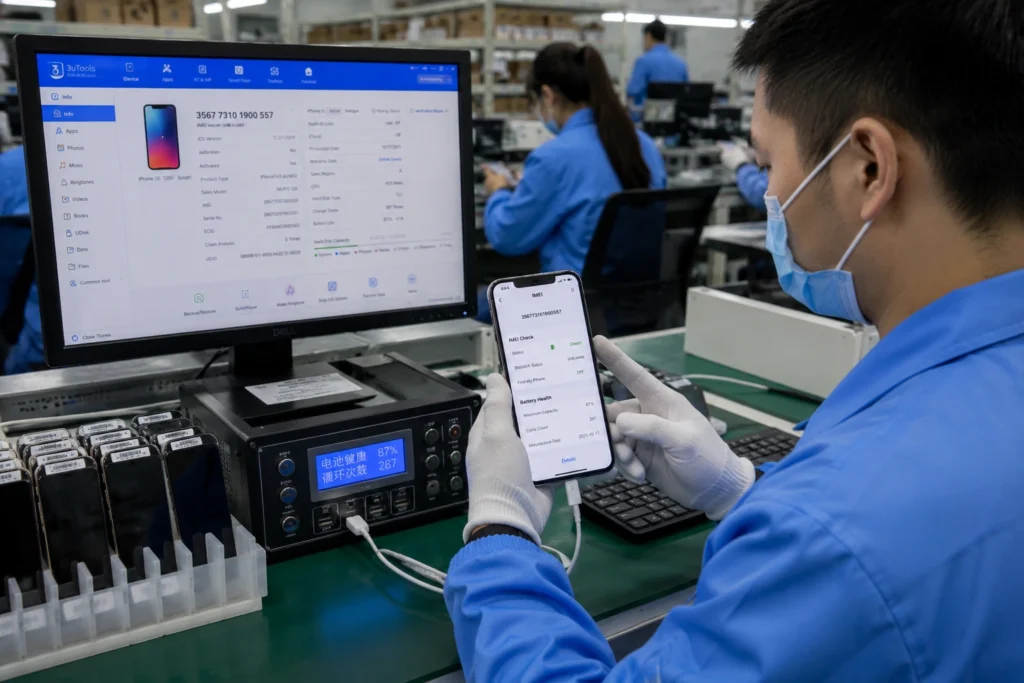
Battery degradation is one of the most common hidden defects in used phones. Request that your supplier report battery health percentage for every unit, typically using diagnostic software that reads battery cycle count and maximum capacity. Most B2B buyers set a minimum threshold, commonly 80% battery health or higher, and reject or discount units that fall below that standard. Get this threshold in writing as part of your purchase agreement or quotation.
IMEI Checks and Blacklist Verification
An IMEI check confirms that a phone is not reported lost, stolen, or blacklisted, and that it is not locked to a carrier in a way that limits resale. Ask your supplier to provide an IMEI report for each unit or batch, and independently verify a sample using a third-party IMEI checking service before final payment. This step alone prevents one of the costliest used phone import risk scenarios: receiving devices that cannot legally be activated or resold in your market.
Full Functional Testing
Functional testing should cover the touchscreen, cameras, speakers, microphone, charging port, buttons, sensors, and network connectivity. Reputable suppliers use standardized testing software and provide a test report per unit or per batch sample. For large orders, ask for a random-sample inspection report from a third-party inspection company before the shipment leaves the warehouse, giving you an independent quality checkpoint outside the supplier’s own internal process.
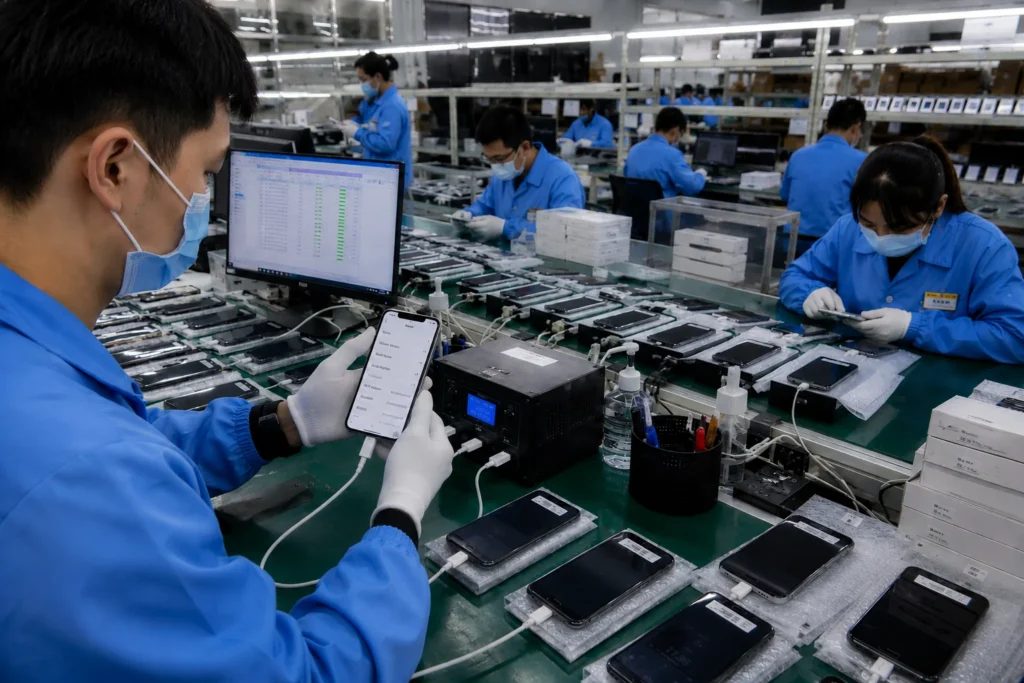
Together, these three checks, battery health, IMEI status, and functional testing, form the minimum QC baseline for any wholesale used phone order. Buyers who request all three as standard documentation, rather than negotiating them as extras, consistently see fewer returns and stronger resale margins once inventory reaches their own customers.
Reduce Payment Risk When Importing Used Phones
Payment risk is often the first concern new buyers raise, and reasonably so, since it is difficult to recover funds sent to an overseas account. Reduce this risk by using trade assurance platforms, verified escrow services, or a split payment structure such as 30% deposit and 70% balance after inspection but before shipment. Avoid suppliers who insist on 100% upfront payment via personal bank transfer, especially on a first-time order, since this offers no recourse if the shipment does not match the agreed specifications.
For new supplier relationships, start with a smaller trial order to test product quality, communication, and shipping reliability before committing to full container volumes. This lets you validate the supplier’s grading accuracy and QC consistency at low risk, and it gives you leverage to request corrections before scaling up your regular purchase order volume and negotiating better wholesale pricing.
Minimize Shipping and Export Risk
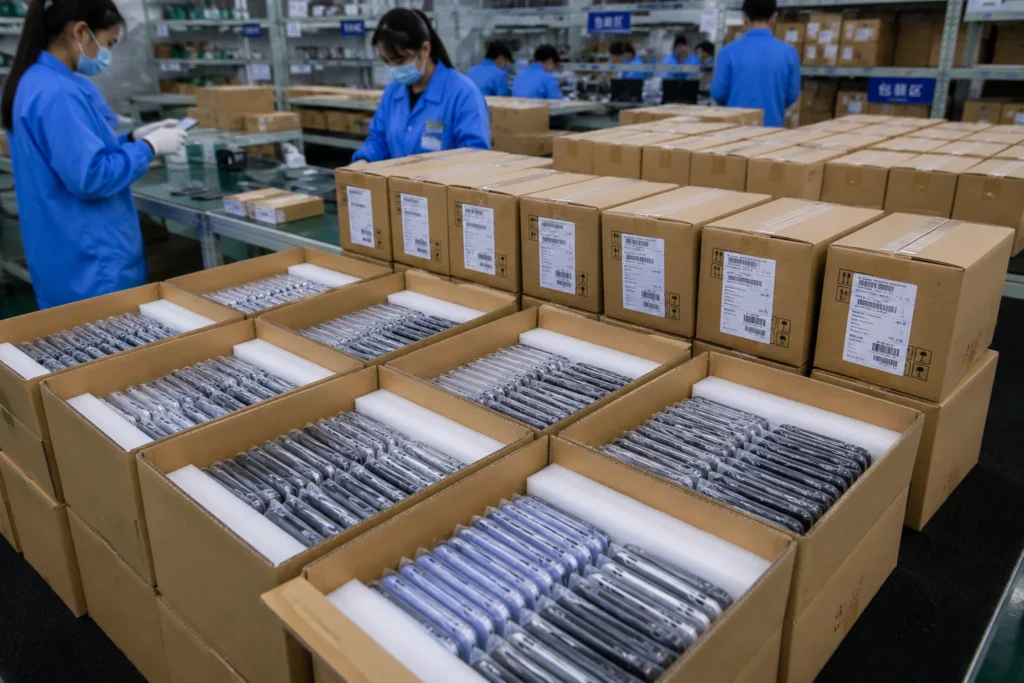
Even a well-graded, quality-checked shipment can be damaged or delayed if packaging and export documentation are not handled correctly. Used phones should be individually wrapped or boxed, packed in anti-static bags where applicable, and cushioned inside export cartons to prevent movement during transit. Ask your supplier for photos of the actual packed cartons before shipment, not just stock photos, so you can confirm the packaging quality matches what was agreed in your contract or quotation.
Confirm export documentation in advance, including a commercial invoice, packing list, and any certificates required for used-electronics import in your country, since customs requirements for second-hand devices vary significantly by market. Choose a supplier who offers shipment tracking and, ideally, cargo insurance, so that damage or loss during transit becomes a recoverable cost rather than a total loss on your side.
Common Mistakes Buyers Make When Importing Used Phones
Skipping Supplier Verification to Save Time
Many first-time buyers move straight to price negotiation without verifying the supplier’s business license, facility, or export history. This shortcut often costs far more than the time it saves, since unverified suppliers are more likely to misrepresent grading, delay shipments, or become unresponsive after receiving payment. Always complete basic verification before discussing volume pricing or committing to a purchase order.
Accepting Grading Descriptions Without Photos or Written Standards
Relying on vague grading terms like “good condition” leads to disputes once the shipment arrives and units do not match expectations. Buyers should always request a written grading standard with reference photos for each grade before confirming an order, and should hold the supplier to that documented standard for every future shipment, not just the first one.
Paying 100% Upfront on a First Order
Full upfront payment removes your only real leverage if the shipment does not match the agreed specifications. Structuring payment with a deposit and balance-on-inspection, or using a trade assurance or escrow option, keeps both sides accountable and significantly lowers used phone import risk on new supplier relationships, especially during the first two or three orders.
Ignoring Battery Health and IMEI Reports
Buyers who focus only on cosmetic grading often overlook battery health and IMEI status, two of the most common sources of post-sale returns and customer complaints. Always request these reports as a standard part of the quotation, not as an optional add-on, and independently verify a sample when the order volume justifies the extra step.
Not Requesting Sample Orders Before Bulk Purchasing
Jumping straight into container-volume orders without a trial shipment removes your ability to catch grading or quality inconsistencies early. A modest sample order, even if it costs slightly more per unit, gives you real data on supplier reliability before you commit to larger purchase volumes and long-term contracts.
Pre-Shipment Risk Reduction Checklist
Use this checklist before confirming payment on any wholesale used phone order, whether it is your first purchase or a repeat shipment from an existing supplier.
| Checklist Item | Status (✓ / ✗) |
|---|---|
| Supplier business license and export history verified | ☐ |
| Facility or warehouse confirmed via video call or inspection report | ☐ |
| Written grading standard with reference photos obtained | ☐ |
| Battery health threshold agreed in writing (e.g., 80%+) | ☐ |
| IMEI report requested and a sample independently verified | ☐ |
| Functional test report provided per unit or per batch | ☐ |
| Payment structured as deposit + balance, or via trade assurance/escrow | ☐ |
| Trial or sample order completed before scaling to bulk purchase | ☐ |
| Packaging photos reviewed before the shipment leaves the warehouse | ☐ |
| Export documentation and shipment tracking confirmed | ☐ |
Buy Used Phones Safely with a Repeatable Process
Reducing importing used phones risk comes down to a repeatable process: verify your supplier, define grading standards in writing, confirm battery health and IMEI status, structure payment securely, and inspect packaging before shipment. Buyers who follow this process consistently spend less time managing returns and disputes, and more time growing their resale business with dependable, wholesale-ready inventory.
At INENG TECHNOLOGY CO., LIMITED, we work with international wholesalers, distributors, and repair shop owners to supply graded, tested, and IMEI-verified used and refurbished phones, backed by transparent quality reports and flexible payment terms. If you are ready to source with confidence, send us your requirements and we will respond with a detailed quotation.
Send RFQ to INENG TECHNOLOGY CO., LIMITED today and receive a customized quotation with grading, battery health, and IMEI verification included.
Frequently Asked Questions
What is the biggest importing used phones risk when buying in bulk?
The biggest importing used phones risk is inconsistent grading combined with unverified battery health and IMEI status. Cosmetic condition alone does not guarantee that a device is fully functional or suitable for resale. Buyers who verify grading, battery health, and IMEI status before shipment significantly reduce the likelihood of costly returns and customer complaints.
How can I find a reliable used phone supplier before placing an order?
To identify a reliable used phone supplier, verify the company’s business license, export history, and industry experience. Request a live video warehouse tour or an independent third-party inspection report, and ask for references from existing overseas customers. A trustworthy supplier will be transparent and willing to provide this information before you commit to a purchase.
What battery health percentage should I require to buy used phones safely in wholesale?
To buy used phones safely, most B2B buyers require a minimum battery health of 80% for standard wholesale grades, while premium or like-new grades often require higher thresholds. Always confirm the agreed battery health requirement in writing as part of your quotation or purchase agreement.
How can I reduce used phone import risk by checking IMEI status before shipment?
One of the easiest ways to reduce used phone import risk is to request IMEI reports directly from your supplier and independently verify a sample using a trusted third-party IMEI checking service before making the final payment. This helps confirm that the devices are not reported lost, stolen, blacklisted, or restricted in your target market.
Is it safe to pay 100% upfront when buying used phones safely from overseas suppliers?
No. Paying 100% upfront is generally not recommended, especially for first-time orders. To buy used phones safely, use a partial deposit with the remaining balance paid after inspection but before shipment, or choose a trade assurance or escrow service that offers protection for both buyer and supplier.
What grading standard helps reduce used phone import risk?
Most wholesale suppliers use an A+/A/B/C grading system based on cosmetic appearance and functional condition, although grading definitions can vary between suppliers. To reduce used phone import risk, always request the supplier’s written grading standards with clear reference photos instead of relying on general industry assumptions.
Should I order a sample before placing a bulk order to buy used phones safely?
Yes. A sample order is one of the most effective ways to buy used phones safely. It allows you to verify grading consistency, battery health, IMEI status, packaging quality, and overall product condition before committing to a larger wholesale purchase from a new supplier.