Used iPhones vs refurbished iPhones is one of the most important comparisons every wholesale buyer should understand before placing a bulk order. Sourcing iPhones internationally means choosing between two very different supply streams, and getting it wrong can hurt your margins and customer trust. Many importers and retailers struggle to distinguish used iPhones wholesale from refurbished iPhones wholesale, often assuming the terms mean the same thing. This guide explains the real differences in grading, quality control, pricing, and risk, helping you source with confidence and choose the right stock for your target market.
What “Used” and “Refurbished” Actually Mean in Wholesale iPhone Sourcing
In the iPhone resale wholesale trade, “used” typically means devices collected from trade-ins, carrier buybacks, or bulk liquidation, sold largely as-is after basic sorting. They are functional but carry natural signs of prior ownership, from cosmetic wear to inconsistent battery health across a lot.
“Refurbished” refers to used devices that have gone through a structured restoration process. This usually includes diagnostic testing, part replacement where needed, battery health checks, cosmetic polishing, and repackaging. A reliable refurbished supplier applies consistent standards across every unit in a batch, not just a random sample.
Understanding this distinction matters because it directly affects your resale positioning, return rate, and the price point your customers expect. Buyers who treat the two categories interchangeably often face unexpected quality disputes after container arrival.
Why the Difference Matters for Your Business Model
If you run a budget-focused resale channel, repair shop, or parts business, used stock at lower cost may suit you well. If you’re building a retail-facing brand that promises consistent quality, refurbished iPhones wholesale is usually the safer long-term choice, even at a higher per-unit cost.
Used iPhones vs Refurbished iPhones Comparison
The table below summarizes the core differences buyers should evaluate before placing an order.
| Factor | Used iPhones Wholesale | Refurbished iPhones Wholesale |
| Testing process | Basic functional check only | Full diagnostic + component testing |
| Battery health | Often unverified or mixed | Typically verified, 80%+ SOH common |
| Cosmetic condition | Wide variance, as-is | Graded and consistent within batch |
| Price point | Lower per unit | Moderate, reflects added labor |
| Warranty from supplier | Rarely offered | Often 30–90 days available |
| Best suited for | Parts, budget resale, repair stock | Retail resale, e-commerce, B2B contracts |
| Return rate risk | Higher if ungraded | Lower with proper QC documentation |
This comparison is a starting point, not a fixed rule. Quality varies significantly between suppliers within each category, which is why supplier vetting matters more than the label alone.
The Real Indicator of Quality
Grading is where the real quality difference shows up, regardless of whether stock is labeled used or refurbished. Reputable suppliers use an A/A+/B/C grading system based on screen condition, housing wear, and functional performance, and they document this per unit or per batch.
Ask suppliers for their exact grading criteria in writing before ordering, not just a verbal description. A trustworthy supplier will readily share grading photos, sample videos, or a written grading sheet.

Common Grading Tiers Explained
| Grade | Screen Condition | Housing Condition | Typical Use Case |
| A+ / Like New | No visible marks | Minimal to no wear | Premium retail resale |
| A | Very light marks | Light wear | Standard retail resale |
| B | Light scratches | Visible wear, dents possible | Value retail, online resale |
| C | Noticeable scratches | Heavy wear | Budget resale, parts, repair use |
Quality Control, Battery Health, and IMEI Verification
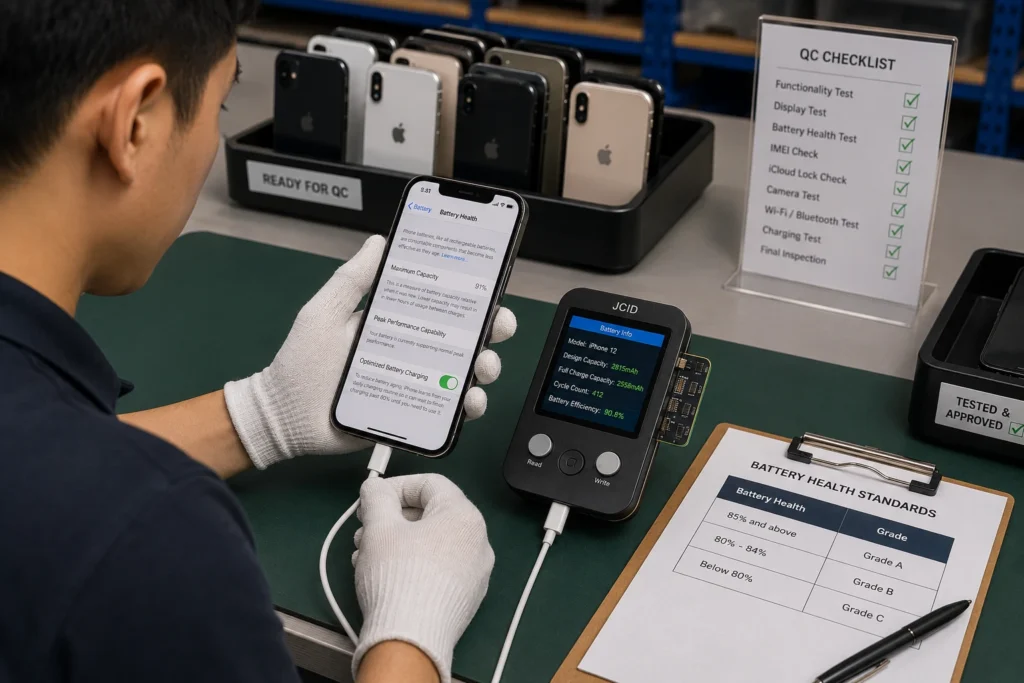
Quality control separates a professional supplier from a risky one. At minimum, your supplier should confirm functional testing (touch, camera, speakers, buttons, connectivity), battery health percentage, and IMEI status before shipment.
Battery Health Verification
Battery health is one of the most common dispute points in bulk iPhone orders. Ask suppliers to report battery health (state of health, or SOH) per unit or per sample batch, ideally 80% or above for refurbished stock. For used stock, request a battery health range so you can price and disclose accurately to your own buyers.
IMEI and Blacklist Checks
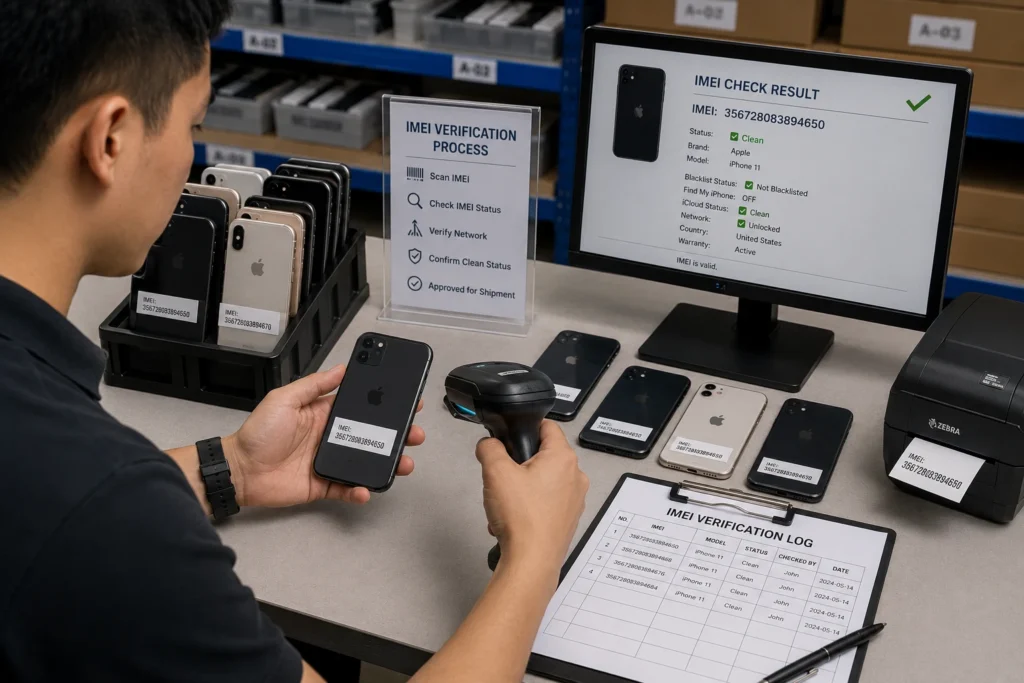
Every unit should pass an IMEI check confirming it is not reported lost, stolen, or blacklisted, and that it is not iCloud or carrier locked unless clearly disclosed. Reputable suppliers provide IMEI check reports or allow you to verify a sample batch independently before full payment. Skipping this step is one of the most costly mistakes bulk buyers make.
Stock Availability, MOQ, and Pricing Structures
Wholesale iPhone suppliers typically set minimum order quantities (MOQ) based on model and grade mix, commonly starting from 50–100 units for mixed lots. Pricing is usually quoted per grade tier, per model, and per storage capacity, since these three factors drive value more than age alone.
Request a detailed quotation sheet broken down by model, grade, storage, and battery health range rather than a single blended price. This transparency helps you calculate resale margins accurately and compare suppliers on equal terms.
What a Professional Quotation Should Include
A complete quote should list unit pricing by grade, available quantity per model, estimated lead time, packaging details, and shipping terms (FOB, CIF, or EXW). If a supplier’s quote is missing these details, treat it as a signal to ask more questions before committing.
Packaging, Shipping, and Export Preparation
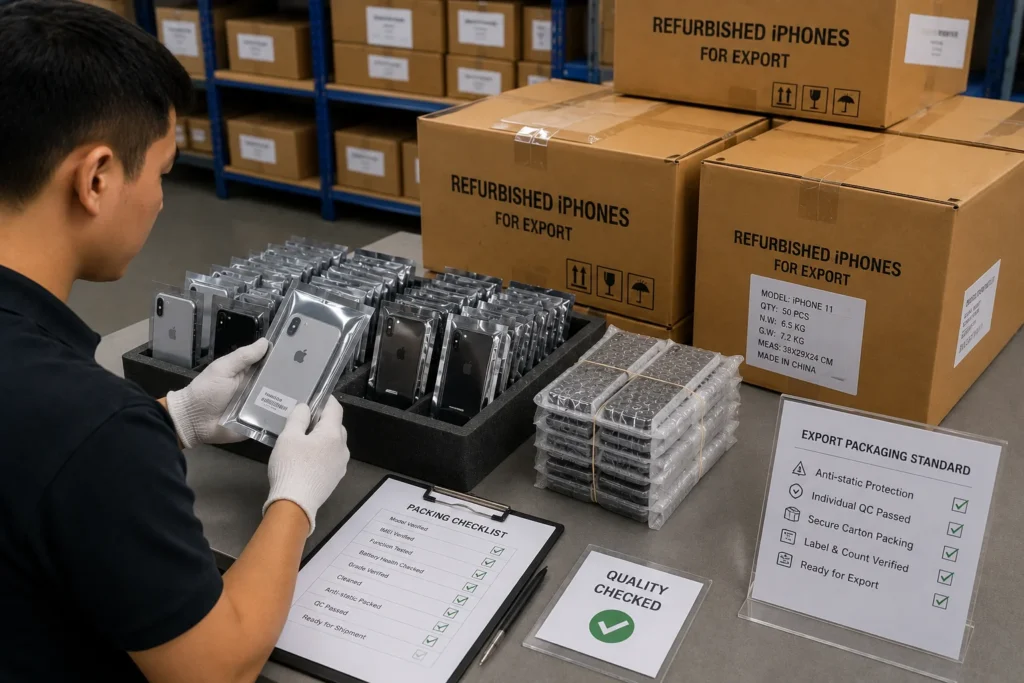
Proper packaging protects device condition and reduces damage claims during international transit. Look for suppliers who individually wrap units, use anti-static bags, and pack cartons with cushioning suited for air or sea freight.
Export-ready suppliers should also provide accurate customs documentation, including commercial invoices with correct HS codes and packing lists matching the actual shipment. Confirm shipping method, estimated transit time, and insurance coverage before finalizing your order, especially for high-value refurbished iPhones wholesale shipments.
Common Mistakes Wholesale Buyers Should Avoid
Ordering Based on Price Alone
The lowest quoted price per unit often reflects lower grading standards, unverified battery health, or hidden defects. Compare total landed cost and expected resale value, not just the sticker price.
Skipping Sample Orders
Buyers who place large first orders without testing a sample batch risk discovering grading inconsistencies only after full shipment arrival. Always request 5–10 sample units matching your intended order grade before scaling up.
Not Requesting IMEI and Battery Reports
Without documented IMEI status and battery health data, you cannot verify what you’re actually receiving, and you have no basis for a dispute if units underperform. Insist on this documentation as a standard part of every quote.
Assuming “Refurbished” Means Identical Quality Across Suppliers
There is no universal certification body enforcing refurbishment standards globally, so quality varies widely by supplier. Vet each supplier’s specific process rather than trusting the label.
Ignoring After-Sales Terms
Buyers sometimes skip discussing return policy, DOA (dead-on-arrival) allowance, or warranty terms until a problem arises. Clarify these terms in writing before payment, including the DOA percentage typically covered.
Buyer Decision Checklist
Use this checklist when evaluating a potential order or supplier:
☐ Supplier provides written grading criteria and sample photos
☐ Battery health data available per unit or per batch
☐ IMEI check reports provided or independently verifiable
☐ Quotation broken down by model, grade, storage, and price
☐ MOQ and lead time clearly stated
☐ Packaging method suited for your shipping route
☐ Export documentation (invoice, packing list, HS code) confirmed
☐ DOA allowance and warranty terms agreed in writing
☐ Sample order tested before full container commitment
GET IPHONE STOCK LIST
Choosing between used iPhones wholesale and refurbished iPhones wholesale ultimately depends on your target market, budget, and quality commitments to your own customers. Both categories can be profitable when sourced from a supplier with transparent grading, verified battery health, and documented IMEI checks. Prioritize suppliers who provide clear quotations, sample testing options, and proper export packaging to reduce import risk and protect your margins.
Ready to compare grades, pricing, and available models for your next order?
Frequently Asked Questions
What is the main difference between used iPhones vs refurbished iPhones?
The biggest difference between used iPhones vs refurbished iPhones is the level of processing before resale. Used iPhones wholesale are generally sold in their collected condition with limited standardization, while refurbished iPhones wholesale undergo diagnostic testing, repairs when needed, and consistent grading before being offered to buyers.
Which offers better profit margins for iPhone resale wholesale?
For iPhone resale wholesale, used iPhones wholesale often have a lower purchase price but may carry a higher risk of returns or customer complaints. Refurbished iPhones wholesale usually cost more upfront but often deliver stronger customer satisfaction and more consistent resale performance.
What battery health percentage should I expect when buying refurbished iPhones wholesale?
When purchasing refurbished iPhones wholesale, a battery health level of 80% or higher is a common industry benchmark. For used iPhones wholesale, ask the supplier to provide the battery health range for the entire batch rather than assuming every device meets the same standard.
How do I verify IMEI status before ordering used iPhones wholesale?
Before buying used iPhones wholesale or refurbished iPhones wholesale, request the supplier’s IMEI verification report. You can also ask for sample IMEI numbers and verify them through a trusted third-party IMEI checking service before completing your order.
What is a typical MOQ for used iPhones wholesale and refurbished iPhones wholesale?
The minimum order quantity for used iPhones wholesale and refurbished iPhones wholesale commonly starts at around 50–100 units for mixed-grade orders. However, MOQ varies depending on the supplier, iPhone model, available inventory, and grading requirements.
Should I request a sample order before purchasing iPhone resale wholesale stock?
Yes. Before placing a large iPhone resale wholesale order, request a sample of 5–10 units that matches your intended grade and model mix. This allows you to verify the quality and grading before committing to a larger purchase.
What warranty or DOA terms should I expect from refurbished iPhones wholesale suppliers?
Reliable refurbished iPhones wholesale suppliers typically provide a DOA (Dead on Arrival) allowance of around 1–3% and may offer a 30–90 day warranty. Whether you’re purchasing used iPhones wholesale or refurbished devices, always confirm warranty and return terms in writing before making payment.